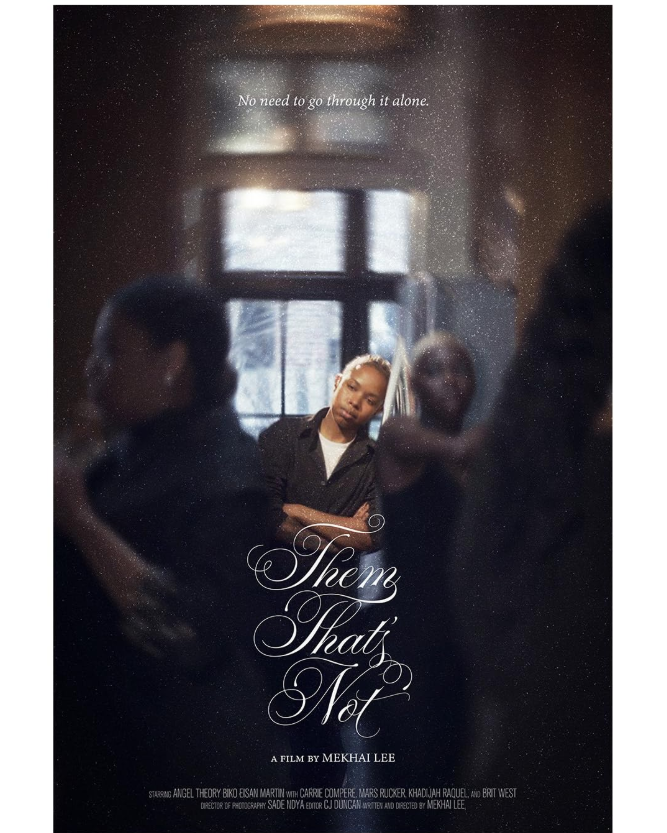

Mekhai Lee’s Them That’s Not is a masterclass in sensory storytelling. In a medium that often relies too heavily on exposition, Lee leans on a much more powerful tool: sound or specifically, the absence and distortion of it. From the jump, the audio design functions as a direct line into the psyche of the protagonist, Drea. The sound dips, rings, and fades, forcing us to navigate the world through her ears. It’s a bold, technical flex that moves the film from a standard drama into a deeply immersive POV piece.
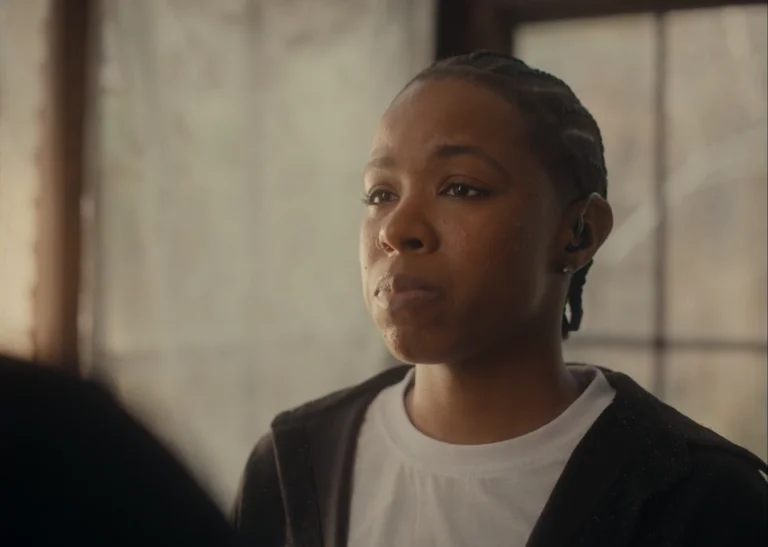
At the center of this quiet storm is Drea, played with a hardened, protective intensity by Angel Theory. She’s a deaf, queer artist standing on the periphery of a family gathering that feels light-years away from her reality. The family laughs and talks in a language they haven’t bothered to bridge for her; they don’t sign, and their refusal to meet her halfway creates a chasm wider than the brownstone they’re standing in. They are mourning a grandmother, but Drea is mourning the connection she never had.
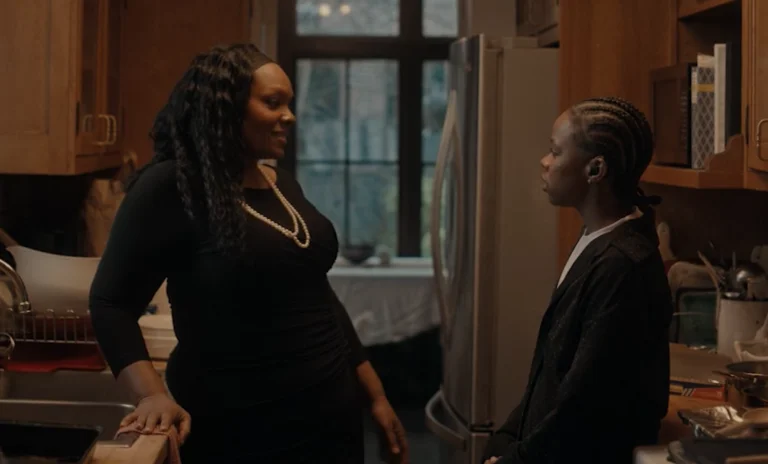
The narrative engine really kicks over when Samuel (Biko Eisen-Martin) arrives under the watch of a warden. The reveal is handled with surgical restraint: he’s Drea’s father, granted a single furlough after two decades in prison to say goodbye to his mother. He enters the room like a physical weight. There’s an immediate, unspoken tension between him and Drea that tells you everything you need to know before a single word is “heard.” It’s unfinished business wrapped in twenty years of regret.
Their estrangement is the film’s heartbeat. You’re watching a young woman who has meticulously built a life around not needing a man she clearly still craves a connection with. Angel Theory plays this beautifully she protects her hurt like a fresh bruise, her eyes constantly betraying the tough-girl facade she’s trying to maintain. On the other side, Eisen-Martin is a portrait of remorse, a father who has all the words but zero ways to deliver them.
Technically, the film is airtight. The brownstone setting feels lived-in and nostalgic, bathed in warm lighting that contrasts sharply with Drea’s isolation. The camera stays tight on her, framing her perspective as she studies lips and hands, trying to decode a room that has effectively locked her out. The sound design completes the circuit, letting silence spread until you’re sitting right there in the isolation with her.
Mekhai Lee deserves credit for not forcing a tidy, “Hollywood” reconciliation. He lets the possibility of a relationship hover fragile and uncertain. It’s a story about the heavy lifting of facing someone you thought you’d learned to live without.
It’s a powerful, restrained look at absence and the quiet, often painful work of family. Sometimes the loudest things in a room are the things that aren’t being said. If you aren’t paying attention to the silence, you’re missing the whole story.