
There is something about the morally compromised protagonist that cinema handles better than any other medium. The anti-hero isn’t a villain — that would be too simple. They’re someone whose methods are wrong, or whose desires are understandable but whose pursuit of them causes damage, or who inhabits a world where the categories of good and bad have been corrupted beyond recognition. Here are the ten most indelibly drawn anti-heroes of 21st-century film.
- Amy Dunne — Gone Girl (2014)
Rosamund Pike’s performance — and Gillian Flynn’s character, who Flynn also novelised — is one of the great anti-hero constructions of modern cinema. Amy is a woman who has been performing versions of herself her entire life, and who finally decides to author her own narrative with sociopathic creativity. The film asks us to understand her even as it refuses to endorse her. We do both, inevitably.
- Tony Soprano — The Sopranos (yes, the film counts) — The Many Saints of Newark (2021)
James Gandolfini’s original creation, now played by his son Michael in the prequel, remains the template for the prestige anti-hero. The genius is the ordinariness — Tony’s problems are recognisably domestic even as his solutions are monstrous. The audience’s complicity in his charm was the whole point.
- Lee — Manchester by the Sea (2016)
Casey Affleck’s Lee is an anti-hero in the truest sense — someone whose flaw is not wickedness but an inability to forgive himself for a past tragedy. He is self-destructive, occasionally violent, almost entirely shut down. The film asks us to sit with that limitation, and we do, because Affleck makes Lee’s damaged interior absolutely legible.
- Sayuri — Drive My Car (2021)
Reika Kirishima’s character — the driver assigned to theatre director Yusuke — is revealed gradually as someone whose apparent simplicity conceals layers of damage and moral ambiguity. Hamaguchi’s film requires patience before it delivers its emotional devastation, but when it does, it’s partly on Sayuri’s account.
- Roy — Ted Lasso universe / Succession — but in film: Steven Soderbergh’s output
Let’s take Llewyn Davis from Inside Llewyn Davis (2013) — the Coen Brothers’ most perfectly sustained character study. Llewyn is selfish, self-sabotaging, occasionally cruel, and genuinely talented. Oscar Isaac makes him impossible to dismiss even as you watch him destroy every opportunity he’s given.
- Carey Mulligan as Cassandra — Promising Young Woman (2020)
Emerald Fennell’s film about a woman executing an elaborate revenge campaign against the network of complicity that destroyed her friend is a study in a particular kind of righteous anti-heroism. Cassandra is not a good person. She is also absolutely correct. The film holds that tension without resolving it, and Mulligan is extraordinary.
- Jake Gyllenhaal as Lou — Nightcrawler (2014)

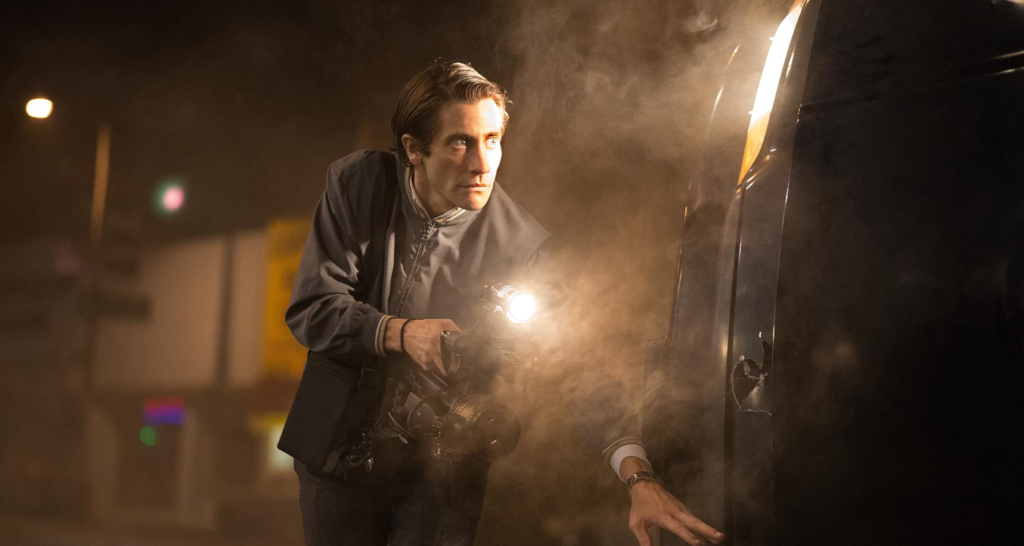
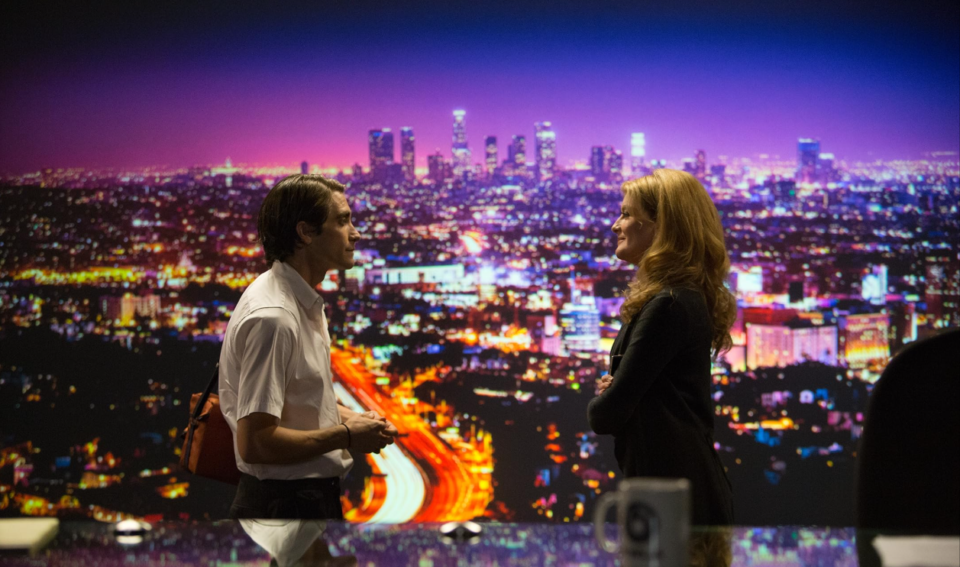
Dan Gilroy’s film features one of the most unnerving performances of the decade. Lou is a genuine sociopath who turns the news media’s hunger for violence to his advantage with a complete absence of remorse. Gyllenhaal lost twenty pounds and his eyes alone tell the whole story. The film is about late capitalism and it’s not subtle about it.
- Riz Ahmed as Ruben — Sound of Metal (2019)
Ruben is a recovering addict and drummer who loses his hearing and faces the disintegration of his identity. His anti-heroic quality is his own worst enemy tendency — the way he makes decisions that destroy the good things in his life out of an inability to accept change. Ahmed’s performance is one of the great physical and emotional achievements of recent acting.
- Phoenix as Napoleon — Joker (2019)
Whatever you think of Todd Phillips’ film, Joaquin Phoenix’s Arthur Fleck is a genuinely complex creation — a man broken by the systems that were supposed to support him who finds power in violence. The film is irresponsible in some ways, but Phoenix’s performance is not. He makes Arthur’s interiority fully realised.
- Mia Goth as Pearl — Pearl (2022)
Ti West and Goth’s character — a young woman in 1918 America whose ambitions and frustrations curdle into something monstrous — is one of the most vivid anti-hero constructions in recent cinema. What makes Pearl genuinely unsettling is how completely the film commits to her perspective. We understand her even at her worst.
Anti-heroes endure because they allow us to explore the parts of ourselves we’d prefer not to look at directly. Cinema provides the darkness in which to examine what we find there.