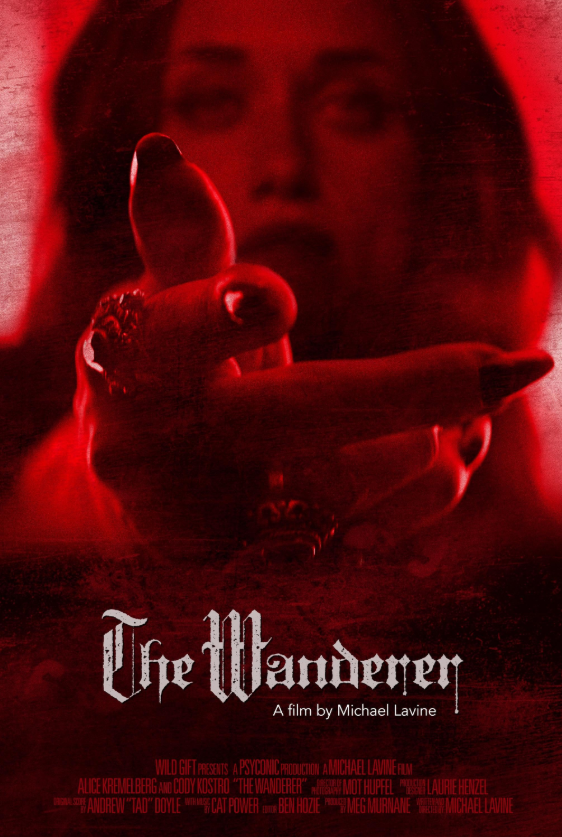

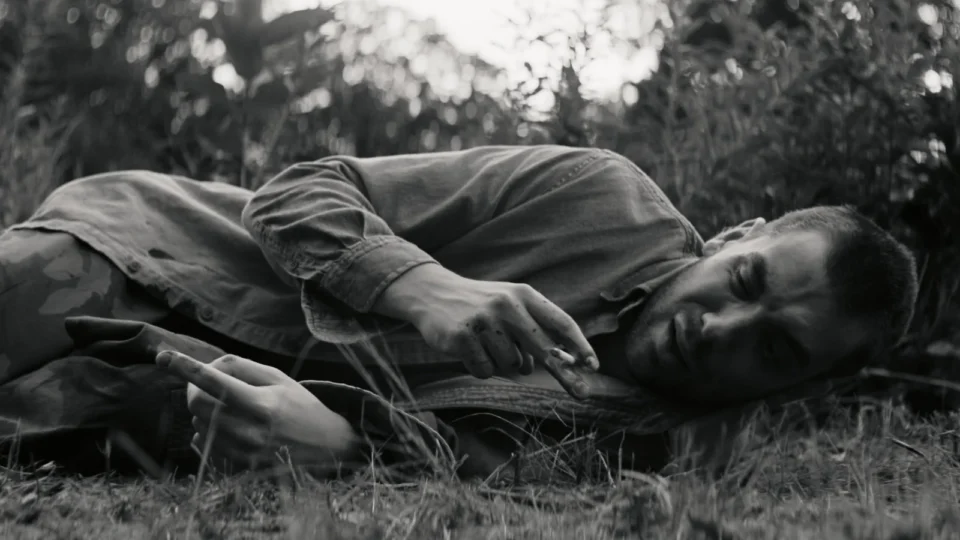
Michael Lavine’s The Wanderer is the kind of stripped-down, high-concept filmmaking that reminds you why the short-form medium exists. It’s essentially a two-man philosophical standoff staged in the middle of a desolate meadow, trading high-octane action for a heavy, atmospheric exploration of mortality and the absolute burden of time. It’s minimalist, sure, but the thematic weight it carries is massive.
The setup is lean: we meet Hopper (Cody Kostro), a man on the brink of death, literally hovering at the finish line. He’s interrupted by Morana (Alice Kremelberg), an immortal woman who looks divine but carries the visible exhaustion of someone who has lived a thousand lives too many. She offers him a deal a chance to walk away from the reaper but there’s a catch. He has to take her place in a cursed, eternal loop. To seal the pact, he doesn’t just sign a contract; he has to pull the trigger and kill her. It’s a grim, poetic exchange that forces a reckoning with what it actually means to exist versus what it means to truly live.
With only two characters on screen, the performances have to be airtight, and Lavine hits the jackpot here. Alice Kremelberg is mesmerizing as Morana. She speaks in an Early Modern English dialect that feels ancient without being theatrical, grounding her in a history that spans centuries. You can see the erosion of time in her posture. She isn’t a superhero; she’s a prisoner of time, and her envy of Hopper’s mortality is the film’s most haunting element. It flips the script on the classic “fountain of youth” trope, presenting immortality not as a gift, but as eternal solitary confinement.
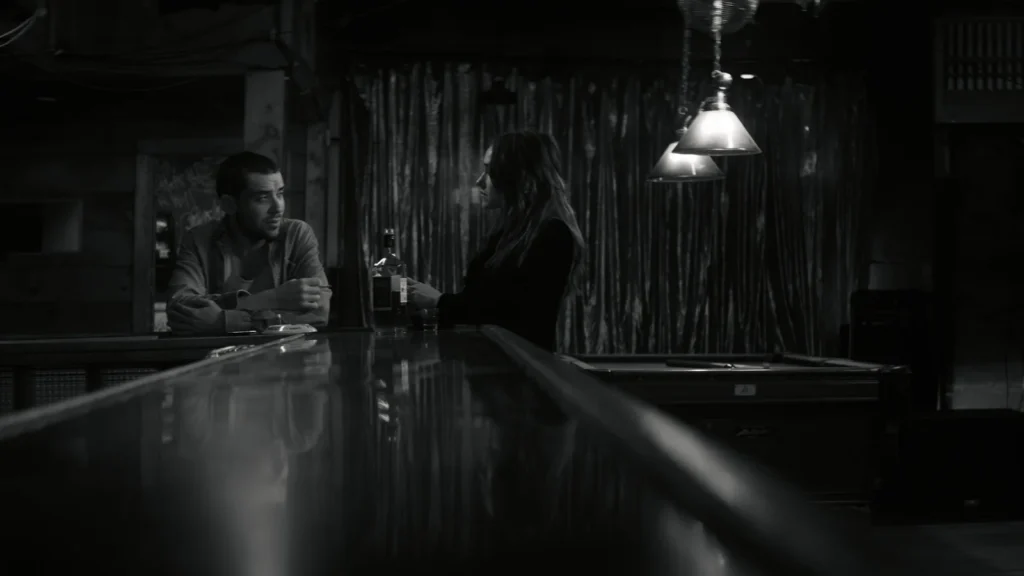
On the flip side, Cody Kostro plays Hopper with a grounded, quiet vulnerability. He isn’t begging for his life. Instead, he meets this supernatural offer with a skepticism that feels incredibly human. He’s a man who has already made his peace with the end, and watching him weigh the “gift” of life against the reality of the cost is fascinating. His hesitation isn’t just fear, it’s a search for truth in a moment that feels completely surreal.
From a technical standpoint, Lavine’s decision to shoot in black and white is a masterstroke. It gives the meadow a stark, noir-inspired grit that perfectly matches the somber tone. Cinematographer Mott Hupfel utilizes soft, intentional lighting and tight framing to make the open field feel as claustrophobic as a locked room. Every shadow feels like it has weight, and every shot feels like it’s holding its breath, waiting for the inevitable.
Then there’s the car a classic Plymouth that Morana drives. In a film this lean, every prop has to pull its weight, and this car feels like a weary companion that has traveled through time right alongside her. It’s a relic of the road, a piece of technology that, much like Morana, is just waiting for the engine to finally stop.
The film’s conclusion is where it really sticks the landing. When Hopper refuses the offer, it doesn’t feel like he’s giving up; it feels like an act of defiance. He chooses the dignity of an ending over the hollow promise of forever. It leaves Morana to fade back into the shadows, a tragic figure destined to keep wandering, likely looking for the next soul to tempt at the crossroads.
The Wanderer isn’t going to be for everyone. It’s slow, it’s pensive, and it asks more questions than it answers. But for those of us who appreciate film as a vehicle for big ideas and meticulous visual storytelling, it’s a rare find. It’s the kind of project that sticks with you, forcing you to brood over a simple, impossible question: if you were at the end of the line, would you take the deal?
Immortality is usually sold as the ultimate upgrade, but Lavine makes a compelling case that the finish line is what actually gives the race its value.