

There are films you watch with your brain and films you watch with your eyes. The best films demand both simultaneously. Cinematography — the actual craft of capturing light — can be as expressive as any screenplay, as character-revealing as any performance. The last decade has produced some of the most visually inventive films in the history of the medium, works where the image itself tells stories that words simply can’t reach. These are ten of the greatest.
- Blade Runner 2049 (2017)
Roger Deakins waited decades for his Oscar, and this was the film that finally made the Academy’s collective failure to recognise him look too absurd to continue. Every frame is a painting — vast, lonely, lit by fires and sodium light and the cold blue of a dying planet. The scale of the visual achievement is staggering.
- Moonlight (2016)
James Laxton’s cinematography for Barry Jenkins’ film is intimate in a way that big-budget cinema rarely achieves — shooting on film, pushing into handheld close-ups that create a tenderness between camera and subject that feels almost private. The pool scene in the first act is one of the most beautiful sequences in modern cinema.
- Roma (2018)
Alfonso Cuarón shot his most personal film himself, in black and white, with 65mm cameras, in long takes with slow pans that gradually reveal the scope of a Mexican middle-class household in the 1970s. The beach scene is breathtaking. The control of negative space is unlike almost anything else in mainstream cinema.
- Cold War (2018)
Łukasz Żal’s Academy Award-nominated work for Paweł Pawlikowski follows up Ida with another gorgeous black-and-white Academy ratio film — but where Ida was still and contemplative, Cold War crackles with romantic energy and political tension. The jazz clubs of Paris have never looked so exquisitely grim.
- The Lighthouse (2019)
Robert Eggers and cinematographer Jarin Blaschke shot on nearly-expired orthochromatic film stock, in a boxy 1.19:1 aspect ratio, to create a film that looks genuinely like it was made in the 1930s. The black and white grain, the expressionist shadows, the way the light of the lighthouse functions as both beacon and horror — it’s extraordinary.
- Portrait of a Lady on Fire (2019)
Claire Mathon’s cinematography for Céline Sciamma’s film is built around the ethics of looking — who can look at whom, what it means to be seen, how desire manifests in sustained attention. The warm, painterly light of the Brittany coast, the candle-lit interiors, the green-tinted opera sequence — every image earns its place.
- Beau Is Afraid (2023)

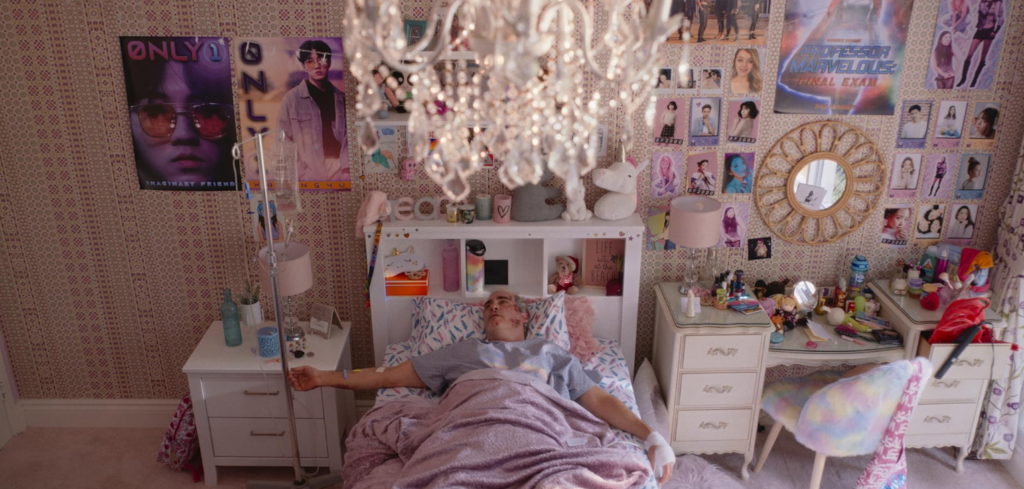
Ari Aster and Pawel Pogorzelski’s hallucinatory nightmare about a man’s journey to his mother is cinematographically ambitious to the point of madness — blending photorealism, animation, theatrical staging and surrealist distortion. It’s deliberately overwhelming, and the images stay with you long after you’ve decided what you think of it.
- All Quiet on the Western Front (2022)
James Friend’s Oscar-winning work transforms the mud and blood of World War One into images of terrible beauty. The German production brings a freshness to a much-filmed subject with an almost documentary closeness to bodies in extremis. The contrast between pastoral beauty and industrial slaughter is never more starkly rendered.
- The Handmaiden (2016)
Chung Chung-hoon’s work for Park Chan-wook’s erotic thriller is among the most visually opulent films of the decade — all elaborate period design, secret passages, and a camera that becomes complicit in the film’s games of concealment and revelation. The garden sequence is ravishing.
- Memoria (2021)
Apichatpong Weerasethakul’s film is almost impossible to describe — a Colombian-set meditation on sound, memory, and the experience of time, shot by Sayombhu Mukdeeprom in images of extraordinary stillness. The film played without subtitles in some contexts and without streaming release, insisting on its status as an event rather than a commodity.
— — —
Cinematography is the art that most film criticism underserves. These ten films are a reminder that the image — not the story, not the performance — is cinema’s most fundamental element. Look harder.