Director Boots Riley publicly criticizes Martin Scorsese’s advisory position at generative AI firm Black Forest Labs, igniting a fresh debate about the industry’s relationship with artificial intelligence.
The film industry’s ongoing reckoning with artificial intelligence has taken a newly personal and pointed turn, with director Boots Riley publicly criticizing Martin Scorsese after the Oscar-winning legend accepted an advisory role at generative AI company Black Forest Labs. Riley, the filmmaker behind the critically acclaimed ‘Sorry to Bother You,’ did not mince words in his public statement, suggesting that Scorsese’s move represented an attempt to push the broader industry toward the adoption of generative AI tools — a direction many creatives remain deeply wary of.
Riley further implied that financial incentives may have played an outsized role in Scorsese’s decision, suggesting the legendary director was offered substantial compensation to lend his name and credibility to the AI firm. The comments immediately reverberated across Hollywood’s creative community, drawing both agreement and pushback from directors, writers, and actors who have been watching the industry’s AI negotiations with growing anxiety since the twin guild strikes of 2023.
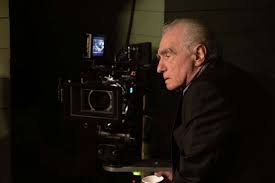
Scorsese, who at 83 remains one of cinema’s most revered living directors, has not publicly addressed Riley’s criticisms in detail. His association with Black Forest Labs signals a meaningful shift, however, coming from a filmmaker long considered the gold standard of artisanal, human-driven moviemaking. His legacy includes ‘Taxi Driver,’ ‘Raging Bull,’ ‘Goodfellas,’ and ‘The Departed,’ films that are widely studied as exemplars of craft.
The dispute arrives as the film industry continues to navigate a complex and evolving landscape around AI-generated imagery, AI-assisted scriptwriting, and the use of digital tools to de-age or recreate actors’ likenesses. The 2023 SAG-AFTRA and WGA strikes won important protections against certain uses of AI, but many in the industry argue those protections have not kept pace with the speed of the technology’s development.
Black Forest Labs, backed by significant venture capital, specializes in high-fidelity image and video generation. The company’s association with a director of Scorsese’s stature is widely seen as a branding coup designed to lend the firm cultural legitimacy. Industry observers note that the move mirrors a broader pattern of tech companies seeking Hollywood credibility as AI tools inch closer to mainstream production pipelines.
The debate is unlikely to be resolved quickly. Multiple union leaders have indicated that AI clauses will be a central battleground in upcoming contract renegotiations. In the meantime, the Scorsese-Riley exchange has crystallized two very different visions for what Hollywood’s future looks like — and who, if anyone, holds the moral authority to define it.