


The concept of home is so often tied to a physical place, but for many of us, it’s really about a person, a memory, or a version of ourselves that we’ve outgrown. Mimi Davila’s short film ‘Pangea’ explores this delicate, aching longing through a deeply personal lens, delivering a short film that gracefully weaves identity and displacement into a complex, messy romance.
Written, directed by, and starring Mimi Davila, ‘Pangea’ unfolds over a single day and night in New York City. We follow Rita (Davila), a passionate painter visiting from Miami, as she reconnects with her ex-lover, Echo (Sasha Merci). From the very first frame, it’s beautifully obvious that this isn’t some cozy reunion built on cheap nostalgia. There is an undeniable tenderness between them, but it’s heavily layered with resentment, unspoken pain, and a lifetime of emotional baggage that neither woman is fully prepared to unpack.
Mirroring the Soul
I believe what makes this shot worth the attention is how it uses their reunion to open the door to much larger conversations about race, belonging, and creative fulfilment. Echo and Rita aren’t just exes fighting over old wounds; they are two women desperately wrestling with their place in the world. In one of the film’s most devastating moments, Echo snaps, “I have a career, what you do is a joke.” It’s a line dripping with bitterness, made all the more heartbreaking by Echo’s abandonment of her own love for photography. It forces us to wonder, is Echo truly dismissing Rita’s art, or is she just projecting her own deep-seated disappointments?
Mimi Davila gives an incredibly raw, magnetic performance as Rita. A character who is energetic, fiercely self-absorbed, and at times completely exhausting, yet beautifully grounded. Sasha Merci balances her perfectly as Echo, offering a quieter, more restrained presence. Their chemistry feels so effortless and authentic that you believe every single ounce of their shared intimacy and conflict.
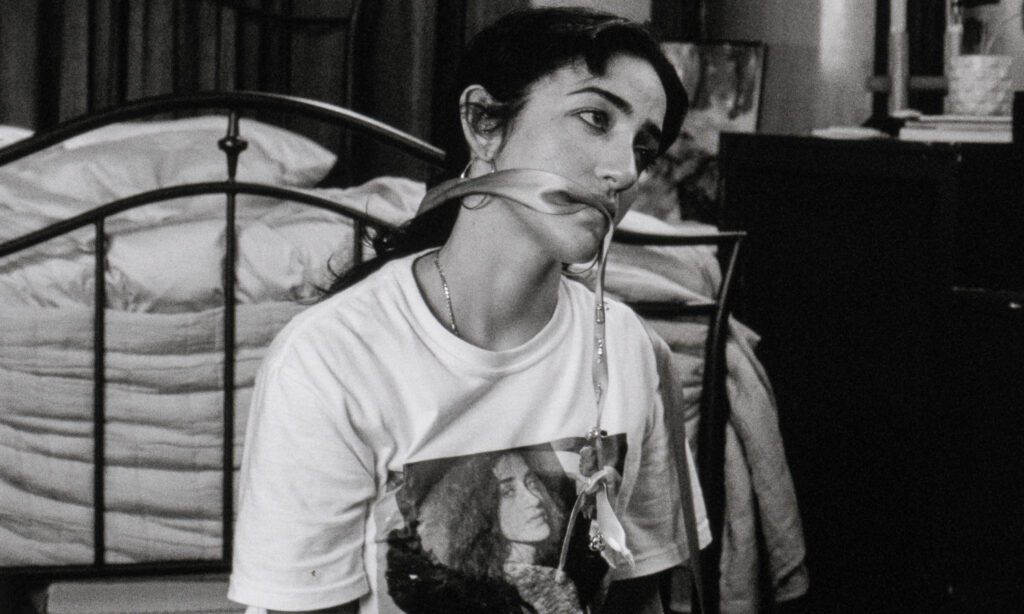
Textures of Uncertainty
Visually, ‘Pangea’ makes some creative, poetic choices. The film is shot entirely in black-and-white palette, filled with grainy textures that make the story feel like it exists in its own timeless emotional universe rather than a literal New York. The handheld cinematography is also a very deliberate touch. The subtle shakes and raw imperfections perfectly mirror the emotional instability hanging over every scene. Even the intimate moments are handled with such intention, serving as a silent language for the complicated bond still tying these women together.
The Verdict
If the film stumbles at all, it’s simply because it leaves us unsatisfied. At just fifteen minutes, the credits roll right as the most compelling questions are left hanging in the air. We’re left wondering if this reunion brought them closure or just reopened old wounds. Yet, maybe that beautiful ambiguity is the whole point Mimi Davila was going for with this film.
Pangea leaves a lasting impression on your heart. Perhaps it gently invites you to reflect on identity, belonging, and the people we sometimes mistake for home.

5/10