

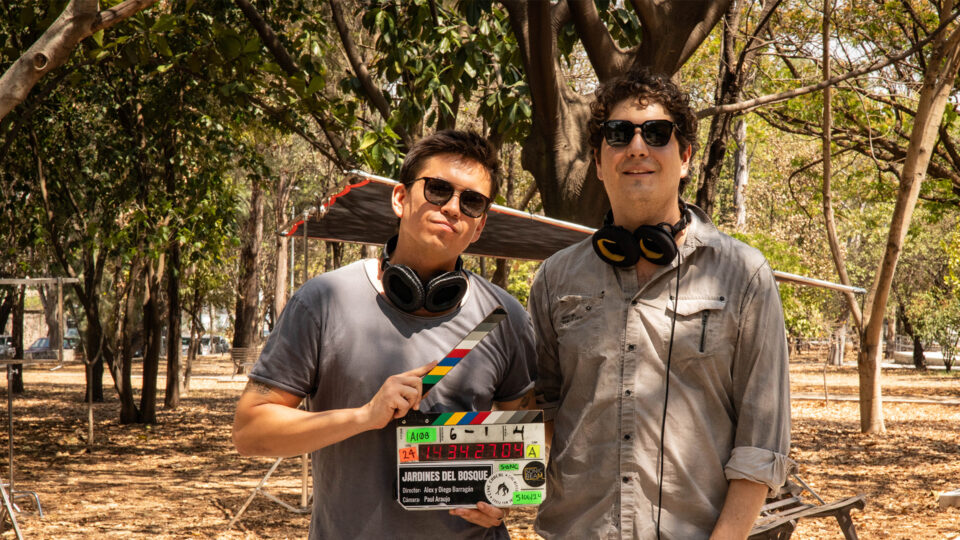
Coming-of-age stories so often invite us to look back on our childhood through a soft, nostalgic lens, but brothers Alex and Diego Barragán’s ‘Jardines del Bosque’ asks us to remember something a little more complicated. Set against the familiar, sun-drenched streets of Guadalajara, the film follows a group of young friends whose fascination with a neighbourhood girl’s disappearance slowly transforms from an innocent adventure into a deeply painful awakening.
Drawing from the bittersweet realities of growing up in a society where violence can quietly become part of everyday life, the Barragán brothers craft a story that is as much about the beauty of friendship as it is about the heartbreaking loss of innocence.
In our cozy conversation, the filmmakers open up about the inspirations behind the film, their intuitive creative process, the joy of working with such talented young actors, and why some of life’s most defining lessons arrive long before we’re ready for adulthood.
- Alex Barragán and Diego Barragán, can you each tell us what exactly drew you into filmmaking?
AB: I think the thing that gives the most meaning to my life is storytelling. Ever since I was a child, I was creating stories with toys and imaginary worlds. Later, music became another way for me to express ideas and emotions through narrative. As an adult, I worked as a photographer, creative director, and graphic designer, and each of those experiences taught me a different way of communicating with people. Filmmaking became the place where all those skills came together. For me, cinema is the most complete language I know, a medium where image, sound, music, performance, and storytelling can all work together to create something meaningful.
DB: I agree, I think filmmaking is one of the most complete forms of art, and its the one I understand the most. I love telling stories through cinema as well, but I also love the fact that cinema can go even beyond storytelling. Movies can be used to express abstract ideas, thoughts and most importantly I like to think about it as a vehicle for empathy. Through film, we can experience lives, cultures, and perspectives that are completely different from our own. Some of the most important lessons I’ve learned about people and about the world came from watching movies.
- ‘Jardines del Bosque’ is rooted in a very specific reality in Guadalajara. How did growing up in that environment shape the emotional core of the story for both of you?
AB: Although we didn’t live the exact events portrayed in the film, we grew up hearing stories like these in the news and from people around us. We know what it’s like to grow up in an environment where violence has become normalized. What interested us most was exploring how that reality affects children. We rarely talk about the emotional impact these experiences have on young people and how they shape the adults they eventually become. That idea became the emotional core of Jardines del Bosque.
DB: Rooting the film in Guadalajara is actually what drew me to the project in the first place. For me, that was the key difference between our story and many of the coming-of-age films that inspired us. I had seen countless stories about childhood, friendship, and the loss of innocence, but I had never seen those themes explored in the places and cultural context I grew up with. There was something very meaningful about taking emotions that are universal and grounding them in a reality that felt deeply familiar to us.
- The narrative itself seems deeply concerned with memory and how we remember childhood, trauma, and how certain experiences change our lives. How important was it for you to capture these themes through film?
AB: For me, the transition from childhood to adulthood is the moment when “the trick is revealed.” You begin to see the world as it really is, and the innocence and certainty of childhood start to disappear. I find that process both beautiful and heartbreaking. That idea was central to the film. We wanted Jardines del Bosque to feel like a memory, something remembered with both nostalgia and pain. From the adult narration to the use of different camera formats, every creative decision was made to evoke the feeling of looking back on a moment that changed your life forever.
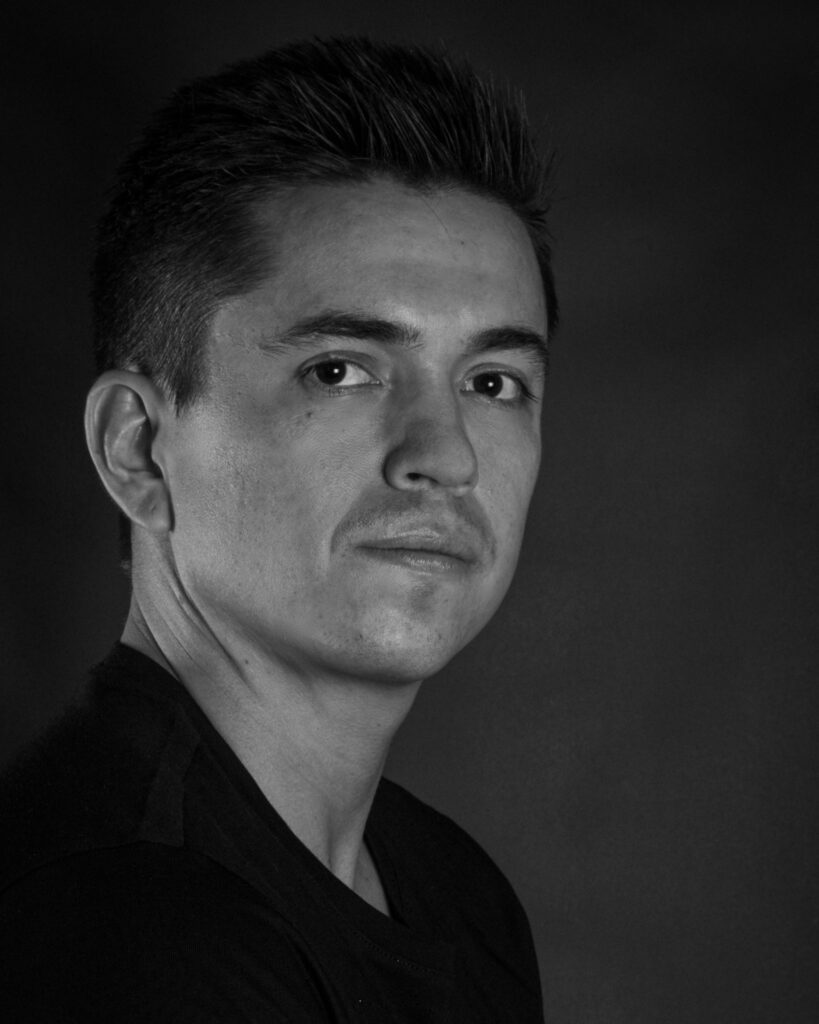
- The film begins with the feeling of a nostalgic coming-of-age mystery, but gradually transforms into something much darker. At what point did you realize this was the tone you wanted to pursue?
AB: From the very beginning. We always knew we wanted the film to start as a nostalgic coming-of-age story and gradually transform into something darker and more unsettling. That shift is directly connected to the film’s central idea: the loss of innocence. As children, the world can feel adventurous and full of mystery, but growing up in an environment touched by violence means eventually confronting a much harsher reality. We wanted the audience to experience that transition alongside the characters.
- How did the collaboration between the two of you function creatively on set? Did each of you naturally gravitate toward different responsibilities?
AB: Yes, absolutely. We have different skill sets that complement each other, and we tried to make the most of that throughout the process. We would first align on the overall vision for a scene or sequence, making sure we both knew exactly what we wanted to achieve. From there, we could divide responsibilities or focus on specific details depending on the situation. That collaboration allowed us to cover more ground creatively while always working toward the same goal.
DB: We try to make all the major creative decisions before we arrive on set, so by the time we’re shooting, we’re usually very much on the same page. One of the biggest advantages of co-directing is that whenever one of us becomes too focused on a particular detail, the other can step back and look at the bigger picture.
- How did your previous experiences in film prepare you for a project this emotionally layered?
AB: This wasn’t our first time working within the coming-of-age genre, so I think our previous projects helped us better understand how to balance tone and guide the audience through different emotional states. We also had prior experience working with young actors, which was incredibly valuable. A film like this depends heavily on authentic performances, so knowing how to build trust with children and help them reach the emotional truth of each scene was something we carried into Jardines del Bosque.
DB: I don’t think directing a film is something that ever gets easier. Even when two projects seem similar on the surface, there are always new challenges, and in many ways, it always feels like the first time. What I did carry with me from that experience was a deeper understanding of childhood. One of the most important things I learned is that children experience joy, fear, grief, confusion, and guilt just as intensely as adults do. Their emotions are not smaller or simpler; they’re just experienced differently.
- How did you work with cinematography and production design to recreate the texture of summer in Guadalajara during 2014? And what were some of the challenges you encountered with that?
DB: To be honest, one of the advantages of setting the film in 2014 is that the world hasn’t changed as dramatically as it would have if we had set it in the 80s or 90s. Many of the locations still look the same, and a lot of the atmosphere we remembered from that period is still present today. We certainly paid attention to details like phones, costumes, and technology, but we never approached the film as a meticulous period piece. With our budget, recreating every aspect of 2014 would have been impossible, and more importantly, it wasn’t really the goal. What mattered most to us was capturing the emotional truth of growing up in Guadalajara during that time. If the audience believes in the characters and their experiences, then the period details become part of the world rather than the focus of it. We always try to stay true to the world we’re portraying. For us, the goal is not to make everything look “pretty,” but to make it feel authentic.
- What was the casting process like, and how did you settle on the children who starred in this film?
AB: Creating a believable friendship was our biggest priority, so we held an open casting call and reviewed hundreds of young actors. We had always imagined Maximiliano Nájar as Santos, and his audition confirmed that instinct immediately. Finding the right Daniela and Lechuga took longer, but once we saw Daphne and Beto together with Max, their chemistry felt completely natural. For Arlette, we needed someone charismatic and unforgettable, and Fiona Palomo was an obvious choice from the moment we met her.
- Working with child actors requires patience and trust. What did the young cast teach you about storytelling that adult actors rarely do?
DB: I think child actors are as smart and capable as adult actors. I try to talk to them exactly as I would to any other actor. However, I do think that there is a certain energy, excitement and lack of ego that comes from child actors that is very refreshing. Sometimes, as adults, we become very conscious of technique or self-awareness, while children are often more willing to fully commit to the moment.
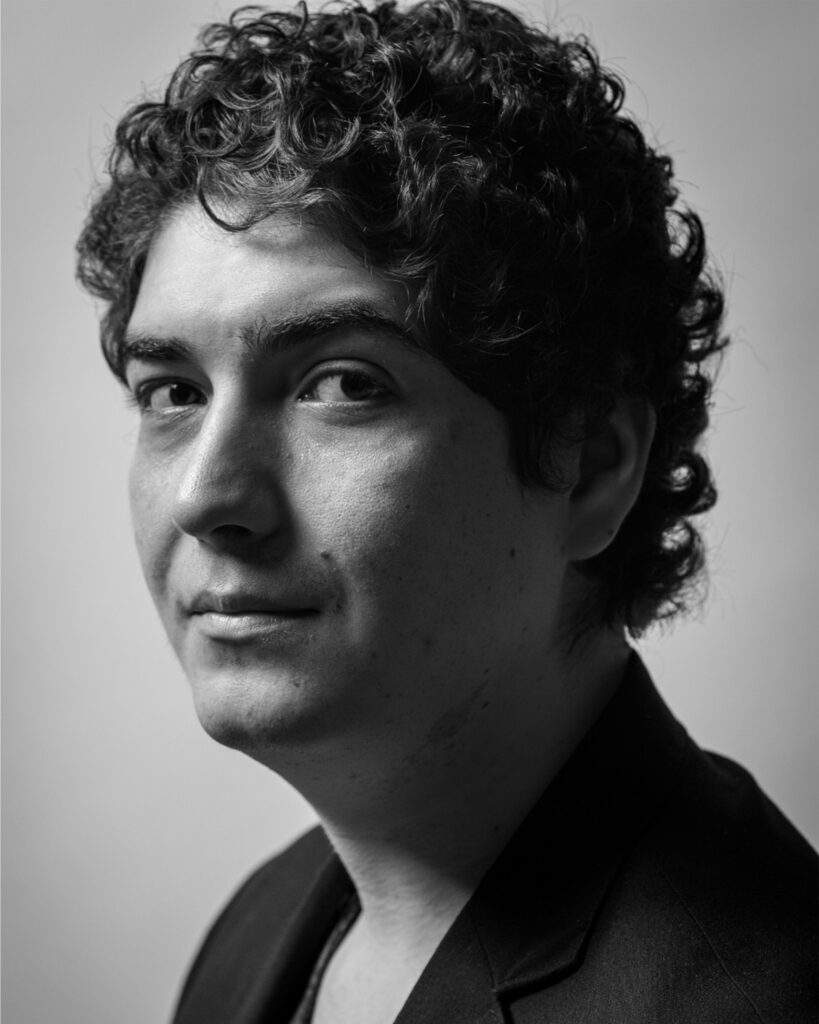
- The film ends in an interesting way. Was it difficult resisting the temptation to give audiences a clearer sense of closure?
AB: Not really, because from the beginning we always wanted the ending to feel bittersweet and nostalgic. We weren’t interested in providing a neat resolution, because the story is really about a transition in the characters’ lives rather than a final destination. We also wanted to acknowledge that violence doesn’t simply disappear. The children don’t save the day or solve everything; instead, they are forced to grow up and learn how to move forward after an experience that changes them forever.
- After spending years immersed in this story, what stayed with you emotionally once filming and editing were finally complete?
AB: I feel incredibly proud of what we accomplished. It was a long and sometimes exhausting process, but I genuinely love the film we ended up making. What stays with me the most now is seeing how audiences respond to it. People tell me that it moves them, makes them laugh, reminds them of their own childhood, or brings back memories they hadn’t thought about in years. For me, that’s what filmmaking is all about: creating stories that help people connect with emotions within themselves.
- Lastly, what conversations do you hope younger audiences in Mexico, especially, and around the world will have after watching ‘Jardines del Bosque’?
AB: I hope younger audiences leave the film thinking about how the world around them shapes who they become. Violence, fear, and loss are often discussed in terms of statistics or headlines, but rarely through the experiences of children living through them. At the same =me, I hope the film sparks conversations about friendship, memory, and the loss of innocence. Ultimately, I would love for audiences to reflect on their own childhoods and the moments that changed the way they see the world.
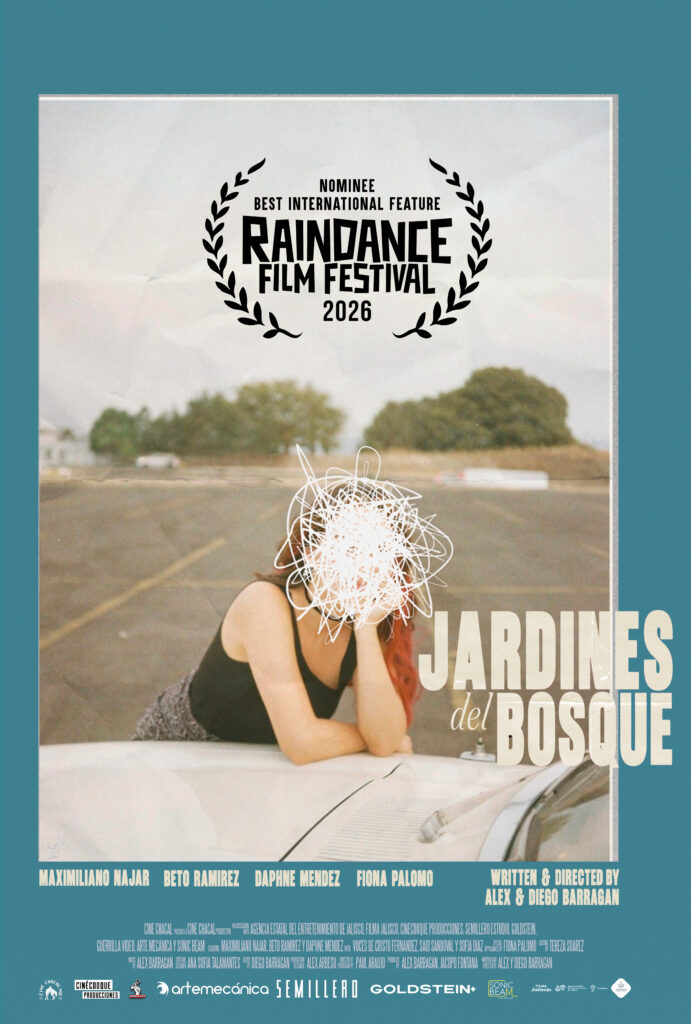
Throughout our talk, Alex and Diego Barragán kept returning to a simple, yet powerful idea: the experiences that shape us as children never truly leave our hearts. While ‘Jardines del Bosque’ is rooted in a distinctly Mexican reality, its tender themes of friendship, memory, and the fear of growing up resonate so beautifully far beyond Guadalajara.
Rather than offering easy answers, the film gently invites us to reflect on the specific moments that altered our own understanding of the world and the people we eventually became because of them. It is this delicate blend of honesty, empathy, and emotional authenticity that makes ‘Jardines del Bosque’ linger in your mind long after the credits roll, reminding us that some mysteries are less about what actually happened and more about how they forever change the ones left behind.