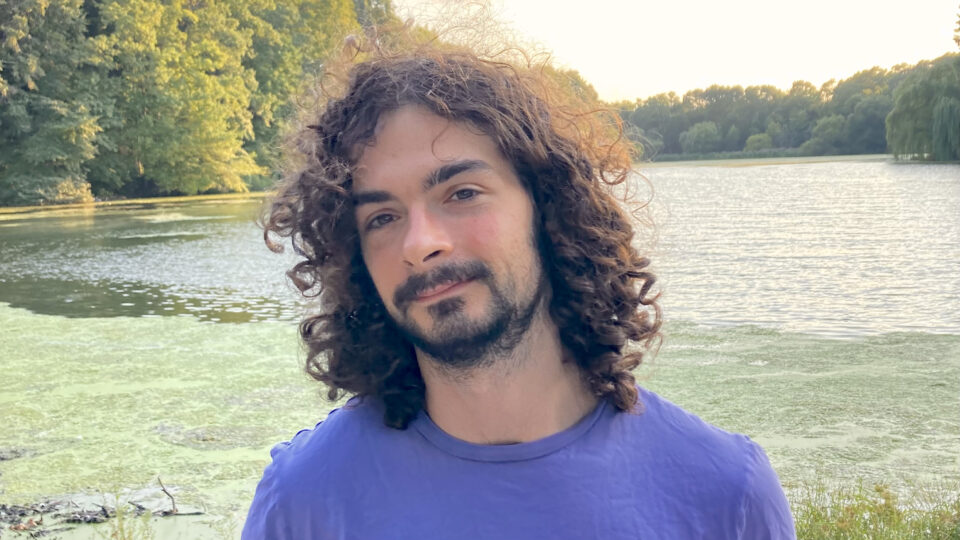
Andrew Garbus’ ‘Everything I Own’ is a hell of a lot more than just a documentary about a marriage falling apart or a family house that is being put up for sale. It’s a raw, deeply personal autopsy of memory, identity, inherited trauma, and the unspoken weight that binds families together.
What kicked off as an attempt to capture one high-tension week turned into a brutal, decade-long journey of self-reflection, forcing Garbus to square up not only to his parents’ collapsing relationship, but to his own heavy battles with mental health, grief, and growing up.
In this candid interview, the first-time feature director drops his guard about turning the lens on his own bloodline, the punishing emotional toll of wrestling with the edit for nearly ten years, and why he firmly believes that when you strip away the bullshit and make a story entirely personal, its emotional truth hits everyone right in the chest.
1.Andrew Garbus, can you tell us exactly at what age you decided to be a filmmaker and how did you come to settle on documentary filmmaking instead of fictional?
Andrew: I started making home videos on my parents’ Panasonic camcorder when I was three years old, and I actually consider those my earliest films, with the very first one even serving as the spine of ‘Everything I Own’. But I would say I really decided I wanted to be a filmmaker when I was 15. Before that, I was obsessed with movies, wrote film reviews and essays, and had already been writing scripts for a few years, but becoming a director still felt like this far-fetched dream. Then, in tenth grade, my English teacher encouraged me to take a script I’d written for an extra-credit assignment and actually turn it into a short film, and afterward I remember thinking, “Oh, I can do this.” As for documentaries, I don’t know that I ever consciously chose them over fiction. I sort of fell into documentary filmmaking over the past ten years, partly because Everything I Own took that long to make and partly because that was the filmmaking community I found my way into. Ultimately, I think the idea itself determines whether I approach a project as a documentary or a narrative film.
- Everything I Own is an incredibly intimate documentary. At what point did you realize this wasn’t just a personal archive, but a story that deserved to be shared with the world?
Andrew: I was in my last year of film school and going through a pretty difficult period in my life. My thesis film, A Song for Danny, had been my main goal as a student, and while I was really proud of what my team and I made, I was frustrated that it didn’t connect with audiences emotionally in the way I had hoped. Before that, I had made a short documentary about my grandfather with Alzheimer’s called SOL, and I would watch people respond to it very differently, often becoming deeply emotional because they saw something in that story they could relate to. That made me ask myself what other experience in my own life might have that same kind of resonance, while also being something I could realistically find a way to film. The answer became pretty obvious: my parents’ divorce and, ultimately, the process of moving out of our family home. So in that sense, Everything I Own was always meant to be shared with others, and the intensely personal approach was simply the most honest way I knew how to tell it because I really believe that the more personal you make something, the more universal it can become.
- You were simultaneously the filmmaker, the son, and one of the subjects of the film. How did you navigate those constantly shifting roles during production?
Andrew: Uncontrollably, haha. I think a lot of the turmoil you see from me over the course of the film comes from the tension between the hopes, dreams, vision, and responsibilities I had as a filmmaker and the grief, trauma, guilt, and rage I was carrying as a son. I was aware of myself as a subject to some extent, especially before production when I was figuring out what coverage I needed to capture the emotional material I was after while also, frankly, covering my ass in edit. But in the moment, I don’t think I was ever able to view myself with that much distance. That really came later, once I got deeper into the editing process and had to start looking at myself less as the person who experienced those moments and more as a character within the story.
- The documentary spans one emotionally intense week, yet it carries the emotional weight of decades. How did you decide what moments from your family’s past were essential to include?
Andrew: There’s the plot of the film, and then there’s the story, and figuring out what to include from the past really came down to what the present-day material needed. The plot is very simple and chronological: the family has seven days to move out, with the tag sale, packing, and moving day giving us this clear structure to follow. But underneath that is the larger story of three family members grappling with their history, their fractured relationships, and what this house and family have meant to them. So when we brought in something from the past, it needed to add context, contrast, or emotional depth to what was happening in the present, rather than just being interesting on its own. A lot of those ideas came up repeatedly in interviews, so the challenge was finding the version that expressed something most clearly and then placing it at the exact point where it would deepen what the audience was already seeing. In that sense, we were constantly trying to strand together the film’s DNA, figuring out when the past and present should run alongside one another and when they needed to collide.
- Your parents’ separation forms the backdrop of the film, but the story ultimately becomes much larger than divorce. What did you discover about your family that surprised you the most?
Andrew: I think the most immediate discovery was a real reckoning with how much my mental health struggles had impacted my family, in ways I wasn’t fully aware of before making the film. As we continued editing and began showing the film to more people, something else surprised me: just how open and honest my parents had always been. They aren’t perfect, and our family dynamics were certainly complicated, but compared with many of the people who gave us notes over the nearly ten years we spent editing the film, I began to realise how unusual their willingness was to talk so candidly about difficult, painful subjects.
That emotional transparency was always present in my family, even when the dynamics themselves were messy. It’s something I didn’t fully recognise or appreciate growing up, and something I’ve come to value much more deeply through making the film.
- Did your parents have any reservations about appearing in such a deeply personal film?
Andrew: Shockingly, to most people, the answer is no. My parents were already very used to me filming things, and they’ve always been supportive of my filmmaking to a large extent. My dad, in particular, has appeared in almost every film I’ve made since I was a kid, so the idea of being on camera wasn’t especially out of left field for either of them. From the get-go, we also talked about the fact that, for the film to resonate with people who had been through anything remotely similar, we all had to be comfortable showing our family honestly and transparently. That said, there was certainly a lot of conflict around making the film while we were also trying to pack up and move out of the house, and you see much of that tension play out in the film itself. As I edited over the years, I regularly showed cuts to my parents, partly, selfishly, because I wanted another set of eyes on the film, but also because I wanted to make sure they understood what the film was becoming. They never asked me to remove anything or expressed that what I was making crossed a line for them.
- The house almost feels like another character in the documentary. What did that home come to represent for you by the end of the filmmaking process?
Andrew: There’s a moment in the film where I say that the house represented stability to me, something that gave me a sense of ground to stand on. I still feel that way, and I’ve never really found anything that functions as a replacement. Everything else has felt more impermanent, and maybe that’s because I rent now, or maybe it’s simply because I’m older and understand that, for most people, homes aren’t lifelong places. I’m not entirely sure. The house also came to represent my adolescence and my family as I knew it then. So saying goodbye to it meant saying goodbye to that version of my life. In that sense, ‘Everything I Own’ is not only a story about grief and loss, but also a coming-of-age story about realizing that the things we believe are permanent, and that provide us with a sense of safety and innocence, don’t last forever, and about trying to figure out how to move forward without them.
- Looking back now, do you think the Andrew who started making this film is the same Andrew who eventually finished it?
Andrew: No, definitely not, and the strange thing is that I think that’s true in some ways for the better and in some ways for the worse. For the better, I think I’m much kinder and more empathetic now than I was when I started making the film, in part because of the experience of making it. At the same time, I’ve had experiences since then, and I think the world has changed in ways that have made me less trusting of other people, so maybe I was more naive then. I also don’t think I would make this film today if the same events were unfolding, but once I got into the edit, I felt like I had been given a gift in the material and had a responsibility to honor it as best I could. We had captured something incredibly rare, intimate, and beautiful, and it was up to me to shape that material into a story that did it justice. There were many times over the years when I thought I should give up, but actually doing so never felt right, and finishing the film became an obligation to the people in it, to the material itself, and to the person I was when I first came up with the idea.
- The film explores inherited pain and generational patterns. Were there conversations with your parents that fundamentally changed your understanding of your own life?
Andrew: Oh, most definitely. There are several moments in the film where my parents talk about my grandparents on both sides, and I started to realise how much my parents are products of both the best and worst qualities of their own parents, and how much I’m a product of the best and worst qualities of mine. One conversation with my mom really crystallised that for me, when I asked her about how much she used to yell at my brother and me as kids and whether she thought that was a good way to parent. She said no, but explained that her own mother yelled, and that was the model of parenting she had been given. I then started recognising that same pattern in myself, especially in how much I yell in the film and how I used to react in my everyday life when I became really emotionally distressed. That realisation has made me much more conscious of where those reactions come from, and I try now to respond differently so I’m not just passing the same patterns on to the people in my life now or to family I may have in the future.
- Mental health played an important role in both the timing of the project and your personal journey. How did making the film affect your own healing?
Andrew: It had a huge impact on me, although I hesitate to use the word healing because I think there’s always more work to be done. Over many years, I had to repeatedly watch a version of myself during one of the worst weeks of my life, and honestly, I didn’t like a lot of what I saw. What was even harder was realizing that, while I was editing the film, I was still repeating some of those same emotional loops and behaviors in my everyday life. At the same time, I was grieving the life I once had, and watching those home videos of how happy my family and I used to be could absolutely wreck me. Making the film forced me to make peace with both of those things and commit to becoming a better person, to living with less anger, pain, and hatred toward myself and other people. That work is ongoing, and I definitely don’t always succeed, but I do think I’m healthier, kinder, more understanding, and more self-aware than I was when I started the film, and my relationships with my family have largely improved because of that. The self-loathing hasn’t completely disappeared either, so every day still requires a commitment to putting in the work, trying to do better, and trying to feel better.
- There’s remarkable vulnerability in allowing audiences to witness your family’s conflicts and imperfections. Was there ever a moment you considered not releasing the film?
Andrew: No, I never seriously considered not releasing it. So much energy had been invested in the film by me and everyone who worked on it, especially my writing and editing partner Sean Szak Prasso, who stayed with the project out of pure passion and belief in what we had, and my family, who sacrificed a great deal both during production and throughout the years I struggled to finish it. I also had, and still have, a lot of hopes and dreams for what might come from the film, so not releasing it would have felt like a disservice to all of that, as well as to the idea and the material itself. On a personal level, I think it was important for me to see it through because I’m someone who struggles enormously with doubt, and I needed to prove to myself that I could carry this all the way to completion. Am I worried about how people might judge or treat my family because of the film? Absolutely. But I really admire the 23-year-old version of myself who believed, whether naively or wisely, that if you make something genuine, honest, and authentic, people will connect with it and meet it with kindness and respect. Releasing the film is also a way of honouring that belief, and of holding onto the idea that the best in people can still be reached.
- Lastly, how do you expect this film to be received by your audience?
Andrew: I know we’ve made a challenging film, and our premiere on July 22nd at the 46th San Francisco Jewish Film Festival confirmed that for me even more. In its craft and emotion, the film is incredibly raw, visceral, and immersive, and I really wanted viewers to feel like they were inside the house with us and, in some ways, inside the collective mind of the family. I think we succeeded in that, and because of that, the film asks a lot emotionally from the viewer, but I also think that’s what allows it to be so powerful and deeply moving. At the premiere, I was incredibly grateful to see how strongly people responded, especially in the conversations I had afterwards with audience members who saw themselves, their families, or people they knew reflected in the film, some of whom were visibly emotional while talking to me. Is it a film for everyone? Probably not, but I do think it has the potential to resonate very deeply with a larger audience than one might initially expect.
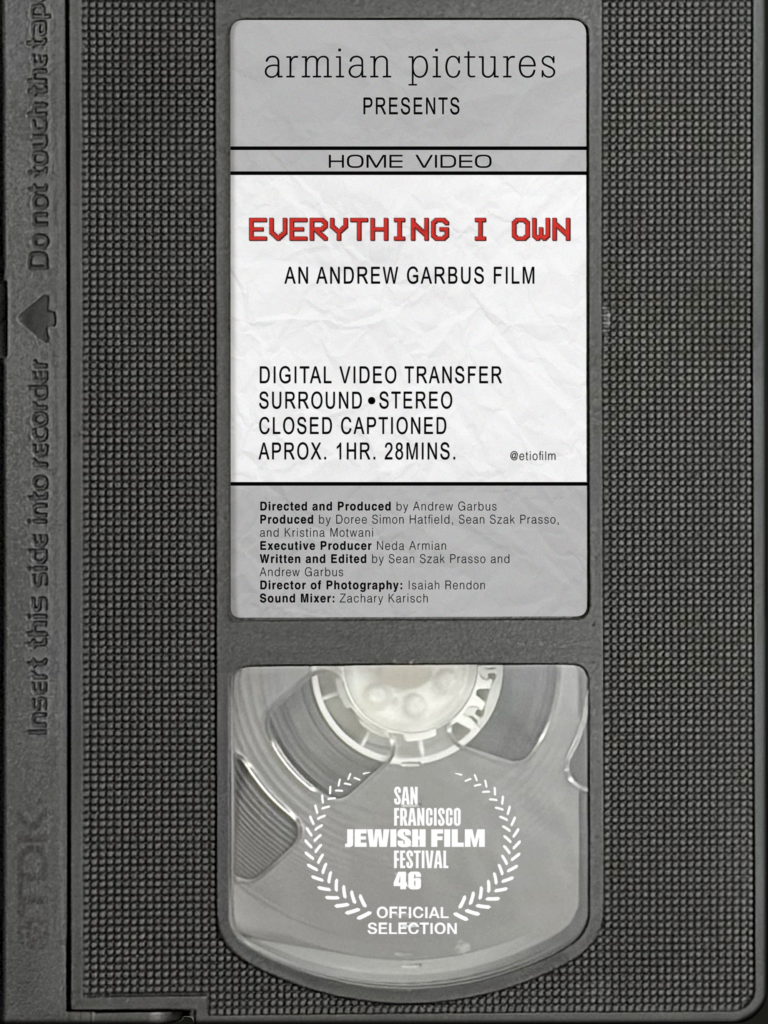
As ‘Everything I Own‘ makes its way into the world, it stands as a powerhouse reminder that documentaries don’t just passively watch life happen they give you the tools to make sense of the carnage. Garbus’ zero-fear willingness to lay bare the flaws, contradictions, and indestructible love within his family turns what could have been a private home video into a heavy, deeply relatable piece of cinema.
His total transparency forces you to look at your own backyard, the houses you’ve walked away from, and the heavy emotional baggage you’re still lugging around. By choosing absolute vulnerability over easy, cinematic answers, ‘Everything I Own’ becomes far more than a story about saying goodbye to a physical property; it’s a gritty, moving testament to forgiveness, resilience, and the relentless drive to rebuild yourself from the ground up after the dust finally settles.