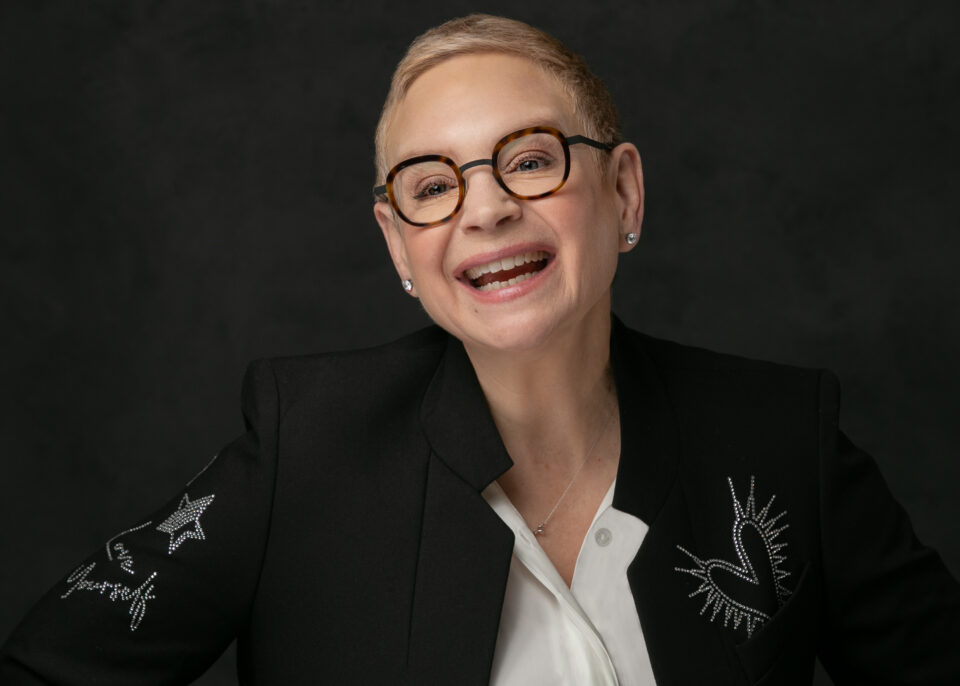
Some decisions carry an aching weight that only those who have walked through the fire can truly understand. For filmmaker Samantha Reynolds, pouring her heart into her latest work meant gently opening up a sacred conversation about the love, grief, and tender responsibility behind one of life’s most heartbreaking choices.
Her short film, ‘No Right Way’, follows Nadine and Johnny as a devastating late-pregnancy diagnosis leaves them cradling an uncertain future for their darling baby. Drawing from the quiet well of her own loss, Reynolds beautifully weaves live-action and soft animation together, inviting us into an emotional experience that is often too heavy for ordinary words.
In this intimate interview, she opens up about the raw instinct that compelled her to tell this story, the journey to find actors who could carry such delicate emotional weight, and her brave mission to create a safe space for empathy around a deeply personal, life-altering path.
- Samantha, thank you for sharing this beautiful film with us. Can you please tell us what inspired you to be a filmmaker?
Samantha: Since I was a teen, I have always been drawn to film as a medium to tell stories and spent much of my allowance and babysitting money on movie posters and memorabilia. For me, film is an ideal medium to share stories as it touches on all the human senses, except maybe touch. It is a way to broadly share deeply human experiences that can transcend all languages and cultures.
- Your film ‘No Right Way’ draws from a deeply personal experience. What brought you to the point where you felt ready to turn that experience into a film?
Samantha: It was purely instinctual. I had written a children’s story about the experience but something inside me said that I had to make this film and that it had to be shot before the end of 2025.
- The title acknowledges that there may be no clear answer to the situation this couple faces. How did that idea guide your writing?
Samantha: The only way it guided my story was that it was my truth as I was going through the process.
- How did you decide which parts of your own experience to bring into Nadine and Johnny’s story, and which parts to keep private?
Samantha: Of course, some of what the characters do and say are fictionalized but the core story was based on my experience. It wasn’t so much about what parts to keep private and others not; it was more about emotion. It was so important to me to have the audience feel as much as possible with the characters; as if they were right there with them making this choice.
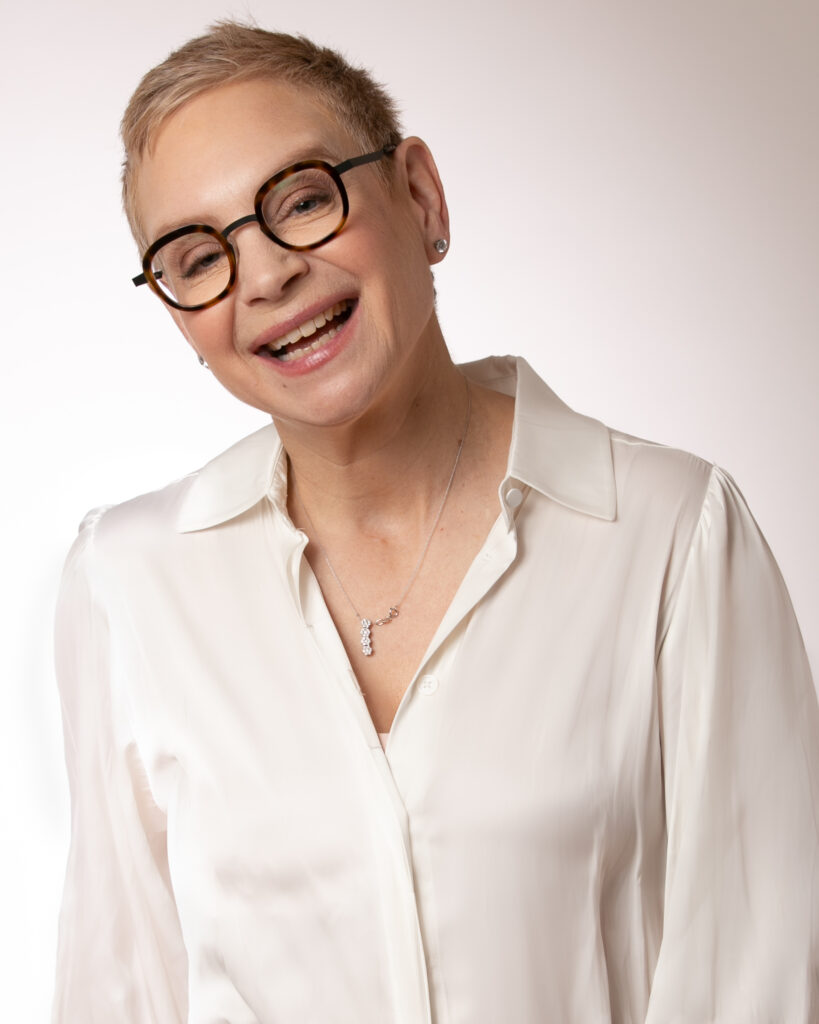
- Were there moments when your personal connection to the material made directing especially difficult, and how did you navigate them?
Samantha: Not especially. I had done much healing on my own before making the film and I was able to compartmentalize my emotions when I was on set. Where it became more difficult was in the editing process. There were a few scenes in the editing room where it hit me that most audience members would be experiencing this for the first time and how impactful that may be.
- The performances of the two lead actors are brilliant. What was the casting process like, and what specifically were you looking for in the actors that you might have considered?
Samantha: Great question. To me casting is one of the most important decisions a director has to make. I purposely cast actors who had an extensive theatre background and training. Coming from that kind of training myself, I knew the actors had to have the technique to be able to draw from deep within themselves at a moment’s notice as we only had three days to shoot.
- You chose to use an animation sequence to capture some of the details of this story. What influenced that choice and the visual style of these sequences?
Samantha: I felt like I needed a way to bring the audience into the world I was creating in a gentle way and animation was that way. I have voiced many roles in animation but never directed or created animation and the process took some time. Jessica Hiemstra, the animator who also has illustrated both my picture books, has such a pure and true emotional instinct that I trust implicitly. We went back and for with drawings and eventually decided on the colors and visual style.
- Also, how did you approach music in a story this sensitive? Was it something you thought about during the writing stages, or did it all come together during post-production?
Samantha: All during post. Kevin J Black, the composer, had so many lovely ideas. I knew that I wanted the music to complement the emotional journey the characters were taking and not to be a distraction. Kevin understood the assignment superbly.
- How did you approach the diagnosis in the screenplay so that audiences could understand its implications without the medical information overwhelming the couple’s story?
Samantha: That was something I was not sure how to do at first. My partner and the producer, Borga Dorter, had the brilliant idea to do a test screening with a questionnaire. This proved to be indispensable for us. A few of the questions were about how to share the diagnosis and how much. We did have the actors come in for some ADR where I had written different versions of what the doctor may say. Lots of trial and error in post but in the end, I am happy with what we did.
- Lastly, for parents who recognise their own experience in ‘No Right Way’, what do you hope the film offers them, and what conversation do you hope it opens with those who have never faced such a decision?
Samantha: For parents who have been through a similar loss, I do hope they feel seen and heard, as it can be a challenge for family and friends to truly understand this kind of grief. For those who have never faced this kind of choice or loss, I do hope they can feel some empathy for Nadine and Johnny; whether they agree or not. I do hope the film will open conversations about what quality of life means to each individual and the deep responsibility parents have when they need to be the voice for their children.
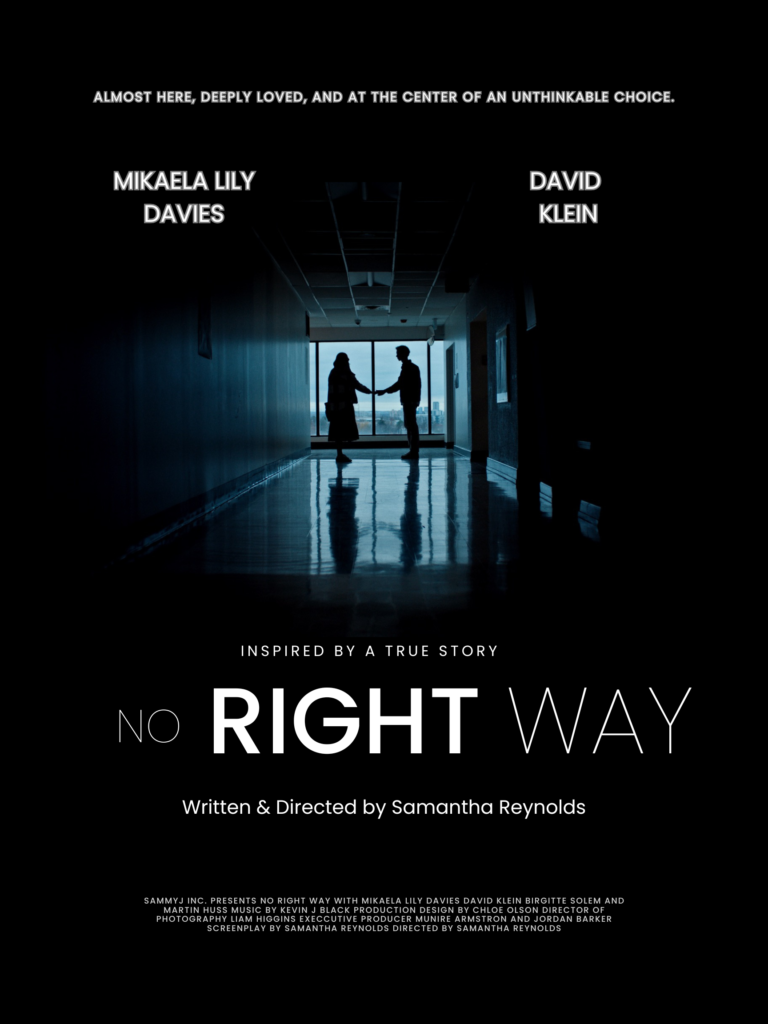
When all is said and done, Reynolds’ deepest wish is that No Right Way offers a gentle, holding space for parents carrying a similar grief, helping them feel truly seen while offering the world a window into their silent heartbreak.
Her reflections reveal how lovingly she guided every detail of the film, from using soft animation as a tender bridge for the audience to thoughtfully balancing the medical realities of the couple’s world.
At the core of every creative choice lies an overwhelming desire to showcase the profound love that fuels a decision so often misunderstood from the outside.
By sharing her own story with such vulnerability, Reynolds gifts us a powerful meditation on parental love, quality of life, and the unconditional compassion we all deserve when there are simply no easy answers.