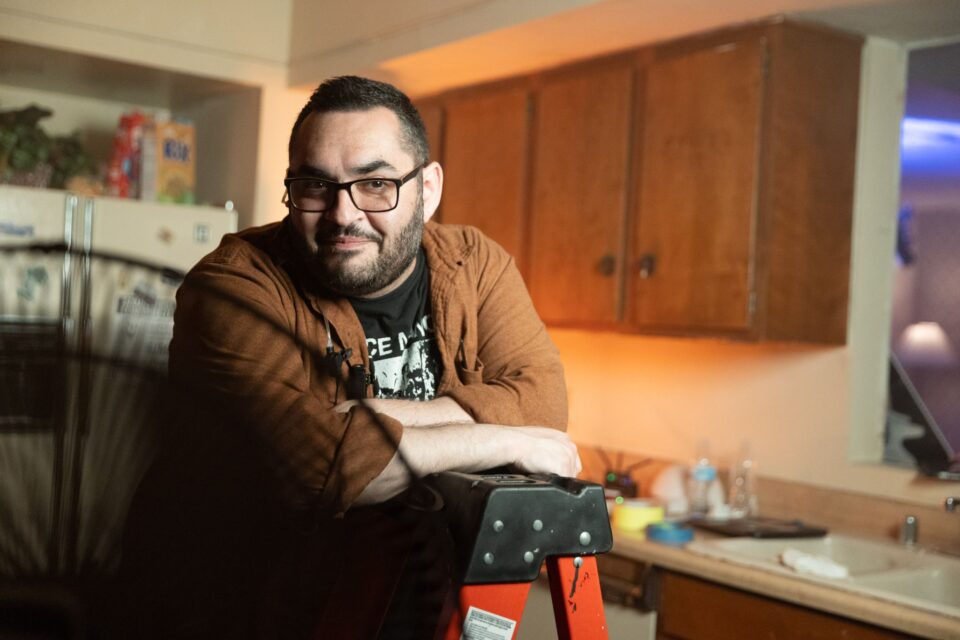
For Damon Weathers, the magical seed of filmmaking was planted by a child’s wide-eyed wonder: “How did they do that?” From the breathtaking practical effects of Terminator 2 to the vibrant dance routines and whimsical set designs of House Party and The Wizard of Oz, his lifelong love of behind-the-scenes artistry eventually blossomed into a thriving career on large-scale sets.
Yet with ‘Bad Tooth’, Damon felt a gentle pull toward something far more intimate, visceral, and grounded.
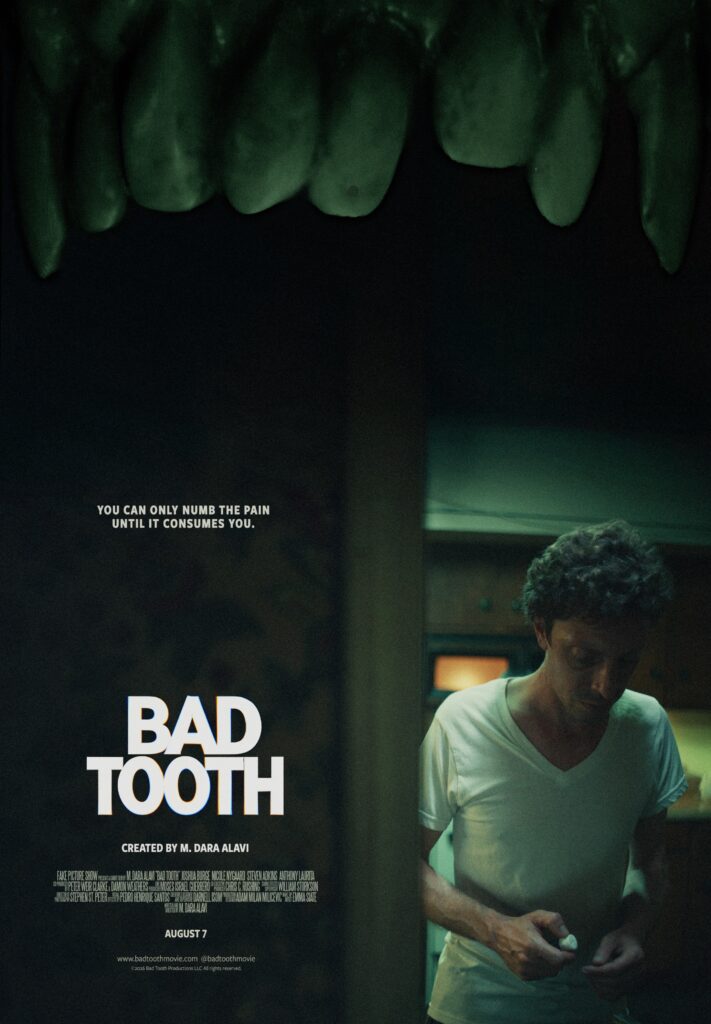
Directed with dark flair by M. Dara Alavi, this unsettling body-horror short offered him a beautiful escape from the predictable rhythm of big-budget productions, allowing him to marry raw practical effects with a deeply human truth: the quiet tragedy of letting our daily aches and anxieties fester until they consume us.
Wearing the producer’s hat, Damon gracefully navigated the sweet, chaotic realities of independent cinema: tight budgets, racing against the clock, and nurturing a dedicated crew who poured their spare hours into the project purely for the love of the craft.
In this interview, he opens up about his journey into cinema, his lovely creative bond with Alavi, the technical artistry behind the film’s monstrous star, and the hopeful vision he carries for expanding this nightmare into a full-length feature.
- Damon, can you share with us what inspired you to be a filmmaker?
Damon: It’s tough to single out one thing – I remember seeing Terminator 2, in the scene where the Terminator pulls the skin off his arm to show Miles Dyson what he is, and that being the first time I remember being blown away and wondering “how did he do that?”. And from that point on, I remember trying to understand what I’d be seeing on screen and how it was executed, whether it was dance choreography in House Party, or the crazy colorful munchkin land set in Wizard of Oz. Really the “how” of any elements that caught my eye and as I got older and started to understand how all these elements served the overarching story, I couldn’t get enough and I devoured any and all magazine articles, featurettes, interviews, all of it!
- You have spent years working on large-scale productions. What drew you to an independent project like “Bad Tooth”?
Damon: I’ve been very fortunate to have been involved in those larger projects, and while I love the work we did for them, candidly, they can become stale and a bit “paint by numbers”. Most mainstream films of that scale don’t have much to say beneath the surface; they aren’t pushing the envelope or raising the stakes much anymore. They’re popcorn movies for a reason and there’s nothing wrong with that, I still enjoy them from time to time, but when I read Bad Tooth, the relatability and depth of Alex’s situation and environment instantly jumped off the page and stuck with me long after. Throw in the chance to play with some fun body horror, and the front seat view of watching some of the industries best effects artists design and execute with no restraints, and a Director that understood that, I knew I needed to be a part of it.
- How did your relationship with the director, M. Dara Alavi begin, and what made you want to come on board as a producer?
Damon: We met while working at Legacy Effects together several years ago and it’s funny because in an effects studio like that, naturally mostly everyone are big “effects films” fans but when we we met he was wearing a Janus Films shirt, and that told me that Matt was about more than just effects films. I called out the shirt in passing and we hit it off right away, chatting about our shared admiration for everything from Taste of Cherry, Bergman and Tarkovsky to Paul Schrader and the 70’s gritty filmmaking era. We’ve become good friends ever since and after seeing his last short film, Zero Down, I knew he had an eye and style that I loved. I wanted to be involved in whatever he did next and reading Bad Tooth cemented that desire for me because I loved the script so when he asked if I’d be willing to join the team, I didn’t think twice.
- With your background in large studio productions, what was different about producing a film as intimate and DIY as “Bad Tooth”?
Damon: I’ve produced smaller short films in the past, but none with this many moving parts so I initially wanted to approach it as I would a larger project but on large scale films and series, the departments are so big. When you speak to a department head, you have to trust they’re seeing their departments work through and the collaboration is mostly with one or two people. On Bad Tooth, because everything was so much more intimate and smaller, we were speaking to the exact person that was executing the ask whether it was speaking directly to the 1st A.C. on set, or the artist molding parts of one of the practical effects we had, having that much granularity in the oversight itself was a bit of an adjustment but it was nice because you got a level of candor in the information because it was firsthand and not through a middle man that had their plate full while juggling diplomacy across their dealings with every department and producer.
- The film has an ambitious practical-effects component. From a producer’s perspective, how early did you have to start thinking about the logistics of bringing the creature to Life?
Damon: Fortunately, Matt was already working through the design with Darnell Isom when I came on board, so we were on the same page about that needing to be the first thing we tackled. From all the experience we have with large productions completely burning through prep and not giving the practical components enough time to plan, build, and fine tune, we all knew we had to start planning the main gags before anything else. By the end, we still didn’t have the time we’d have liked when it came to shooting, but I think we put our best foot forward in really utilizing the time from the jump to properly design, plan, and fabricate the gags. Peter Clarke, our other Producer, was instrumental in that as well as he’s an accomplished animatronics and effects designer and puppeteer, so from the outset he was able to proactively flag any hurdles or bottlenecks that would potentially come up well before they did. Peter’s experience in the field was extremely advantageous for us.
- What were some of the biggest production challenges you faced in making sure everything was achieved within the film’s independent resources?
Damon: Candidly, for me it was a challenge at first to shake the usual mentality of relying on the other departments to do their part in a timely fashion. This was a labor of love for most of us, and because we were cashing in some favors and being gifted the goodwill from friends and colleagues, the sense of urgency isn’t the same when you’re not in a large studio with hectic deadlines being pushed by large productions and larger creative names. Everyone that helped on this was fantastic and had a passion for the story, and really knocked it out of the park, but I’d be lying if I said everyone met every deadline on time and on the first try without some nagging and oversight – and that’s from the top down, myself included! Everyone has a day job so we had to respect that and learn to navigate those waters as honorably as possible.
- Also, was there a particular moment during production when you thought, “This is why we decided to make this film”?
Damon: Oh absolutely, I actually had a few of those moments! We have been wanting to work with Joshua Burge for a while actually, long story there, but once he agreed to come on there was another tier of excitement I got to. On set however, specifically in the kitchen scene when he’s speaking to Mara (played by Nicole Nygaard) and he has an outburst at the end of their dialogue and Josh just nails it the first try – I looked at Matt, smiled and just said “Yup” and we both grinned. And without spoiling the story, when the creature puppet arrived on set at the end of the first night, and no one but a few of us had seen it so when the whole crew was just stopped and flocked to it and all the “ohhs” and “awes” really made me smile and think this is exactly the response we wanted.
- What are some of the things you hope the audience don’t miss out on when they watch this film?
Damon: Having spent a good majority of my career on the effects side of the film industry, it’s common for a lot of us to feel like we don’t get enough of the creature in most movies, even if the movie is good and really utilizes it well. So I hope the audience gets a good look at ours and all the little details in the design and I truly think there’s a good balance of how much of it you see and how effective it is.
- After everything you learned from making this short, what would you do differently if you were producing the feature?
Damon: When we do the feature, we will definitely dedicate more time on set to the effects and gags. We came into this wanting to give the gags a dedicated amount of time to shoot but of course, with crew, availability, finances, and everything else that comes into play, we didn’t get the amount of time we would have liked, even if we got more than most shoots allow. On the feature, I’m hoping we have the funding and scheduling to allow for a little more time to rehearse and perform, especially since we’ll have more resources and help to manage all the spinning plates, and won’t be at the mercy of the amount of hats we’re each wearing.
- Finally, what do you hope “Bad Tooth” says about the people and systems that allow problems to fester until they become impossible to ignore?
Damon: I think there’s a relatability to Alex and the situation he’s in and I hope that anyone who sees it and can relate, also sees the problem with letting things fester, especially when it’s multiple things across varying situations in life. I hope it says to people, at its base level, that it never ends up well if you just let things build. We don’t have control over some things, like dental care allowances, but we do have control over some things and Alex letting multiple things fester and become issues that continue to compound cause his night to go terribly awry – maybe his experience will make people rethink how they approach certain things in their own lives so they don’t run the risk of a creature growing from inside of them!
When all is said and done, Damon Weathers’ labour of love on ‘Bad Tooth’ captures the tender heart of independent filmmaking where every struggle is magnified, but every victory feels infinitely sweeter.
Working with modest resources means every favour asked, every deadline met, and every creative touch carries profound weight for a small, tight-knit family of artists. Yet those very constraints gifted Damon and his team an emotional closeness and creative freedom that giant studio lots so rarely allow.
From the childlike thrill of watching the puppet creature arrive on set to the quiet awe of witnessing Joshua Burge bring a delicate scene to life, the memories Damon treasures most are woven with pure collaborative spirit.
More than just a chilling creature feature, ‘Bad Tooth’ gently whispers a universal truth about the internal fears and unresolved issues we ignore, hide away, and allow to grow in the dark.
If this story can make audiences laugh, squirm, and perhaps gently confront the lingering things they’ve been putting off in their own lives, then Damon and his team have delivered a piece of cinema that is as meaningful as it is unforgettable.