
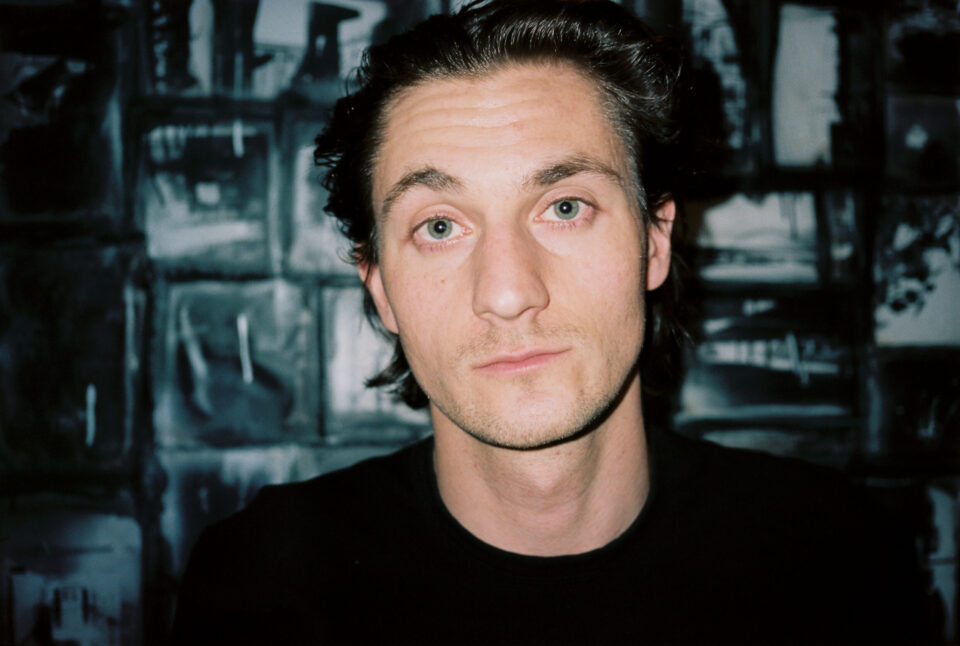
There is something incredibly moving about the way Joaquim Adrià Pujol speaks about filmmaking. He doesn’t approach it with the polished certainty of someone chasing cinematic grandeur, but with the raw openness of a woman still trying to make sense of the emotional wreckage left behind by family, addiction, and memory.
That vulnerability sits at the very heart of Màquina, his deeply personal documentary that follows a father and son navigating psychedelic-assisted addiction treatment across the American West inside an aging Winnebago. What could have easily been a conventional recovery narrative instead unfolds as something so much messier, more intimate, and more human.
Through long stretches of difficult silences and painful revelations, Joaquim turns the camera inward, examining not only generational cycles of addiction but the fragile emotional architecture holding his family together. Whether discussing the ethics of filming deeply private moments or the startling revelations that emerged during production, he speaks with such beautiful candour about the blurred line between storyteller and participant.
It becomes so clear that Màquina is less concerned with “solving” addiction than with understanding the soft, emotional currents beneath it, the grief, trauma, and longing that often remain unspoken within our families.
- Joaquim Adrià Pujol, can you start by telling us what led you to become a filmmaker?
Joaquim: I had a pretty non-traditional upbringing, pretty colorful, pretty dramatic, lots of extremes. While I was exposed to a lot of art and alternative ideas, we never had a TV in the home and I didn’t really start watching movies until I was a bit older. I found them incredibly captivating, an escape from an unstable reality, but I didn’t really understand how they were made or what went into them.
My first inclination was that I wanted to be an actor. I pursued that for a while in my teens and did some professional theater, but quickly realized I enjoyed telling the whole story and not just embodying one part of it. Around the same time I was introduced to fine art photography and spent a lot of time shooting stills and working in the darkroom. The background in acting and theater, mixed with the visual storytelling skills I was developing through photography, naturally led into making short films and ultimately propelled me to move to LA at 18 and pursue filmmaking.
- Directing and cinematography almost go hand in hand. If you had to choose between the two, which would you say you enjoy better?
Joaquim: I’m not really sure I could choose. It almost doesn’t matter to me whether I’m the director or the cinematographer so long as it’s a story I’m invested in. It really depends on who you’re collaborating with and the dynamics of those relationships. I’m the kind of DP who gets very involved in the story and will give suggestions that aren’t traditionally considered part of the cinematographer’s role. Some directors really don’t like that, so I tend to end up working with people who are more open. On the flip side, as a director I really try to listen to and internalize suggestions from the people around me.
It’s a collaborative art form at the end of the day. I think you need a healthy amount of respect and competition between your key creatives so that you end up making something greater than what any individual could come up with on their own. A bit of pressure and a bit of humility. I just try to have as many of the arguments as possible during pre-production so that when you’re on set and the whole team is looking to you for creative inspiration, the key creatives are aligned and at least existing in the same chapter, if not on the same page.
- Your latest documentary film, ‘Màquina,’ is rooted in your own family’s experiences with addiction. At what point did you realize this deeply personal journey needed to become a film?
Joaquim: I was in a very dark place with my own addiction, was heartbroken and shooting a project that was slowly eating away at my soul. I could see myself following in the footsteps of my brother and father as a young high-functioning alcoholic who then crashed and burned in spectacular fashion. Around the same time, my brother crashed a car while driving drunk and almost died; this was the 5th or 6th time this had happened. His rock bottom became the inciting event and inspiration for me to explore our family’s generational cycles of addiction and explore an alternative approach to healing through the film.
- Having worked on environmental documentaries such as Kiss the Ground, Common Ground and Groundswell. How did making a film that is so autobiographical differ from your previous work?
Joaquim: “Groundswell” premiered at Cannes recently and a few weeks later “Màquina” premiered at Brooklyn. It’s been an interesting moment of reflection because both films are really the distillation of years of work, growth, and experimentation with process and technique.
The biggest difference between the regen/soil films “Kiss the Ground,” “Common Ground,” and “Groundswell” and “Màquina” is really the scope and scale. The soil films involved a huge amount of travel and an insane shooting ratio because we were covering a story and movement that was constantly shifting and evolving under our feet. There were multiple characters and intersecting storylines that needed to be investigated, often leading us toward entirely new directions or developments that would shift the focus of the film. I think we filmed in around 11 countries for “Groundswell” alone, so the scope was massive.
“Màquina,” on the other hand, was very contained and immersive. On the soil films, we were lucky if we got a few days to embed ourselves and build rapport with the characters. On “Màquina” I lived with my father and brother for about six weeks straight while we filmed the treatment and road journey. That amount of time and focus, with far fewer subjects and distractions, really allowed us to find a deeply intimate and vulnerable tone.
“Màquina” was also shot without a crew in the field, which is very different from how we work on the soil films.
Overall, it’s hard to compare them because I see them as fundamentally different things. The soil films are about getting a message out into the world and function more as activism, whereas I see “Màquina” as a personal exploration. It’s more ambiguous and less interested in giving answers. It’s an invitation for the audience to speak rather than a film that offers answers.
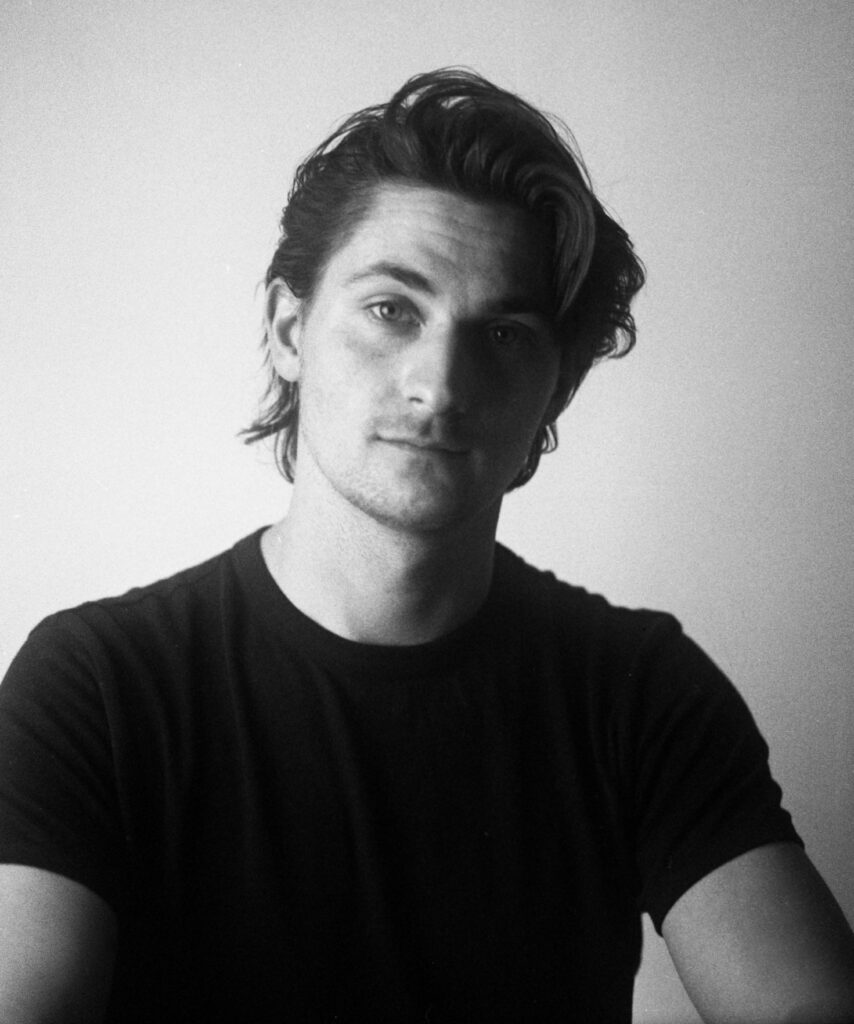
- How did you navigate the emotional and ethical challenges of documenting your father and his struggle with addiction? Were there moments during filming when you questioned whether certain scenes were too personal?
Joaquim: Most of my immediate family has struggled with addiction, primarily alcohol. My mother, grandfather, aunt, father, brother and myself have all had different relationships with substance abuse and dependency, so it’s something that’s very familiar to me and something I grew up around. When we decided to make “Màquina,” it was really a way to push ourselves toward change.
I honestly don’t think any of us would have gone to treatment or tried to address our codependent dynamics, traumas or addictions if we didn’t have this idea that we were making something out of it.
The ethics were incredibly important to me and something we discussed regularly. The opening of the film is actually a bit of a nod to the delicacy involved in filming such raw and vulnerable moments. There were definitely times when I chose not to film certain things because they felt like they crossed a line.
Overall though, Xavi and Marcel placed a tremendous amount of trust in me. We had an agreement that I would complete the edit and not show them a cut until the film was essentially locked. At that point, if either of them had major objections, we would discuss them. When we finally did the private screening, there were certainly moments that were difficult for both of them. How could there not be? It’s an incredibly vulnerable film. But after talking through it at length, we all agreed there was something special there and decided not to change it.
- Were there any moments during production that fundamentally changed the direction of the film from what you originally envisioned?
Joaquim: There were many, but in a way they were expected and even welcome. For me this film was always about exploration and the desire to create change. I tried not to hold expectations about the outcome. I had hopes, of course, but on a story like this you really have to stay present and not think too much about the future. A major turning point came during the second treatment when Xavi relapsed and decided not to continue. It was difficult for Marcel and me, and as the storyteller it completely shifted my perspective on the story I was telling. The film became much more about Marcel’s journey than Xavi’s.
- What was the most difficult conversation you had with your father during the making of Màquina?
Joaquim: Some of the most difficult conversations happened toward the end of production. Marcel had found his own path and was beginning to distance himself from Xavi. I remained in contact with both of them, and there were many painful conversations where Xavi expressed how abandoned he felt. I had to find my own balance and create my own boundaries with him, which was incredibly difficult but also necessary. Part of the purpose of the film was to break those codependent dynamics and allow each of us to find our own path. I guess it comes down to the fact that even when you know something is the right direction, it doesn’t make it any less painful to walk.
- As director, cinematographer and also a subject in the film, how did you balance technical considerations with being emotionally present in such vulnerable moments?
Joaquim: I tried to keep the technical and logistical side as simple as possible. No crew. One camera. An Angenieux DP Rouge 16–42mm, so there were no lens changes. Most of the lighting was practical, and I tried to keep Xavi and Marcel mic’d as much as possible. By simplifying the gear and keeping the camera available at all times, I was able to immerse myself more fully in the experience and be a member of the family on this journey rather than someone standing behind the camera. There was definitely a lot of give and take with that approach, and it didn’t always work the way I intended, but overall I’m very moved by the level of vulnerability and intimacy we were able to capture.
- What surprised you most about the treatment journey that unfolds in the documentary?
Joaquim: The biggest surprise for me was learning about my brother’s experience with sexual abuse. He had never mentioned it to me and I had no idea until we were deep into filming the project. It happened after the initial flood dose in Colorado. We were on our journey home, filming one of the scenes on the rocks in Utah, and during a check-in on camera he just started talking about it directly. It was an electric moment for me. Shocking, but also incredibly moving, because I could see something had shifted inside him. It was obvious that the experience with Ibogaine had given Marcel a new perspective and some separation from his trauma. At the time I didn’t know how fully he would embrace that opportunity for healing, but it was palpable that something fundamental was changing.
- Lastly, what do you hope people who see this film carry with them long after the credits roll?
Joaquim: I see “Màquina” as more of an invitation to speak than a film that’s going to tell people what to do or what to think. If people take anything away from it, I hope it’s a deeper awareness of their own experiences with addiction and a greater openness to discussing the stigmatized issues surrounding substance abuse. I also hope it encourages conversations around the codependent dynamics and unresolved traumas that often feed into generational cycles of addiction.
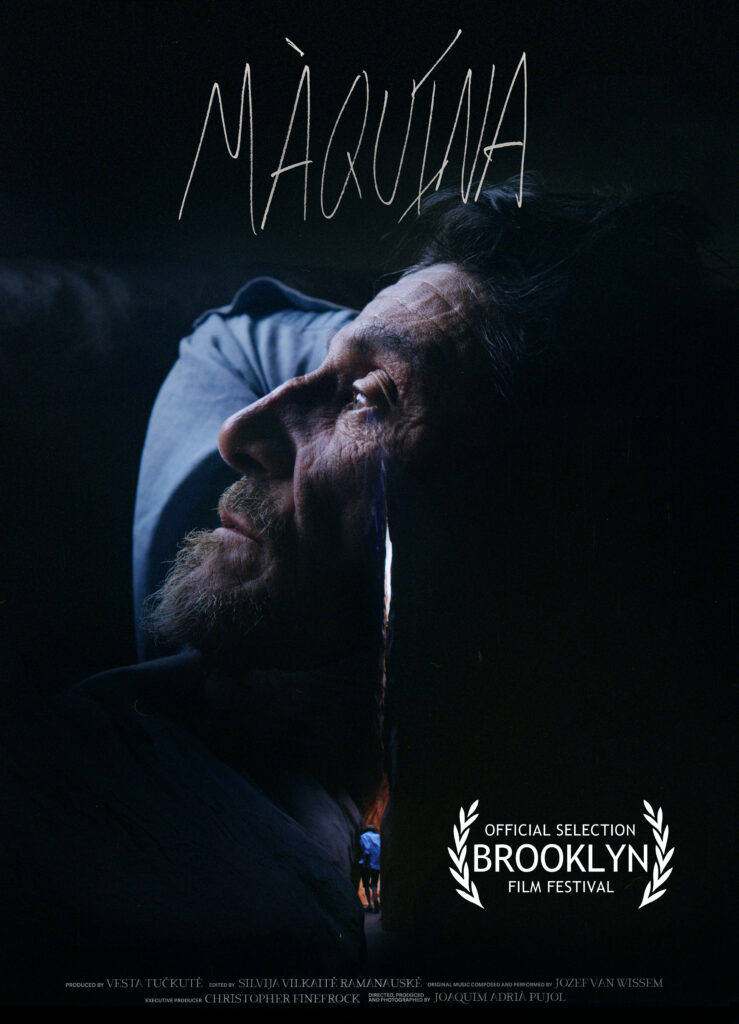
By the end of our conversation, it’s clear that Màquina isn’t interested in offering redemption in the traditional, tidy cinematic sense. Joaquim Adrià Pujol doesn’t frame healing as a straight line, nor does he pretend that confronting addiction suddenly untangles years of trauma and dependency.
Instead, the film, much like Joaquim himself, stays suspended in a space of uncertainty, where progress and pain coexist uneasily. That honesty is exactly what makes both the documentary and his reflections so affecting. What lingers most is the film’s willingness to make vulnerability visible, treating addiction not as a spectacle, but as something painfully ordinary, a cycle sustained by silence and unresolved wounds. In opening up his own story with such emotional transparency, he creates a gentle space for audiences to confront the conversations they may have long avoided in their own lives.
Màquina may begin as a personal reckoning, but it quietly evolves into a universal invitation to speak openly about the things families are often taught to hide. Perhaps that is the film’s greatest achievement, not that it offers all the answers, but that it permits us to begin asking the difficult questions, finally.