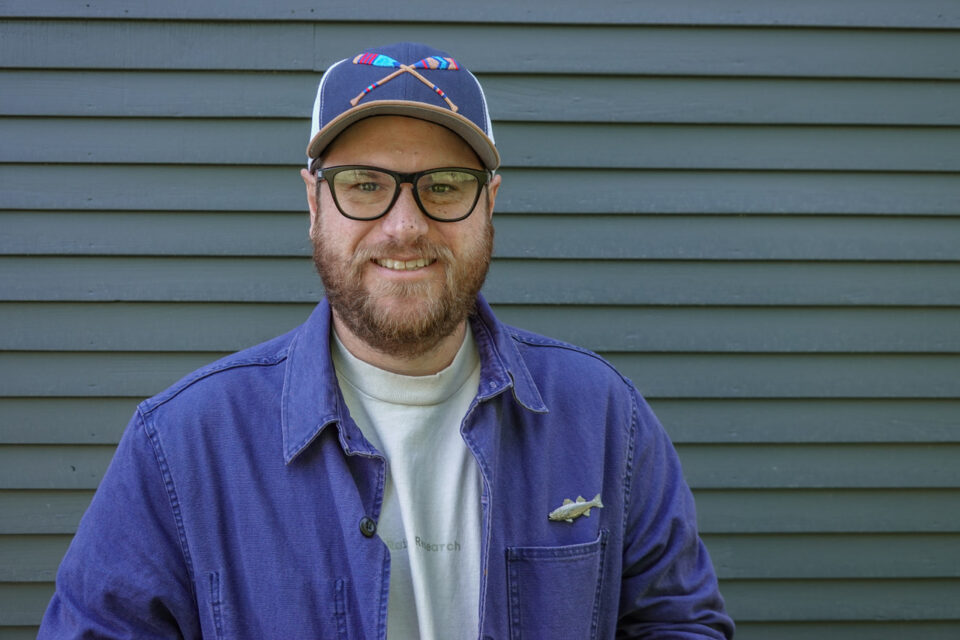
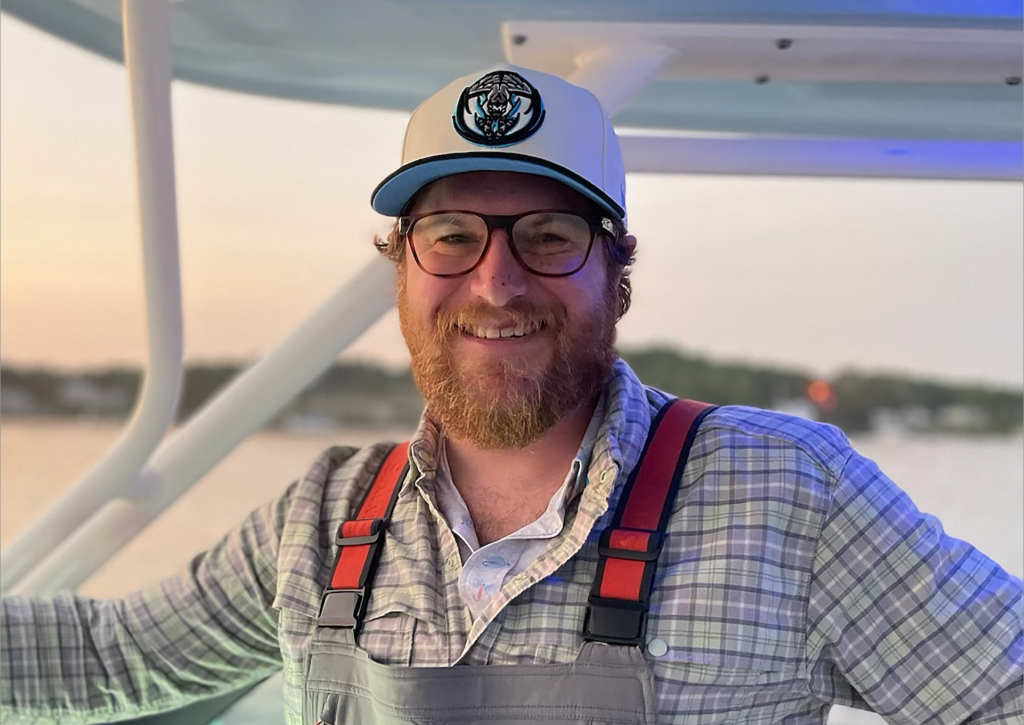
For filmmaker Harrison Buck, ‘Dragon Mom’ is a hell of a lot more than just a documentary about disability—it’s a gritty, deeply personal look at family, raw resilience, and the massive, often-overlooked power of inclusion.
What kicked off as basic research for a film tracking the intersection of disability and nature completely shifted gears when Harrison Buck realised the most compelling story was already staring him in the face. Zeroing in on his lifelong friend Laura and her son Alden, who lives with a severe disability, ‘Dragon Mom‘ locks onto a family’s everyday realities with total honesty, compassion, and a heavy dose of creative restraint.
In this chat, Harrison Buck talks about his commitment to protecting Laura’s authentic voice, the hard lessons he learned about accessibility and ableism, and why forcing the audience to see the world through Alden’s eyes became the ultimate guiding principle behind every single creative choice.
- Harrison Buck, what inspired you to become a filmmaker, particularly one who makes a documentary film?
Harrison: I have wanted to make films my whole life. As a child, my idol was ski filmmaker Warren Miller. He lived his ideal life, capturing his favourite sport as long as he could, he toured his work and was so passionate about the snow sports world. I have worked in film, marketing and video production since graduating from college in 2008. I have spent much of my career in the outdoor and music industry, but after leaving my job in marketing in Colorado in 2017, I was ready to get to true story-driven filmmaking.
- Your latest film, ‘Dragon Mom’ feels like a project that didn’t just come up by chance. What made you decide to document Laura and Alden’s deeply personal journey?
Harrison: I have been friends with Laura since childhood. My family and I have been close to Laura and Alden since his diagnosis. 2 years ago, when I started research on a film about disability and nature, I was talking with my friend Laura about helping my team develop a glossary of terms. We wanted to make sure we were using the best possible language in everything we did around the project. As we continued, Laura was really finding her voice in her poetry and in an advocacy space, and we realised we had an amazing subject amongst us all along.
- The title ‘Dragon Mom’ is both striking and evocative. When did you decide that would be the perfect title for this film, and what was the thought process of arriving at that decision like?
Harrison: Last summer, when we were editing the film, the working title was “Adapt”, and as we were working, we started noticing the word being used a lot and saw a few projects coming out that were similar enough we wanted to distance ourselves from it. Ultimately, like most parts of this film, as we stripped back any outside influence and focused on Laura and Alden’s actual lived experience, we realised just how important the term Dragon Mom is to HER. That’s why we decided to stay grounded in Laura’s story and trust it would resonate.
- Obviously, you are no stranger to them, but how did you build and maintain that trust with Laura and her family throughout the production of this film?
Harrison: No, we are not strangers at all. But we have never had a camera between us before. Laura was quite comfortable with the camera out the gate, and we had a very small team, so we wanted to focus first on getting Alden comfortable with it around and mostly not distracting him. He got the joke right away and seemed to genuinely enjoy having us and the camera around.
- You mention wanting to ensure that Laura’s voice remained authentic. What steps did you take to avoid imposing your own perspective onto her story?
Harrison: That was a huge focus of mine, and every step of the way from research, pre-production, all the way through roll-out, it has been a mantra of mine to strip my additives away to stay as focused on Laura’s life as possible. An example is, early on, we had this idea to bring them out to Colorado to ski and be a part of some wonderful non-profits that work in the disability space. But that’s just it, they don’t ski in Colorado, that was all added. So we stripped back and went with them on their already established family vacation to Vermont.
- Disability narratives are often framed through inspiration or tragedy. How did you work to move beyond those familiar storytelling conventions?
Harrison: I don’t want to sound like a broken record, but again, that’s all Laura and how she conducts herself day to day. We just follow along and display as honestly as possible. She does not try to be an inspiration, and she certainly does not view it as a tragedy. She just does the best she can for her children each day.
- What were some of the most eye-opening conversations or experiences you encountered while making Dragon Mom?
Harrison: Oh man, probably one every few hours, honestly. I learned so much, from word choice to new concepts like “dignity of risk”, ableism, the built world, ADA history and compliance, support networks, OT and PT practices, etc. I think that’s probably my favourite part of this project is how much I have learned about life for people living with disabilities and how challenging the built world is for people who it isn’t designed for. That’s what I want to bring to the audience: the ability to learn new things, see the world a little differently and ultimately want to make it more accessible and inclusive.
- Alden is nonverbal, yet he appears to have a powerful presence within the film. How did you approach telling a story through his perspective?
Harrison: That was crucial. Most people rely so heavily on verbal communication, and he, as you said, does not communicate verbally, so you adapt. Mostly learning and takes cues from his family and caregivers. But his perspective was what we started with. We wanted to shoot it cinema Veritae style, so not fly on the wall, but right there with him, at his height. We learned early on that people who use wheelchairs have a distinct view, which contains a lot of looking up at other people’s nostrils. We wanted to achieve his point of view but also get a look UP at Alden from say his service dog, Bouy’s, perspective.
- There is a recurring connection between nature and healing throughout the film. Why was that theme important for you to explore?
Harrison: The healing power of nature is very important to me. I have spent much of my life outside and strive to spend even more of it outdoors. A huge focus of mine is breaking down the bifurcation of the built world and the natural world. It’s all just the world, and the more we see them as separate, the greater the danger. There is an inherently intrinsic value to fresh air, but there is more to it than that. Bird song is a documented nervous system regulator. Being close to trees is scientifically proven to reduce cortisol. Most people with severe disabilities cannot access Capitol N Nature like rafting the Grand Canyon, or even contemplate skiing, so places like playgrounds are crucial to accessing the healing and connective power of nature.
- The film embraces an observational approach. What influenced that choice?
Harrison: I already spoke to this but specifically capturing Alden’s perspective as best as possible was the primary goal. We wanted to put the audience right on the chairlift with him to catch all his wonderful self.
- What would you say was the most challenging aspect of making this film?
Harrison: The most challenging part was probably just continually making sure we were being as true and honest to this 5-week period of Laura and Alden’s complex lives as best as possible, without adding anything superfluous. It was a constant day-to-day thing to maintain, and gave us some strong guidelines.
- Lastly, what conversations do you hope the film sparks around accessibility, inclusion, and societal perceptions of disability?
Harrison: Ideally, people are doing just that, having conversations. There is a lot to unpack here, and it’s hopefully a filter for which people can view the world, and wanting to make it a more inclusive place.
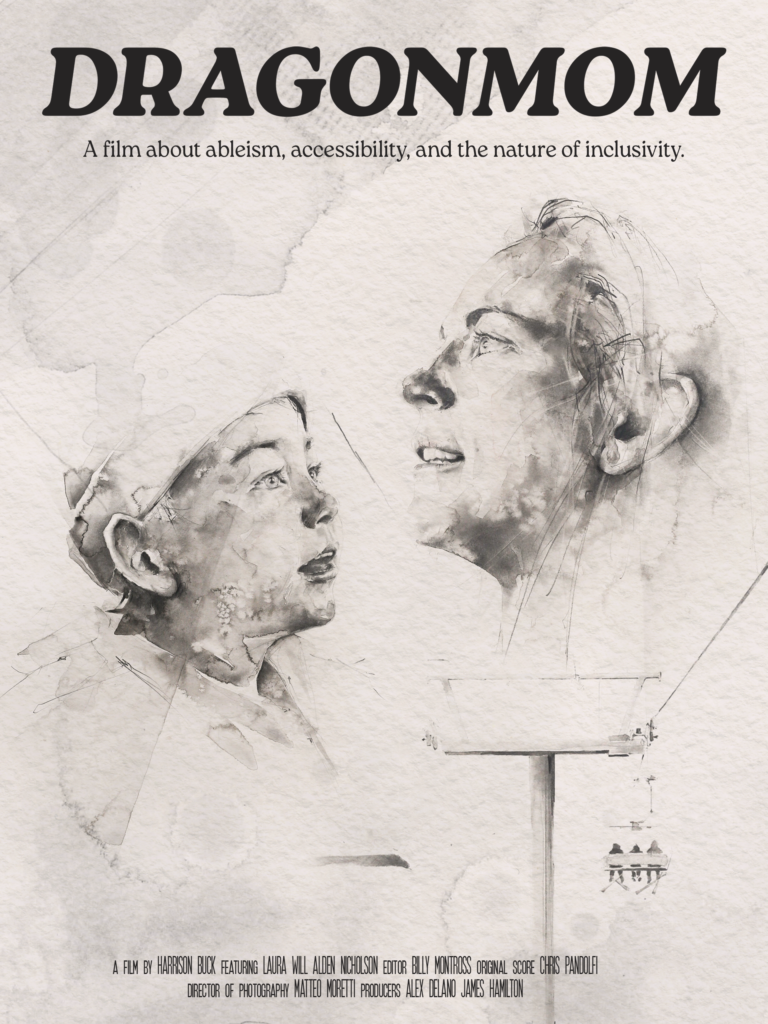
Throughout Dragon Mom, Harrison Buck completely resists the cheap temptation to turn Laura and Alden’s reality into some textbook tragedy or oversentimental triumph. Instead, he delivers a sharp, thoughtful portrait of ordinary people squaring up to extraordinary circumstances with dignity, love, and pure determination. By sticking dead-accurate to their lived experience and leaning into a raw, observational camera style that puts the audience right in the room with them, Buck has forged a film that demands reflection rather than giving you easy answers. If this documentary hits its mark, viewers won’t just walk away with a deeper understanding of disability and accessibility; they’ll leave with their eyes wide open to the countless ways our world needs to step up and become a more welcoming, inclusive, and compassionate place for everyone.