
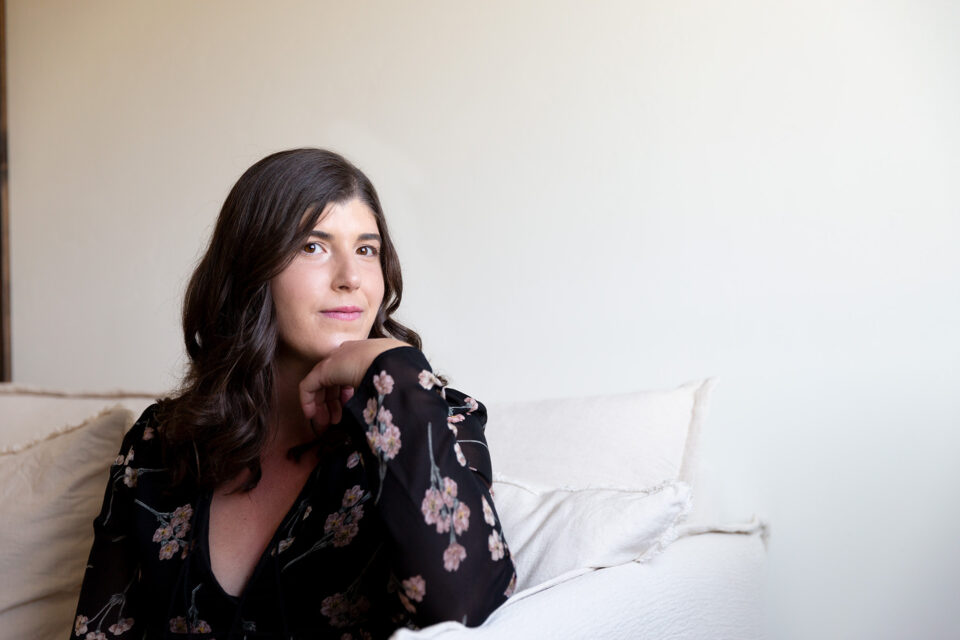
Animation has long held a magical ability to transport us into far-off, dreamlike worlds, but for filmmaker Melissa Bloom, the medium is really a tender invitation to fall back in love with the real one. With ‘The Farmer’s Daughter’, Bloom delivers a deeply heartfelt stop-motion treasure that gently explores regenerative farming, family legacy, and our sacred relationship with the earth—all while quietly, beautifully reinventing how animated stories are brought to life. Crafted with eco-conscious materials and a deep, loving respect for nature, the film feels as much like an extension of its green heart as it does a stunning piece of storytelling.
In our sweet conversation, Bloom shares the cosy childhood memories that first sparked her love for cinema, why stop-motion remains her ultimate creative passion, and how ‘The Farmer’s Daughter’ grew into both a celebration of mother earth and a bright, hopeful vision for the future of sustainable animation.
- Melissa Bloom, can you tell us a bit about what inspired you to be a filmmaker?
Melissa: I grew up reading and watching the Harry Potter and Lord of the Rings series’ and loved the behind the scenes footage that shared how the films came to life. My junior year of high school I made my first stop-motion animation with two friends from art class on my parents dining room table using a mini DV camera. One of those friends, who was a year ahead of me, graduated and went to film school so I started to see that filmmaking was a possible career path. That summer I also went to the NHSI film camp at Northwestern University at the suggestion of a family friend and decided I wanted to apply to film schools for college. It took until my sophomore year of college to decide to pursue stop-motion specifically, but the process of filmmaking in general always interested me.
- Your latest film ‘The Farmer’s Daughter’ is about healing damaged land, but it also feels like a story about healing broken traditions. Was that dual meaning intentional from the beginning?
Melissa: Yes because modern regenerative agriculture is rooted in indigenous wisdom and ancient farming practices. It is about reconnecting to the land and observing what it needs at that specific moment rather than applying blanket industrial methods. So much indigenous wisdom has been lost over time, partly because humans have become disconnected from nature and partly because it was always meant to be passed down orally from elders, where it mattered how they told a story as much as what they said. I won’t get too much into the history of it, but I think the incredible thing about regenerative agriculture is that, in listening to the land, farmers across the world were able to tap into these methods without any human or book giving them the information. All they had to do was recognize their connection to Nature and their ability to become a part of the ecosystem, which reconnected them to that lost wisdom.
- What convinced you that stop-motion was the ideal medium to tell this story?
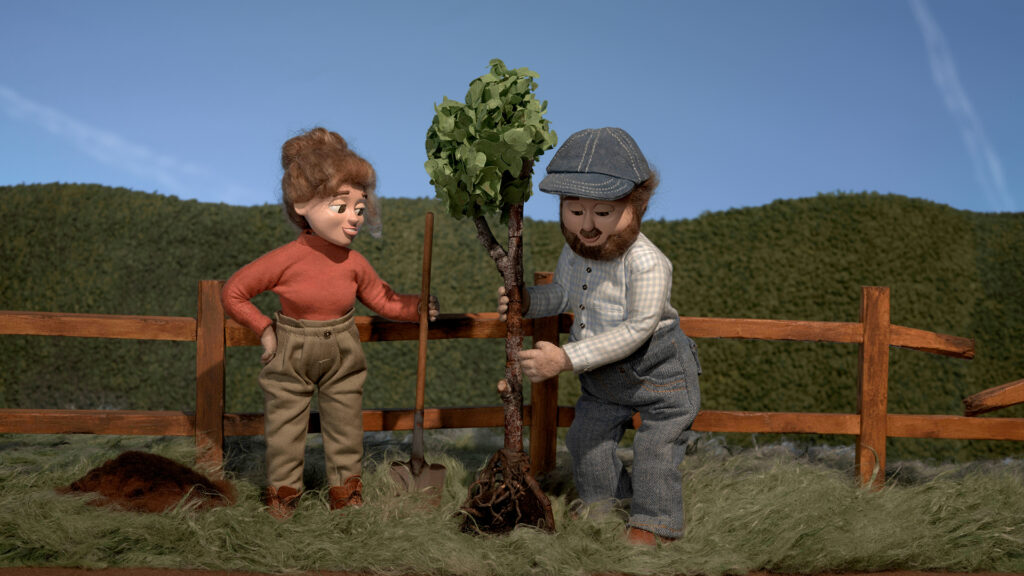
Melissa: I will always be convinced that stop-motion is the ideal medium to tell my stories! But in all seriousness, my studio’s mission is all about realigning with nature in how we create art and entertainment. So when I began to envision how the world of ‘The Farmer’s Daughter’ would be constructed, I naturally gravitated toward organic and regenerative materials so that I could support farmers and suppliers who were living the values that the film expresses. From regenerative wool batting and sheepskins to organic cotton fabrics and natural plant-based paints and glues, we have been able to support so many amazing individuals and companies working to make their industries better. I also loved the idea of bringing texture back to stop-motion and the artist’s “fingerprint,” so to speak. Today stop-motion productions are almost entirely petroleum or plastic-based, with everything looking nearly as polished as CGI. I don’t understand the point of making something that’s handmade if it looks like it was made in the computer.
- The film spans multiple generations of one farming family. Why was it important to show environmental change across time instead of focusing only on the present?
Melissa: Because the story is about healing the soil, I felt it was important to show how the soil had degraded over time. It didn’t happen overnight and it wasn’t just one farming method or time period that sent us on the trajectory we’re on today. This was a confluence of technology, history, and practices that have caused damage we can only see in hindsight. There was so much more historical context I would have loved to include, but I chose to keep it as simple as possible with four iterations of the farm so the audience could understand how farming technology has changed and how that has affected the soil. In that way, the land kind of becomes a character of its own.
- The daughter refuses to accept that the farm’s decline is inevitable. What does she represent to you beyond being the film’s protagonist?
Melissa: Daughter represents a shift to a more feminine paradigm of healing the land, in contrast to the more masculine domination mentality that modern farming has evolved from. She also represents the younger generation, open to the new way of farming, as opposed to Father who is set in the conventional old ways. When we were working on their character designs, I wanted Father’s shape to be more square and solid and for Daughter to be more rounded and soft to contrast those ideals. When I chose the title of the film, ‘The Farmer’s Daughter’, I wanted people to think of the next generation of farmers and what they will be left with when the previous generation is gone. And she plays a very active role in what she’ll be left with, rather than being a victim of that broken system.
- Your story presents environmental responsibility without feeling preachy. How did you find that balance between advocacy and storytelling?
Melissa: Thank you for that compliment! I think it’s about staying true to just that—storytelling. This wasn’t meant to be my opinion on the state of our farming system or what I think of regenerative agriculture. It’s about a daughter who wants to continue her family’s legacy. We learn about regenerating the soil through her eyes and the education is woven throughout her experience. I think it also helped to make the film silent because I couldn’t rely on dialogue to explain anything.
- The decision to create the film using eco-conscious materials mirrors the values within the story. Was there ever a moment when staying true to that philosophy in itself became a challenge?
Melissa: There were definitely plenty of challenges along the way, but none that ever compromised the integrity of our mission. The whole point of the film was to create an independent project, free of outside influence, so that we could develop more eco-alternatives to the industry-standard stop-motion materials and methods without worrying about timeline. Over those three and a half years, I definitely had my share of frustrations and stressors. Sometimes it felt like the project would never get done. But we had a great team who were willing to try new ways, even if sometimes they didn’t work out. Sometimes there were wasted hours and sometimes I would have to work with the material myself and advise a fabricator on how to use it. Other times we’d find out that a product we had been using that we thought was completely natural had a hidden ingredient that was petroleum-based. And occasionally we also had to pivot when a material did not hold up as expected during animation. But overall we had an amazing team of people championing our mission and willing to think outside the box.
- The production lasted three and a half years instead of the year you initially anticipated. How did you find and settle on the right collaborators to work on this film and did that present any challenges as well?
Melissa: A lovely aspect of the stop-motion industry is how small and tight-knit it is. When I finished the script, I contacted my old co-workers from Los Angeles, after being out of touch for 6 or 7 years, to help me with pre-production. It was as if no time had passed, but they worked on the side of their full time jobs so pre-production took a year when it could have taken just a couple of months. I was also working out of my garage alone when the production first started, so the studio was really built up around this film. My family invested in a 1949 cinderblock building in downtown Kalispell that we renovated and restored over 8 months while beginning fabrication with remote workers from Portland, who were recommended through my network. It was a lot to juggle the transition from working alone to hiring a remote crew and then finding my core crew in Montana (which happened organically, thankfully), plus setting up the space and stocking up the studio with equipment. Needless to say it was stressful, but I’m so grateful to all the people who consulted and came out to help us get up and running.
- If audiences leave the film inspired not only by regenerative farming but also by the possibility of creating more consciously in their own professions, would you consider that the film’s greatest success?
Melissa: Absolutely! The ultimate goal of the studio is to refine our ways to the point that they can be used across the world by other artists and studios. It’s only in the past couple of generations that synthetics have become the norm across all industries and, with them, increased chemical exposure. My grandparents composted, reused items, and ground their own flour—it was just how things were done until they suddenly weren’t. If we truly want to heal the environment, we have to start rejecting the now-standard ways of convenience that we’re so used to. And in order to do that we need better alternatives that actually work, across all industries.
- Lastly, for anyone looking to consider stop motion animation for their next film, what advice would you give them?
Melissa: There is nothing better than creating with your hands. Stop-motion is such a special medium and I love when people share with me that they’ve tried it at some point during school or their career. My advice is to be conscious of what you choose to construct the world from and challenge yourself to omit the obvious toxins. We are a professional studio operating without hot glue or epoxy clay—two very prevalent materials in stop-motion. Get creative in how you approach your project and check out our website or social channels for some inspiration on how to create in alignment with Nature!
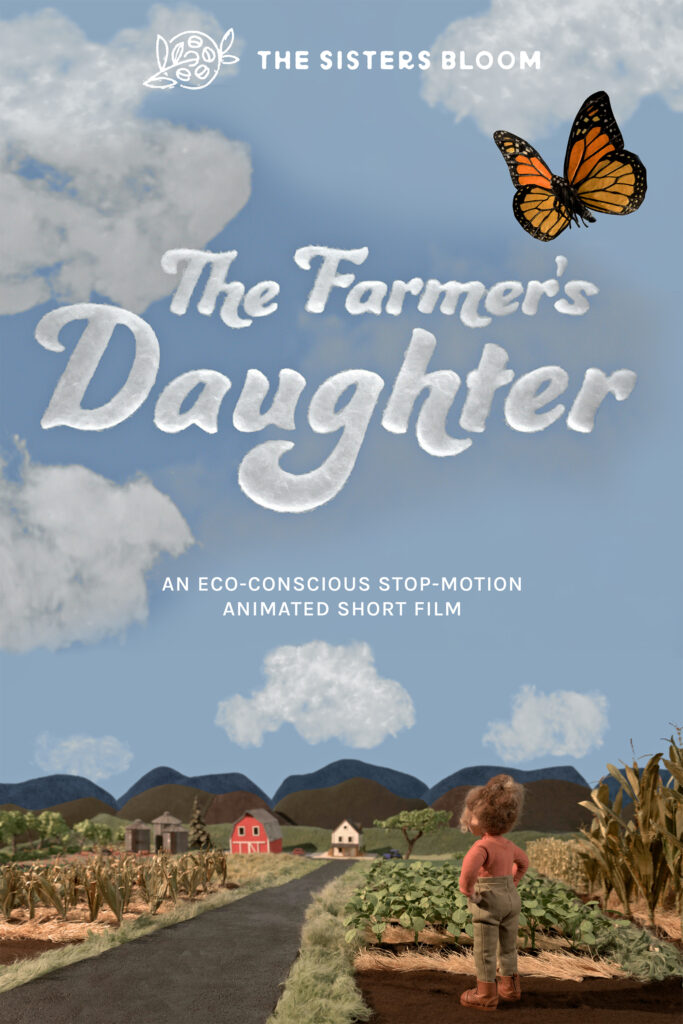
As our conversation comes to a close, it becomes so wonderfully clear that Melissa Bloom has created far more than just a gorgeous animated film—she has planted a seed of hope for the future of storytelling. The Farmer’s Daughter stands as a breathtaking tribute to the delicate balance between honouring our roots and caring for the world we leave behind.
By weaving sustainable, eco-friendly craft into every single frame, Bloom proves that art can truly practice what it preaches, offering a soft, poetic reminder that the stories we tell should nourish the earth just as much as they nourish our souls. Her passionate dedication to both her craft and the environment leaves an enduring, beautiful impression, proving that when love, art, and nature align, the result is nothing short of pure magic.