
There is a quiet, aching kind of heartbreak that comes with the fading of a friendship, a tender grief that often stings just as deeply as romantic loss, yet so rarely receives the space to be mourned.
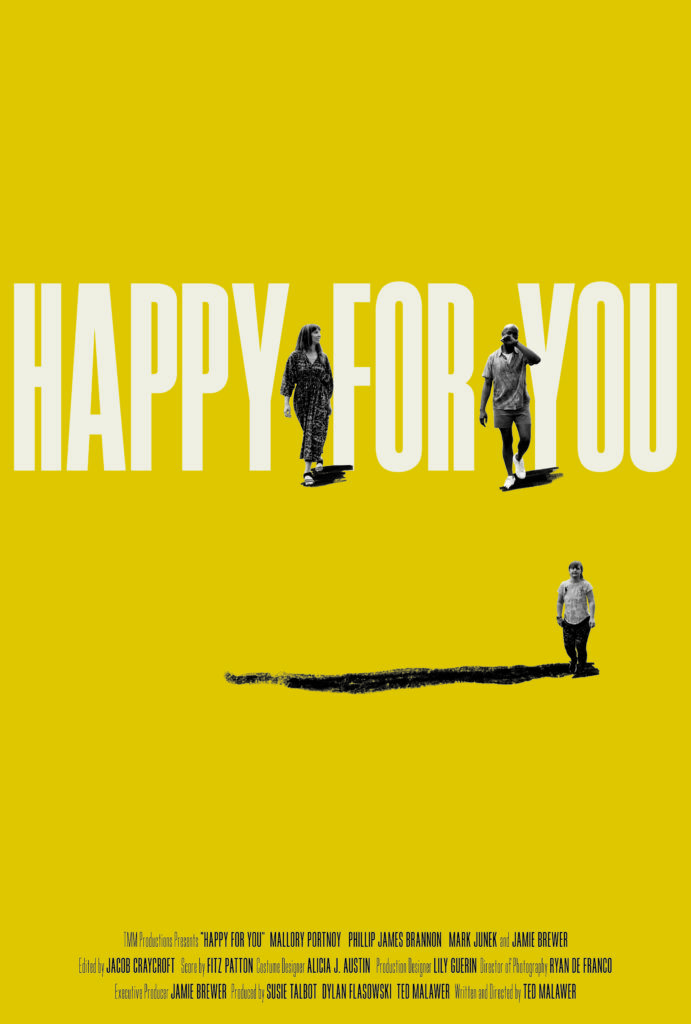
In his directorial debut, ‘Happy For You’, Emmy Award-winning writer and producer Ted Malawer gently walks us into this unspoken emotional landscape. The story follows two estranged souls, Abby and Mark, whose tentative attempt to rebuild their bond takes a painful, tender turn as long-buried truths regarding Abby’s sister, who has Down syndrome, begin to surface.
What begins as a delicate story about two old friends gradually opens into a rich, vulnerable exploration of family dynamics, disability, unconscious biases, and the fragile threads that hold human hearts together. Drawing deeply from his own personal journey and years spent listening to the Down syndrome community, Malawer approaches these sensitive spaces with a grace that understands people are rarely purely right or wrong even when their intentions are rooted in love.
Featuring a radiant performance by Jamie Brewer (who also serves as Executive Producer) alongside Mallory Portnoy, Phillip James Brannon, and Mark Junek, ‘Happy For You’ marks a meaningful new milestone for Malawer across his celebrated work in theatre, television, and literature.
In this interview, he opens up about the spark behind the script, the sweet vulnerability of stepping behind the camera for the first time, the necessity of authentic representation, and why some friendships, no matter how deeply cherished, carry scars that are not always easy to heal.
- Ted, first off, can you share with us what inspired you to become a filmmaker?
Ted: I have always loved stories in all forms. I started as an opera singer, then began to write—first as a novelist, then for the stage before transitioning to film and television. My experience working with actors has deeply informed the screen stories I’m interested in: human, funny, emotional, weird. When I started spending time on set as a television producer, I realized that I loved seeing how everything comes together—from building sets to choosing camera lenses to working with editors in post-production. That’s when I decided to write and direct my first short film.
- ‘Happy For You’ explores two friends attempting to repair a broken relationship. What was it about the idea of a friendship falling apart, rather than a romantic relationship, that you wanted to explore?
Ted: Most of the important relationships in my life are friendships. When a romantic relationship ends, there is language to describe it—“we broke up” or “he dumped me” or whatever. But when a friendship ends, it’s extremely painful… yet how can you really communicate how deeply affected you are? That question sparked the initial story of HAPPY FOR YOU.
- Your title carries an interesting emotional ambiguity. At what point did you settle on the title, and what does that phrase mean to you within the context of the relationship between the two friends?
Ted: The title came quite early in the process. One of my favorite emotions to write about is “happy-sad”—when you’re rooting for someone but also have complicated feelings around their success. The title applies to how these friends feel about each other, but also represents the melancholic way the story ends.
- How much of their backstory did you develop for your characters that audiences never see, and how did that unseen history inform the way you wrote their interactions?
Ted: So much! Not only did it inform how I wrote their interactions, it informed how we dressed our set (in things both seen and unseen in the film), where we chose to film, even our costumes. I strongly believe that you need to know your characters deeply before you can write their stories. This was also developed through the shooting and editing process with my brilliant producers and collaborators weighing in and offering ideas.

- Coming from playwriting, television and producing, what was the biggest misconception you had about directing a film before you actually stepped behind the camera?
Ted: I knew it wouldn’t be easy, but I wasn’t aware how many miniature decisions would need to be made at a rapid-fire pace, and how directly our budget would dictate what we were (and weren’t) able to do.
- What would you say directing this film revealed about your voice as a filmmaker that you had not discovered through those other forms?
Ted: In most of my creative endeavors, the writer crafts the blueprint but the ultimate decisions are made by the director. This is the first time onscreen that I have been able to have the final say—which was both exhilarating and terrifying. It forced me to realize what was important about the story and how we filmed it. The relationship between myself, the actors, my producers and especially my cinematographer Ryan De Franco and editor Jacob Craycroft left deep impacts on me as an artist that I will carry forward into my next projects.
- The story gradually reveals painful truths about Abby’s sister. What made you interested in allowing those revelations to emerge through the friendship between Abby and Mark rather than presenting the disability storyline more directly?
Ted: I love mysteries, and stories that start out as one thing and morph into another. I knew that I wanted there to be a question around why Abby and Mark stopped speaking, and that I wanted to hold off revealing this to the audience for as long as possible until it imploded.
- How important was it for you to tackle this subject with the most subtlety and poise?
Ted: It was absolutely the most important thing in the world. I wrote the role of Ali for Jamie Brewer, an actress I have been a fan of for a long time, who is also an Executive Producer. Her input and thoughts, and being present on set, were informative and inspiring. I could not, and would not, have made this film without her.
- Also, how did you approach writing those moments that touch on Down syndrome without turning the characters into simple heroes or villains?
Ted: I grew up around many people in the Down syndrome community thanks to my mother’s experience as a teacher for people with special needs. In this story, there is likely a character you side with more but there are, as you point out, no heroes or villains. There are simply humans.
They try to do the right thing but mess up. Their intentions, though, are good—and that’s what I hope people take away from the film.
- During the shooting process, were there any restrictions or challenges that forced you to make a more interesting creative decision?
Ted: Time and money! There were so many restrictions around what we could shoot, things that didn’t make it into the final edit, things we filmed but couldn’t use for various reasons. That said, I am so proud of how the movie came out and wouldn’t change a thing. It truly represents our experience together as cast and crew over a single weekend in the Hudson Valley.
- If given the choice, is there more of this story you would like to tell, perhaps in a feature length?
Ted: Absolutely. I barely scratched the surface of these characters and would love to revisit them and their stories. Plus, the actors—Mallory Portnoy, Phillip James Brannon, Jamie Brewer, and Mark Junek—are stupendous. I’d work on anything with them!
- Lastly, when audiences finish ‘Happy For You’, what is the one assumption about friendship, family or disability that you most hope they question in themselves?
Ted: My biggest hope is that the movie entertains and challenges our perception of what it means to be a friend and what it means to walk through the world differently than others. I think we can all use a bit more compassion and understanding, now more than ever.
When all is said and done, ‘Happy For You’ is far more than Ted Malawer’s inaugural step into directing; it is a warm, deeply human invitation to look closely at how we love, cherish, and sometimes inadvertently hurt the people closest to us.
Even while navigating the gentle pressures of limited time and resources, making this short has clearly ignited his desire to stay with these characters longer, nurturing hopes of expanding their tender universe into a feature-length film.
What makes this project shine so brightly is its refusal to paint life in black and white or point fingers,, choosing instead to wrap its arms around every character in all their flawed, well-meaning, and beautifully vulnerable complexity.
As Malawer continues to grow as a filmmaker, ‘Happy For You’ softly reminds us that empathy and true understanding are not always automatic;; they are quiet practices we must choose every single day. And perhaps that is the film’s sweetest gift: even when a relationship cannot be mended, there is still immense healing to be found in understanding why it broke.