

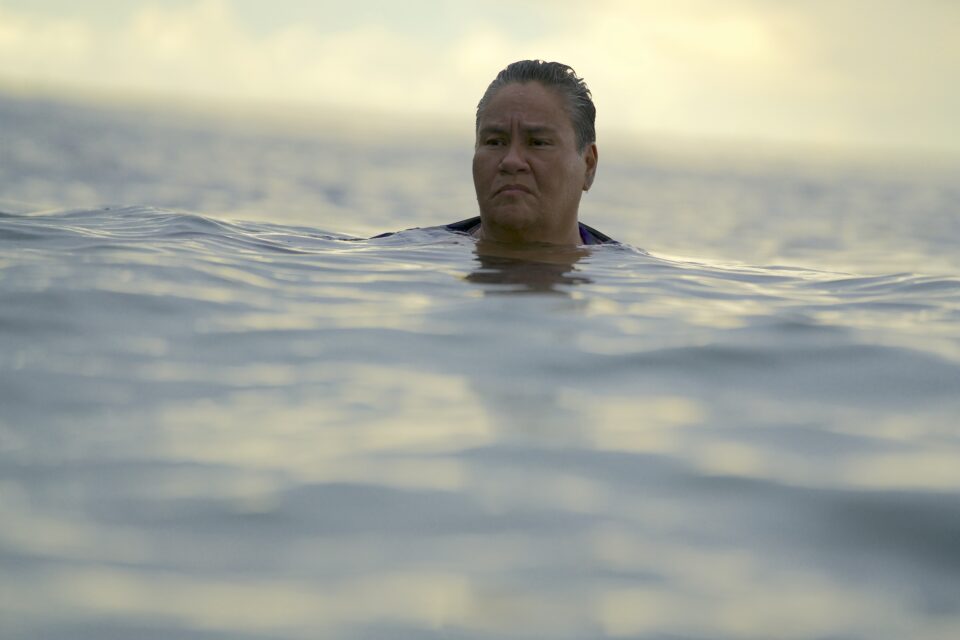
It is never easy watching a person slowly disappear while they are still standing right in front of you. Not in a physical sense, but emotionally and spiritually, watching a brilliant mind lose its grip on the world. ‘Before the Moon Falls’, directed by Kimberlee Bassford, carries that specific, heavy ache in nearly every frame. What starts as a portrait of a revolutionary Samoan writer gradually transforms into an intimate observation of a beautiful, complicated mind unravelling in real time.
The documentary follows acclaimed author Sia Figiel over the course of eight long years. It traces her artistic legacy, her incredibly raw struggles with bipolar disorder and depression, and ultimately the tragic events that shifted the trajectory of her life and the film itself. It is not an easy documentary to sit through, I must say. I struggled with it. And Had to watch it multiple times to make it to the end of it. But once you fully commit to it, it is absolutely impossible to look away from. It’s the kind of film that leaves you needing to take a long, quiet walk afterwards. The director approaches Sia’s story with a patience and a feminine tenderness that never feels exploitative, even when the subject matter becomes almost unbearably painful.
The Humanity of a Nonlinear Journey
What makes ‘Before the Moon Falls’ so affecting is just how human it feels. This isn’t a documentary interested in simplifying mental health into “digestible” lessons or the kind of inspirational clichés we see too often. It understands that healing is messy, nonlinear, and sometimes tragically incomplete. The film resists the urge to package Sia’s life into a neat, tidy redemption arc, and because of that honesty, it lands with a startling emotional force.
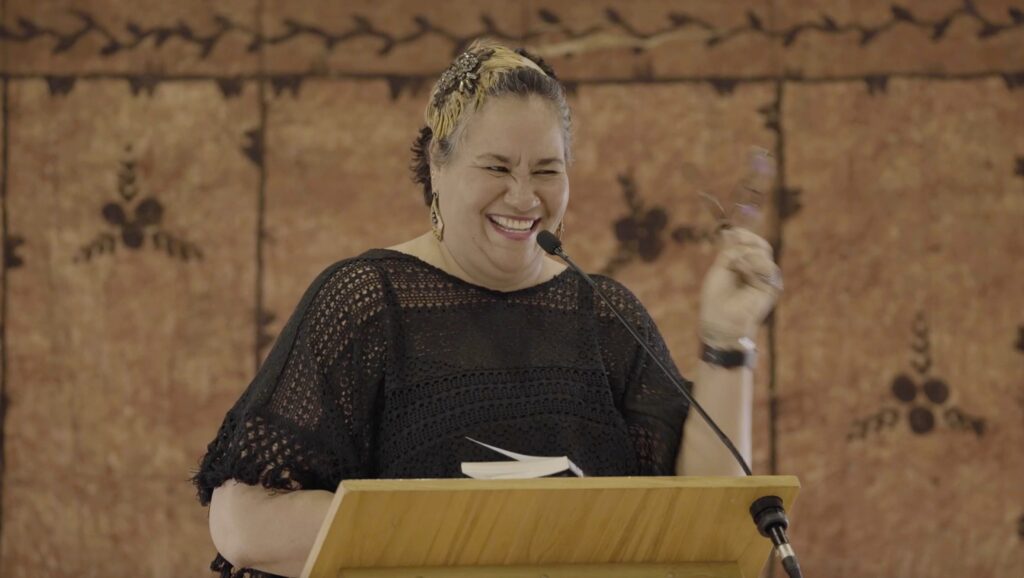
Sia herself is magnetic. Whether she is speaking passionately at public events, laughing with loved ones, or spiralling into emotional volatility, she commands the screen. There is a fire inside her that never fully disappears, even during her darkest moments. Bassford’s camera captures not just the celebrated feminist voice and public intellectual, but also the frightened, wounded woman underneath all that brilliance. The result is a portrait that feels painfully intimate.
One of the documentary’s greatest strengths is its willingness to sit in contradiction. Sia is both vulnerable and destructive; she is inspiring yet difficult; loving yet deeply troubled. The film never asks us to excuse harmful behavior, but it does ask us to understand the complexity of suffering. That emotional nuance becomes especially vital as the film moves toward its devastating final act.
A Seismic Shift in Storytelling
There is an early sense that this might become a story of recovery a “triumphant turning point” where Sia rebuilds herself piece by piece. But life doesn’t always follow a cinematic structure. The arrival of the shocking murder charge involving Sia changes everything, not just for the audience, but for the filmmaker herself.
What is remarkable is how thoughtfully the documentary adapts to this seismic shift. Bassford doesn’t sensationalise the tragedy. Instead, she allows confusion, grief, and moral discomfort to exist openly. You can feel the filmmaker wrestling with those impossible, heavy questions: How do you continue telling the story of someone you’ve spent nearly a decade documenting after something so horrific occurs? How do you reconcile empathy with accountability? The documentary never pretends to have the answers, and that honesty gives it a tremendous amount of integrity.
Visually, the film carries a quiet emotional elegance. Bassford’s observational style lets moments breathe, conversations feel unforced, and silences are allowed to linger. Even the landscapes seem to carry their own emotional weight, reflecting both beauty and isolation.
What also stays with you long after the credits roll is the film’s cultural dimension. Sia’s experiences exist within larger, often silent conversations about generational trauma, societal expectations of womanhood, and the stigma surrounding mental health in many communities. Her pain never exists in a vacuum; it ripples outward into her family and her community.
Spending eight years with a subject creates a level of trust that simply cannot be manufactured. You aren’t watching isolated interviews; you are witnessing a decade of evolution, deterioration, hope, and collapse. That accumulated intimacy makes the end of the film feel almost unbearably close.
What moved me most is that beneath all the tragedy, the film never loses sight of Sia’s humanity. It refuses to reduce her to a diagnosis or a crime. Instead, it insists on acknowledging the full complexity of a woman who once gave a voice to so many others while she was struggling desperately to save herself.
Bassford avoids the pitfalls of melodrama through restraint and compassion. Before the Moon Falls is heartbreaking and profoundly human filmmaking. It leaves behind no easy comfort, only reflection and the lingering image of a woman whose brilliance could illuminate entire rooms even as the darkness gathered around her.
8.5/10