
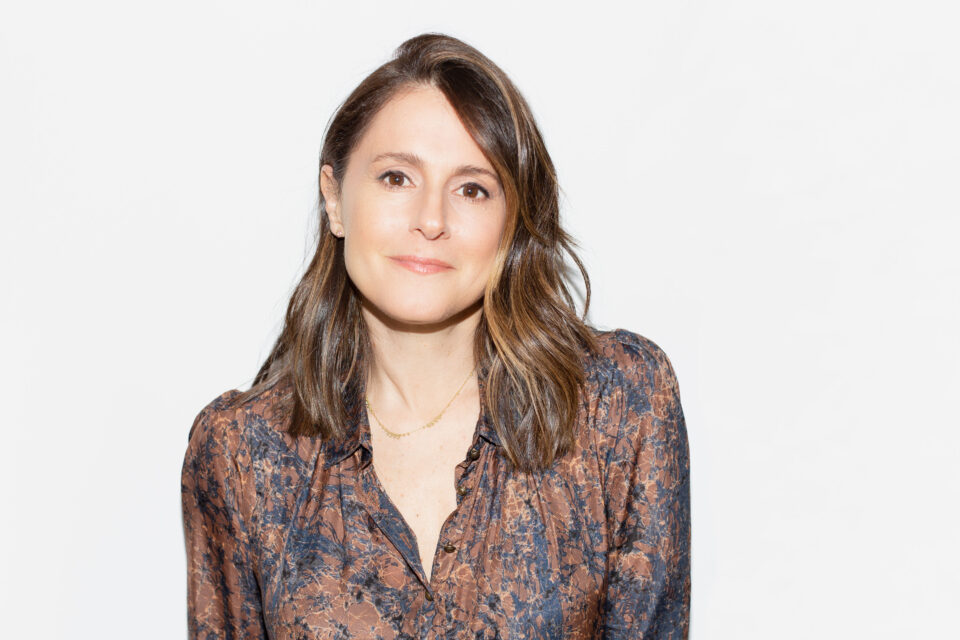
Ali Marsh’s path to the director’s chair didn’t happen overnight, but Pittsburgh is a solid reminder that some stories drop exactly when they’re supposed to. In our conversation, Marsh gets honest about the real-world experiences that fueled the script, the raw grind of stepping behind the camera for the first time, and the collaborative muscle required to bring Mints’ world to life. From the meticulous, zero-shortcuts recreation of a gritty 1970s aesthetic to directing breakout young talent Delaney Quinn, Marsh breaks down the heavy lifting that made the film a success. She also lays out her blueprint for expanding Pittsburgh into a full feature-length project—a move that would give audiences a deeper look into a narrative that’s only just scratching the surface.
- Ali Marsh, after more than two decades as an actress and voice artist, what first drew you towards filmmaking and at what point did you find the confidence to step behind the camera as a director?
Ali: Well, to be totally honest, I had reached a point in my acting career where I hit a big fat wall…. it was just time to approach this whole beast from another angle. I’ve always had stories I’ve wanted to tell, and you’re exactly right – for me, it was about working up the courage to feel like I could, in fact, be a teller of stories. And that courage definitely grew out of – let’s call it what it is! Time passing! Also known as age. And a recognition that it was now or never. Just time to take the leap. I felt I had nothing to lose.
- Your latest film, ‘Pittsburgh’, captures a very specific moment in a young girl’s life. What first inspired Mints’ story, and how much of it draws from personal memories or observations?
Ali: A whole lot of Mints, and the world of Pittsburgh, is drawn from my real-life experience. I embellished, of course, and filled it out a lot. But these sorts of moments, that end up really informing our stories about ourselves, are just always so juicy. Also, having kids of my own has made me particularly keen on noticing the moments when they’ve been ready to take in different sorts of information about their environment and the people who surround them. I mean, they’re pretty grown up now, but it’s an area I find fascinating. What our brains allow us to see and absorb at any given time in our lives. What information are we ready for, when, and why?
- The late 1970s feel almost like another character in the film. What fascinated you most about setting the story in that era?
Ali: I’m so glad you felt that way. I did, too! Capturing that era felt like a huge mission of the film, and I’m so proud of how it came out. Something about that era just feels so rich to me – the colour palette, the texture, the low-fi, no tech of it all. There was such a strong personality to that era, in a way that I don’t feel so much anymore, now that the entire world is so accessible – things feel somehow less specific.
- The story balances humor, vulnerability, and heartbreak. How did you approach finding that tonal balance using a young character as the lead?
Ali: Well, those are kind of three of life’s most significant ingredients, right? I mean, there are other biggies, of course, but striking the balance is always key. I tried to mine the humour wherever I could, and there’s inherent vulnerability in the story. The heartbreak, and all the rest… I have to credit the actors with that. They were all just so fabulous. They were the special sauce.
- Anyone would admit that Delaney Quinn’s performance stands out in this film. What was it about her that convinced you she was the best pick for the role?
Ali: My wonderful casting director, Steven Vincent, read the script and said, “I have the perfect girl for you”. Boy, was he right! I still made him find a whole lot of other kids to audition – and so many of them were truly excellent. But I kept coming back to Delaney. She’s such a talent. And she just let Mints live in her in this totally organic way.
- How has your experience as a performer influenced the way you communicate with actors on your set? And what aspects of the story are you most excited to explore in the expanded version?
Ali: Well, I just really love actors. I love them so much. They are the funniest, most sensitive, wise and intuitive bunch. And I really scored with this cast. It was so easy to direct all of them; I barely had to. Once in a while, I would just give the slightest adjustment – and I guess I gave those adjustments in the way I would like to receive them when I’m acting. With clarity and respect.
- Can you talk about your collaboration with production designers Jamie Brzeski and Alan Bruckner in building this world?
Ali: Again, I feel like I really scored with those two! They both really got my vision from the very beginning, and they were both such a joy to work with. We had so much fun searching for stuff on eBay, all over the internet. And Alan just had this amazing collection of set pieces, which we used to create the hotel room. Those weird hexagonal panels that we affixed to the walls – he just had those! He can do anything – he was changing the doorknobs and locks on the hotel doors without anyone knowing! And Jamie has the most amazing eye for detail. The three of us really had a blast. We were like kids in a candy store.
- I can imagine some of the challenges you had to face on this project. What lessons do you think will stay with you throughout your directing career?
Ali: Hire the best people you can! My entire team, from DP Jared Levy to the entire crew, editor to composer, producers, and everyone in between, was 100% enthusiastic, on board with the vision, and excited to tell the story. I felt so supported. That and…be prepared. Be as prepared as you possibly can be.
- Considering how well this short film has done, are there any plans for a feature-length exploration of it?
Ali: That’s the hope and dream!
- Lastly, one of the film’s central ideas is that children sometimes possess wisdom that most adults overlook. What conversations do you hope the film sparks among audiences?
Ali: Hmmm, I hadn’t really thought of it that way – inspiring conversations. If it does, that’s fantastic! I just want audiences to feel transported, engaged, entertained .. and like they want more of these people and their story! I definitely do.
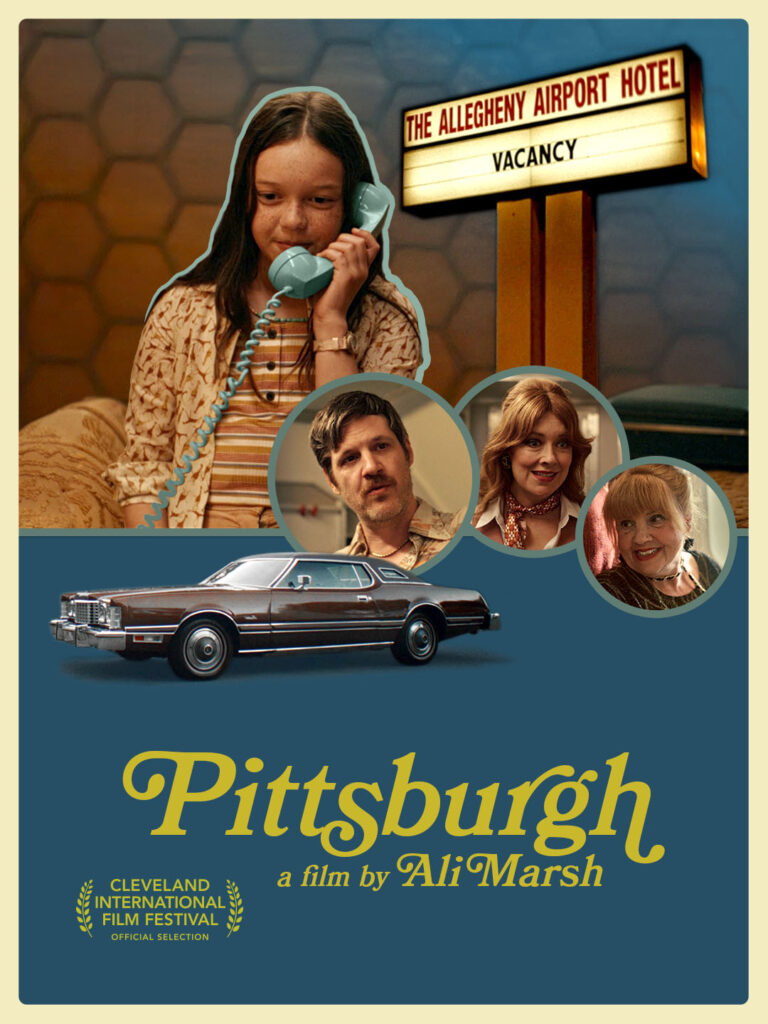
What hits you hardest after talking with Ali Marsh is that she doesn’t just manage a set; she protects the characters and the crew, pulling the strings behind the scenes. Whether she’s talking about her actors, the production design, or the technical crew, she constantly strips it back to three core principles: trust, prep work, and lockstep collaboration. That exact discipline runs through Pittsburgh, a film that squares up to the chaotic uncertainty of childhood while highlighting the resilience it takes to survive it. As Marsh sets her sights on a feature-length adaptation, it’s clear that Mints’ story still has plenty of mileage left in the tank. If this sharp, deeply personal short is any indicator, audiences will be more than ready to ride shotgun wherever she takes the narrative next.