

For filmmaker Olivia Jean Hamilton, real storytelling kicks off the second you stop using it for simple entertainment and start weaponising it to decode the world around you.
With her short film The Closet, she pulls directly from a deeply personal experience to deliver a fresh, sharp, and unapologetically humorous take on the classic coming-out narrative—zeroing in on the unique, often-overlooked anxieties bisexual people square up against, even within the LGBTQ+ community.
Seamlessly fusing heartfelt vulnerability with biting comedy, Hamilton crafts a film that hits home while pushing some serious buttons. In this conversation, she breaks down the real-life inspiration behind the script, the non-negotiable need for authentic representation, the power of comedy to smash through difficult truths, and why having the balls to laugh is sometimes your best defence against life’s most intimidating moments.
- Olivia Jean Hamilton, what inspired you down the path of filmmaking?
Olivia: I have always been a filmmaker since I was a kid! Since childhood, I became fully absorbed into whatever TV show or movie I’m watching, as long as it had a good story. The power of TV and film media to transport one into another world has always been my inspiration, and my escape.
- Your film ‘The Closet’, takes the traditional coming-out narrative and completely flips it on its head. At what point did you realize there was comedic power in the fear of coming out to queer friends rather than straight ones?
Olivia: I think there is comedic power in any story, depending on how you tell it. I’ve had to deal with a lot of hard situations or traumatic instances in my life, and if I didn’t find a way to laugh about it, I’d always be crying. I’d rather see my life as a comedy than a drama. It doesn’t change what happens in life but it does help change how I get to feel in my day to day.
- The film is rooted in your own boarding school experience, how did revisiting those memories shape the emotional honesty of the script?
Olivia: It doesn’t matter how old you are, it will always be nerve-racking when you expose a critical part of yourself and you are not sure how it will be received by those you love. I have always used comedy as a tool for tough situations, so jumping out of the closet was my best way to tell my friends without making the moment too serious. I wanted to make sure I kept that genuine feeling of anxiety there, but also the importance of being silly when dealing with life.
- Olympia’s anxiety feels very real beneath all the humor. How important was it for you to ground the comedy in authentic emotional experiences?
Olivia: Extremely. As humans, we are so complex and can feel a plethora of emotions simultaneously. I knew it was important to remain deeply connected to this very human experience of anxiety otherwise the cringy, awkward, silly way of coming out wouldn’t feel genuine. The emotional stakes had to be high since this was a truly scary moment for Olympia.
- Amy’s performance as Olympia feels both awkward and charming. What specifically convinced you she was the right person for the role?
Olivia: Amy is a highly trained actor, with a very extensive and diverse education. Good comedy is much harder to achieve than drama, but doing both at the same time was a skill I knew she had. Her questions about the character prior and her “homework” on building Olympia as a real person is a prime example of her level of professionalism. I would work with her on many more roles since she is extremely talented and always up for a challenge.
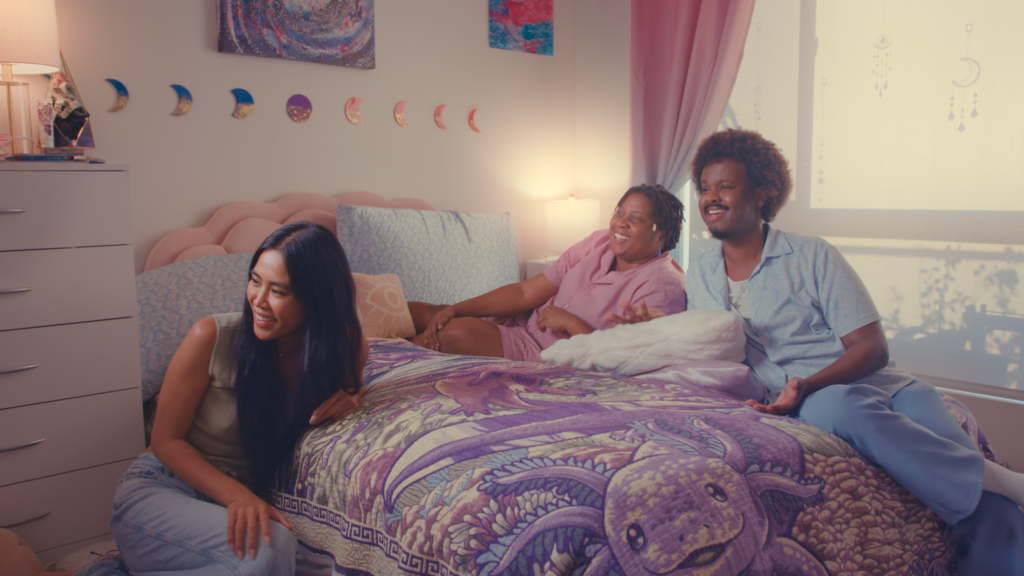
- One of the strengths of the film is how recognizable the friend dynamics feel. Were the supporting characters inspired by real personalities from your own life?
Olivia: Haha yes! Sasha (Jasmine Vaughan) is not an actor but my childhood best friend since we were 5. I had her fly across the country for this role and had her embody herself mixed with bits of our NYC friend group which was so fun. Gray (Moe Dagane) the gold star gay was actually based off of a friend from boarding school, who was so proud to be a gold star and a bit biphobic.
- With your experience so far, do you think comedy can sometimes communicate social truths more effectively than drama? How effective do you believe that it can be?
Olivia: Comedy has a better way of disarming people to talk about critical things. With drama people are more on edge or more likely to have their guards up where comedy can talk about a truth without feeling too direct. Drama can also feel like someone is preaching at you or a teacher giving you a lesson where comedy is enjoyable and sometimes you don’t realize what they’re telling you until after the moment is over.
- What kinds of topics or characters are you hoping to explore next as a filmmaker?
Olivia: Well I am currently working on my first feature documentary about my late mother Dorothy Cann Hamilton. She was an incredibly inspirational person. Though after that I’m going to get back into narratives either for feature or episodic, where I take classic tales like Cinderella or Alice in Wonderland but with my own twist to them.
- What has surprised you most about audience reactions to the film so far, particularly from bisexual viewers?
Olivia: How deeply it resonated with my fellow bisexual viewers and how grateful they were to see a nuanced representation. I’m also surprised at how many critics are not in love with pastels, genuinely shocking to me because if I had my way, I’d paint the world in that exact color palette.
- Lastly, if a young bisexual viewer watches ‘The Closet’ and sees their own anxieties reflected in the narrative, what do you hope they ultimately take away from the experience?
Olivia: Regardless of your friend’s personal biases or prejudice, if they truly love you, it doesn’t matter and if it does matter, then they don’t truly love you. We deserve to be surrounded by loving and supportive people even if their unknown reaction can make us a little nervous. Sometimes it’s good to test our friend’s love and support for us because otherwise you could be surrounded by people who are not genuine, or worse yet, haters, and not realize it. So shake the house to test that strong foundation baby, then you know it is worth it to keep building with them!
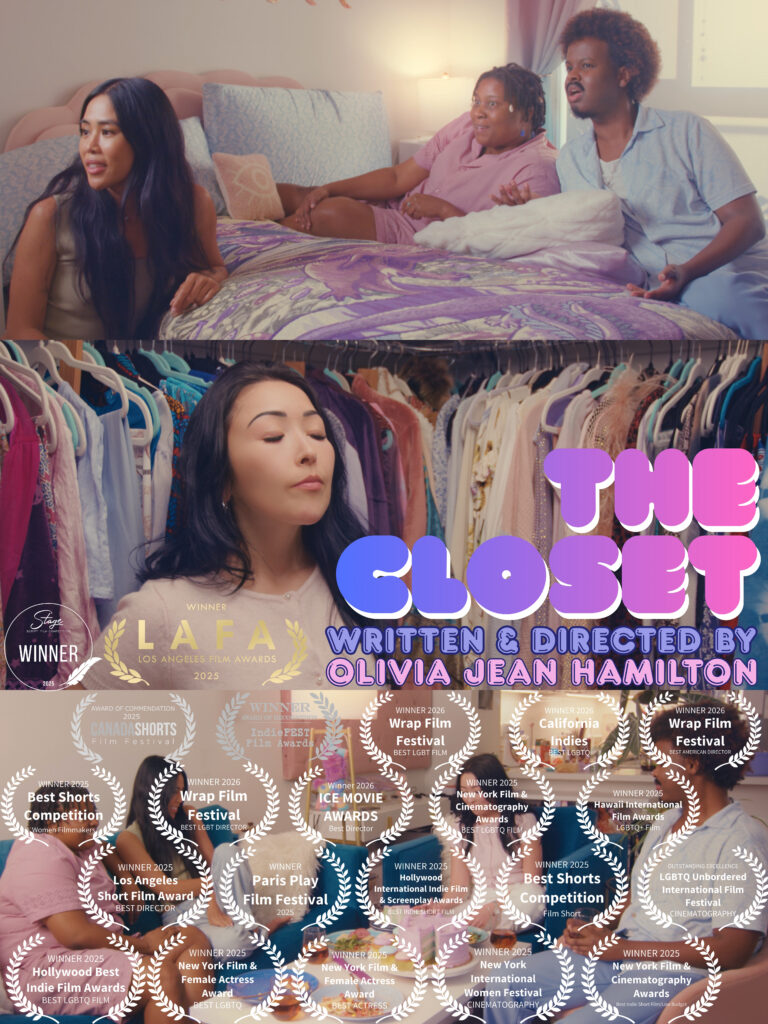
What hits you hardest after talking with Olivia Jean Hamilton is that The Closet is a hell of a lot more than just a clever structural twist on a familiar genre. At its core, this film is an absolute celebration of raw authenticity, radical self-acceptance, and the sheer courage it takes to lay your cards on the table with the people you care about most.
By locking in genuine emotional stakes and balancing them with disarming humour, Hamilton has forged a narrative that connects deeply with audiences, especially bisexual viewers who rarely get to see their specific realities handled with this much nuance and warmth.
As she sets her sights on upcoming documentaries and flipping classic narratives on their head, one thing is set in stone: her iron-clad commitment to driving meaningful stories home with heart, humor, and pure humanity is only just heating up.