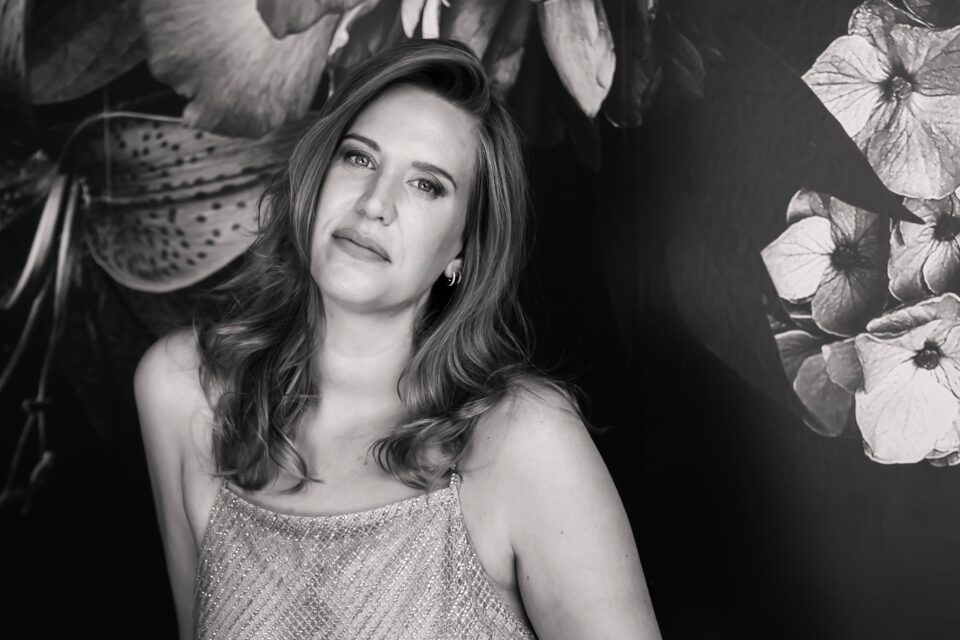
Natalie Schwan’s Last Stand at Butte City might be carved out of the rugged, unforgiving frontiers of 1880 Montana, but the real war being waged on screen is far more internal than its vast Western backdrop suggests.
Beneath the gritty tale of a woman digging her boots in and refusing to surrender her homestead lies an intense, deeply personal exploration of raw grief, severe trauma, and the sheer grit it takes to rebuild a life from the ashes. In this conversation, Schwan drops her guard and talks candidly about her unconventional path into the director’s chair, the personal scars that shaped Charlotte’s journey, and why this stands as the most raw, vulnerable project she’s ever put on camera.
She also breaks down the brutal realities of bringing an authentic, period-accurate Western to life on a lean budget, the powerhouse performances that blew past her expectations, and her ambitious vision to expand ‘Last Stand at Butte City’ into a full-length feature.
- Natalie Schwan, congratulations on your latest short film. Can you tell us what your journey as a filmmaker has been like so far?
Natalie: Thank you – I’m very excited about this film. It’s my most personal project yet and it really felt like I honed my voice as a director in this one. Like many people in the industry, I found my way into film in a sort of abstract, non-linear way. I never went to film school, and instead went to business school and pursued entertainment PR. Then I moved to LA and realized my passion for storytelling and film as an interest was something I wanted to pursue as a career. So, I started interning with producers and production companies and learned from the ground up. Then I made my first short film for a few thousand dollars and had no idea what I was doing, but it truly was the best trial by fire learning experience. I literally bought “Filmmaking for Dummies” and worked my way through it and made a 15 minute short film that I’m still incredibly proud of. I thought I wanted to produce at first, and started producing for friends just out of film school and for photographers in LA. It sort of snow-balled from there and I was always making my own short films on the side. My producing became a means to direct and when I moved to New York I started directing commercials everything cracked open from there. My next step is to direct long-form content.
- Last Stand at Butte City is rooted in the American West, but at its heart it’s an intimate story about grief and healing. What was the initial spark that inspired this film?
Natalie: It’s a very personal story and I put a lot of myself into the script. I had this character idea percolating for a while of a woman in her 50s/60s going through a major life transformation and was fascinated about the steps in her life that could have brought her there. When I decided to write something in the Western genre, I found her origin story easy to write given the unforgiving and brutal nature of the American West. Her story might seem unbelievable, but she was likely not an isolated incident in that time period. Life was hard. Loss and death were commonplace. Outlaws and illness that led to death were just a part of life. I wanted to explore my own trauma, loss and grief through a safe lens of setting it in a different time period, and with a woman in a much different season of life. I had found funding opportunities to film shorts in Montana so I was looking for some kind of impetus from that state’s history that could be Charlotte’s turning point and the idea of the railroad and how that both disrupted and connected our nation felt like a perfect way to literally and metaphorically unearth Charlotte’s past.
- The film touches on themes of trauma, memory, and acceptance. Were these ideas drawn from a specific historical account or from broader human experiences you wanted to explore?
Natalie: These were inspired a lot by my personal story, and I wanted to find an external, more distant lens to explore them. I heightened the stakes that were historically accurate – unfortunately, death from disease, violent brushes with outlaws and the general unforgiving nature of an unforged country were commonplace in the time. I tried to lean into what was happening on a broader level during that time period and place but I wasn’t looking at a specific woman in history. I think Charlotte’s tragedies represented an accurate depiction of many women’s stories in that era.
- Charlotte’s conflict begins as a fight against the railroad but gradually becomes an internal battle. Was that emotional transformation always at the center of your story?
Natalie: Absolutely. Charlotte has been stuck for so many years, I knew we needed an external event that would kick start her emotional journey into the past in order to move forward. When she realizes what the incoming railroad will unearth, both literally and figuratively, it triggers so much of what she has locked away in memory. Her fight, while it has an external target of the railroad, is very much a fight with herself and her struggle to find peace with her past and move forward in her life.
- Tell us a bit about the casting process. How did you settle on your choices for both the older and younger Charlottes?
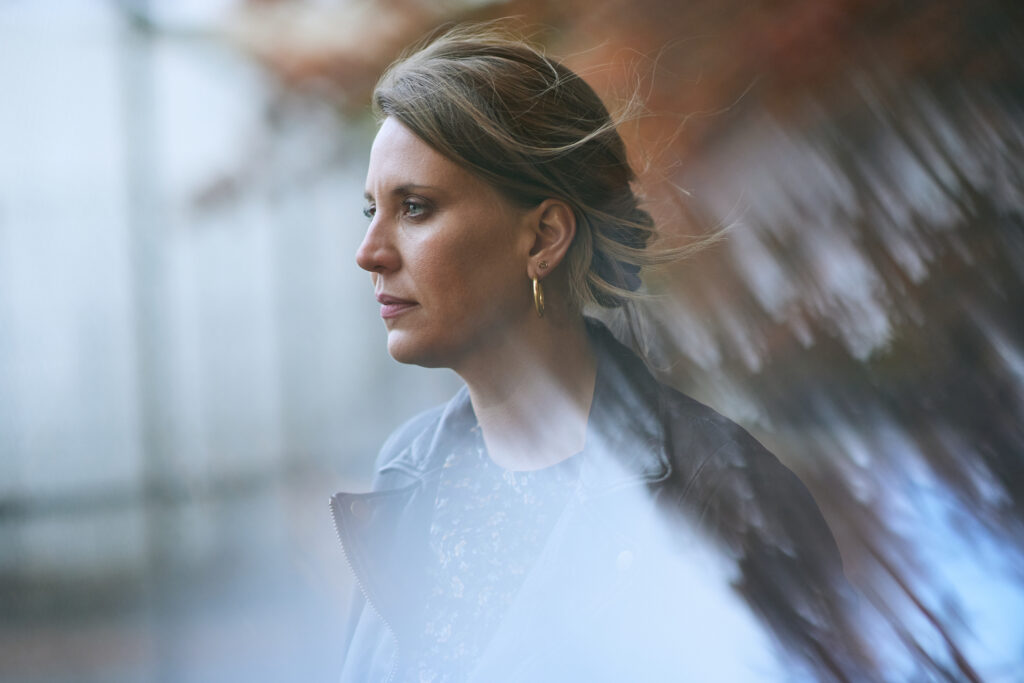
Natalie: We had an incredible casting director on this – Emily Fleischer – who cast our Charlottes. I knew from the beginning that I wanted our lead to be an actress who was ready to roll up her sleeves and get into a challenging character and a physically demanding filming experience. I wanted an actress who didn’t care about always looking glamorous and was ready to ride horses and get into a gritty period costume. I knew we needed an actress who really connected with the character and was ready to sink her teeth into it – and Kerry O’Malley was the perfect person for that. I truly couldn’t have imagined a better Charlotte and I’m beyond blessed to have worked with her. After we cast Kerry, we started looking for our younger Charlotte and Emily discovered Jamie Lynn Richards who truly just blew me away in both the audition and her performance on screen. This is her first film role and I think she’s destined for an incredible career. Both my Charlotte’s couldn’t have captured her any better – it’s one of the few times in my career that the final film is so much better than my wildest imagination, I’m incredibly lucky to have collaborated with these women who gave me all of their best talent, heart and energy. They really held nothing back and I think that is evident in the film.
- Why did you choose 1880 Montana as the backdrop for this story, and how important was historical authenticity to the narrative?
Natalie: We were chasing a filming incentive in Montana (and ultimately were awarded funding from the MT Department of Commerce via the Big Sky Film Grant), so I knew I wanted to find something in Montana history while I was finishing the script. The disruption of the incoming railroad that went through the territory (it wasn’t even a state at that time) was a perfect historic moment. It would have completely disrupted the local status quo and felt appropriate as a thematic backdrop on a macro-level to mirror Charlotte’s own journey. I always try to be as historically authentic as possible and relied heavily on my costume designer and production designer to bring that texture to the screen in the details.
- Obviously, any period film can be extremely challenging. What was the biggest challenge you had to deal with in the making, especially in the world-building?
Natalie: Budget is always a challenge on any project, but with a period piece it’s so specific, the costume, set design, etc are far more layered and expensive than a contemporary piece. Luckily we had incredible access to those pieces filming in Montana because so many Westerns are shot there. The local team were so incredibly generous with their resources and talents, we were really able to build a much bigger world and higher production value than I was anticipating. I think our biggest challenge was deciding where to go bigger and use more budget in moments, and where to be more simple and lean into alluding to a bigger world than what we could actually see on screen.
- Looking back now, is there anything you would approach differently if you were to make this film all over again?
Natalie: So many things came together in a way that exceeded expectations, and I have to give a lot of credit to the cast and crew who gave me 100% of their time, energy and talent to make our film possible. I do feel like we packed a lot into an incredibly ambitious shooting schedule given budget constraints, and I would have liked to add one more day into the schedule so we could have breathed a bit. So much of the film was emotionally heavy and I think both cast, and even the crew, would have loved a bit more time between heavier scenes to reset.
- The ending feels emotionally satisfying while also leaving viewers wanting more of Charlotte’s story. Have you ever considered expanding Last Stand at Butte City into a feature-length film?
Natalie: Definitely – this has always been the intention behind the short film. It was a real challenge to fit the scope of the story and characters and world into a 17 minute film and I’m very excited about developing this into a feature film where we have more time to live with these characters and the world. The short was an incredible exercise in building out the feature in my head, and a hands-on workshop to see which moments or beats I wanted to add or extend in the feature script that I didn’t have time to cover in the short. It also helped me realize what I could cut and where less was ultimately more.
- Lastly, after audiences leave Charlotte and her homestead behind, what is the one feeling or question you hope remains with them long after the credits roll?
Natalie: I want audiences to feel a bit heartbroken in the film, but ultimately find hope at the end. I was inspired to make this film because of events that have happened in my own life and Charlotte was very much a cautionary tale of who I might have become if I didn’t address my own grief and trauma. Ultimately, I want audiences to be reminded that it is never too late to change your life or find redemption and hope. I want people to be reminded of how important connection is, even if it feels dangerous after loss or heartbreak or trauma. Isolation can feel like the easy or protective choice – but ultimately it cuts us off from the very thing that can heal us: human care and connection. I want people to wonder where Charlotte goes, and be a little unsure if it will all work out, but ultimately applaud her for choosing to leave rather than stay behind her own self-imposed prison cell.
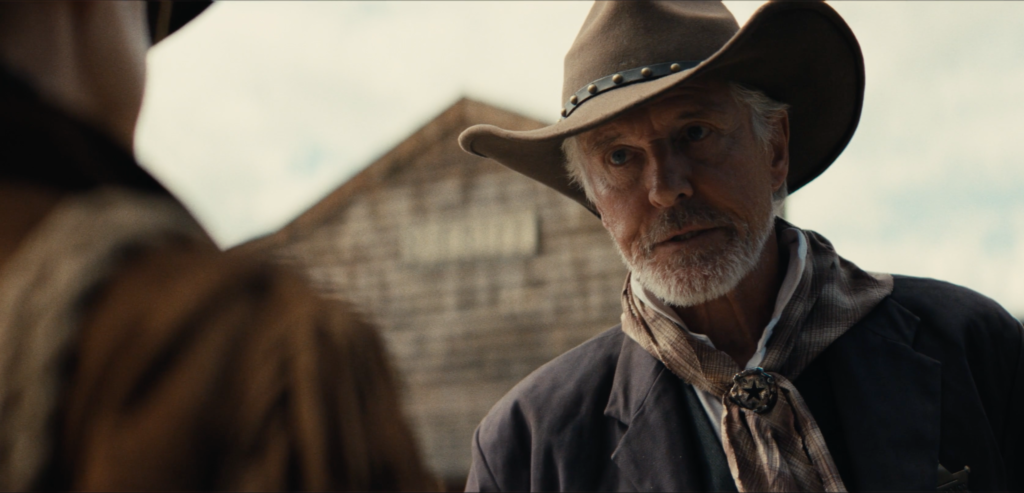
By the end of our chat, one thing is abundantly clear: Last Stand at Butte City is a hell of a lot more than just a sharp, beautifully shot Western; it’s Natalie Schwan’s uncompromising meditation on the heavy emotional baggage we carry, and the strength it takes to finally lay it down.
Charlotte’s fight might be set in another century, but her struggle with grief, isolation, and redemption hits like a sledgehammer in today’s world. Schwan’s absolute devotion to authentic, hard-hitting storytelling shines through every answer, leaving zero doubt that this short film is merely the opening shot of Charlotte’s journey.
When the feature adaptation lands, audiences will jump at the chance to step back into this brutal, richly realised world guided by a filmmaker whose voice is growing sharper, bolder, and more formidable with every single frame.