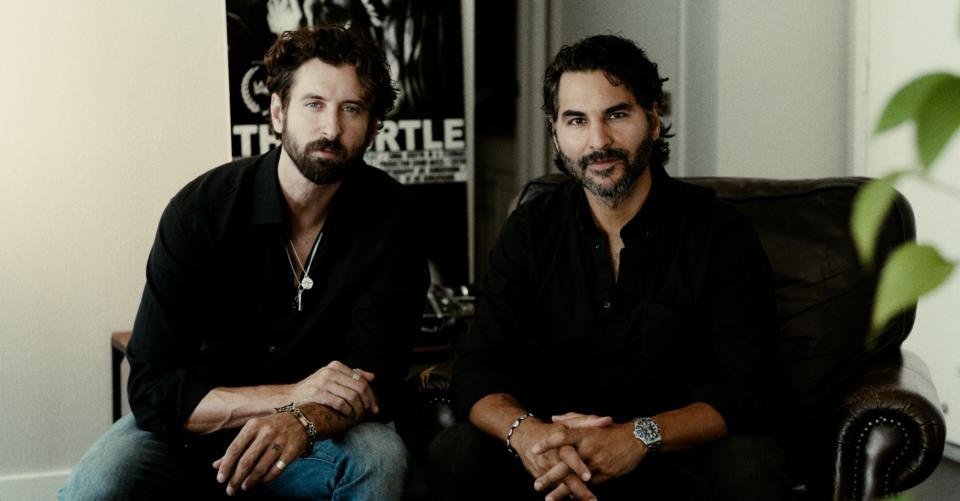
Some films are built to give you a couple of hours of cheap escape, while others step right up, grab you by the collar, and force you to look at the parts of yourself you usually keep buried deep. Joe Bongiovanni’s ‘The Turtle‘ belongs firmly in that second camp.
Pulling straight from raw, personal experience, this short cuts right to the bone of modern masculinity, emotional vulnerability, and the invisible armour men build to lock people out of their relationships. Together with producer and lead actor Richard-John Seikaly, the collaborators break down how absolute honesty became the foundation of both the narrative and their creative brotherhood, why cold truth beats a polished performance every single time, and how a lean, intimate short became the launchpad for an ambitious streak of filmmaking.
- Joe and Richard, can you each tell us what influenced you to become filmmakers?
JB: Definitely Mel Gibson in the first Lethal Weapon. There’s a great scene where he’s looking at this picture of his dead wife and he just breaks down and I knew at that moment that it wasn’t a character, but it was actually Mel breaking down and that’s what pulled me in at a very young age. Also my grandfather Tone, I used to watch Once Upon a Time in America with him when I was very little, and being from Sicily, he was in love and obsessed with Robert De Niro.
RJS: I am an actor/producer and not yet a bonafide filmmaker– Joe has earned that title.
- What was the inspiration for ‘The Turtle’ and how did you both come to collaborate on it?
JB: The turtle was inspired by my marriage at the time about 12 years ago. I felt obligated to uphold this kind of masculine support system in the relationship and in consequence, I ended up strangling my emotions. So I wrote the script, aiming at trying to kind of find a balance.
RJS: Joe and I were already collaborating on test shoots as he developed his filmmaking skills. At a party, he saw my co-star Emma Griffin and I interacting and simply asked if we wanted to shoot something. It was a no brainer– We read the script and loved it.
- The film examines masculinity without portraying it as simply toxic or villainous. Why was that nuance important to preserve?
JB: There’s such strength and healing in vulnerability, and whether it’s coming from a masculine or feminine energy, I wanted to really try to dial in on that.
- Your collaboration appears to be built on honesty and creative trust. What conversations do you have before production begins that allow you to challenge one another without compromising the work?
JB: I think me and RJ’s ability to just trust each other without really needing to say much. I’m comfortable being vulnerable in front of him as much as he’s comfortable being vulnerable in front of me. So much of how we work together is really finding ways of drilling into the truth without sugarcoating it.
RJS: I keep an open mind and heart when speaking creatively with Joe because I trust his talent. We have common goals to get after the truth. A healthy creative ego is best based on not knowing, I ask questions, I commit to choices he throws at me and see if it works. That’s the creative trust. It also helps that we were close friends before we began our collaborations.
- As someone who has worn many hats on sets, how do you know when to step aside and simply serve the emotional truth of a scene?
JB: Part of the process that I’ve learned and studied is being able to throw out all the preparation I’ve done. And I’m the type of Actor and Director who throws everything out even if I haven’t prepped! haha, so that’s why preparation is super super important for me. I also am not very good at pushing false behavior, so my belief has always been: a true ‘nothing’ is always better than a false ‘something’
- As producer, how do you also protect the emotional integrity of a deeply personal story while still making practical production decisions?
RJS: By being patient with the process. I feel it’s all under one hat really in the sense that it’s always to protect the story as an actor, producer or any other position on set. I have also learned to let things go for the betterment of the project. It comes from my training as an actor. I follow my creative impulses and I live in the questions: if it works cool, if it doesn’t we move on. As a producer, I invest time and energy to champion the story we are telling first and giving the director the ammunition needed in the editing room.
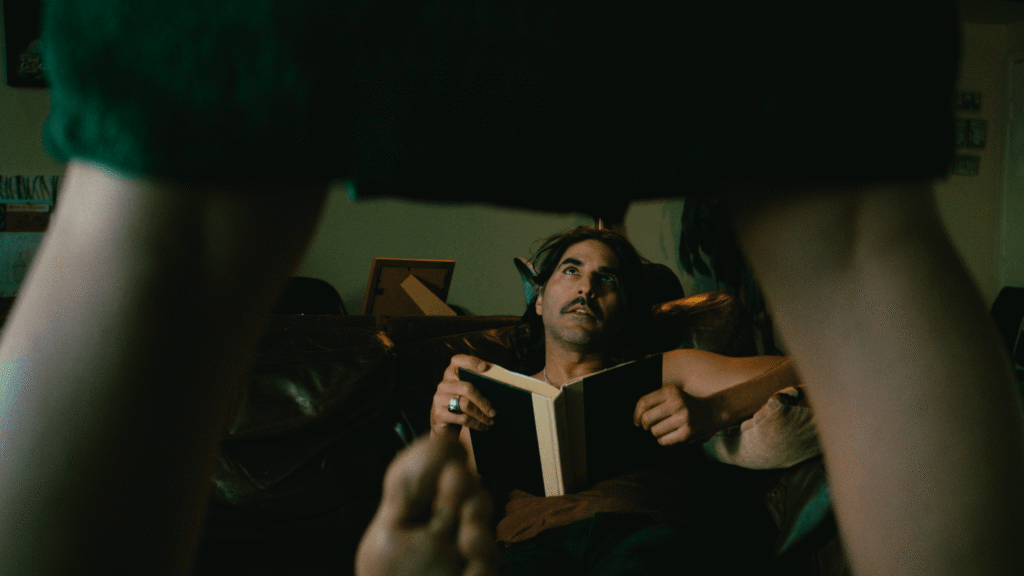
- What directing techniques helped you capture performances that feel lived-in rather than performed?
JB: A big thing that I like to do is begin a conversation with the Actor before we start rolling and try to talk about things that have nothing to do with any type of scene or any type of character. That way the work maintains an organic flow, and I can roll and “catch” moments for the edit. Honestly, when I’m working, I don’t even like to use the term “character” or the term “scene” because the words themselves can be very two dimensional. I also feel the energy on set that I produce as a Director, just in how I behave or speak about truth and my own personal art form and how I’m trying to go for this grounded realism, it almost becomes contagious amongst the actors. And of course, when it’s not working for a take, it really all depends on the Actor and their own process and a lot of it for me is just shutting up and getting out of the way.
- Tony carries enormous emotional weight while saying relatively little. As an actor, how did you approach communicating what remains unspoken?
RJS: After studying the script and talking with Joe, I trusted the work would be there. Playing off Emma Griffin and just being present with her was like we were in a “sandbox” as Joe likes to call it. Listening is a big one always. Sitting in real thought and not pushing anything. I gave myself time to sit with my thoughts and Joe catches it like fireflies in the night you gotta watch for those glimmers of light.
- The performances feel remarkably natural. What kind of rehearsal process helped create that level of spontaneity on screen?
RJS: Thank you for saying so. It was really getting to know each other through the work. I felt very comfortable in our “sandbox”. Relaxation is key for me to let things happen, following creative impulses and just always listening with my body to Emma and other elements in the room. I rehearsed as we shot, it’s always a rehearsal for me, it keeps any pressure off of having “to perform”
- After completing this film, what did you discover about yourself that you hadn’t before starting this project?
JB: It made me feel ready to shoot my first feature.
RJS: That I’m all mush inside aha… I suppose I rediscovered how important it is to be open and keep saying yes in the flow of the work because it’s always a beautiful surprise when things hit you that you didn’t expect.
- What do you hope the audience, men in particular, take away from the film?
JB: I hope men see this and they realize how fragile the balance can be in their own relationships. I hope they realize that vulnerability can be one of the strongest and most precious states that I think can move mountains in terms of long-term commitment.
- Richard, what advice can you give to any actors who are considering dabbling in the role of producers as well?
RJS: Find your tribe of creative partners to collaborate with who are serious about their craft. Identify your strong suits, what resources do you have? What are the creatives around you good at? Be a facilitator and supporter of your tribe and get your work seen. Don’t wait for someone to give you permission to tell the stories you want to bring to life.
- Lastly, you have another project on the way, ‘Chasing Persephone’. Can you tell us a bit about what to expect from it?
RJS: A raw, honest, poetic, and gritty piece of cinéma verité. A true love letter to the work by Joe in every department of pure guerrilla filmmaking. Heart and soul.
JB: Chasing Persephone is a dive into addiction and the power of what Love, or what even the idea of love can do to a person. The acting work in Chasing Persephone is very grounded and very real, almost feeling like a documentary at times, and I think it will really hit a nerve with a lot of people. It’s definitely one of those films that makes you think and feel for a couple days after the credits roll. We caught something special that I think will push the boundaries of filmmaking. I’m excited for people to experience it.
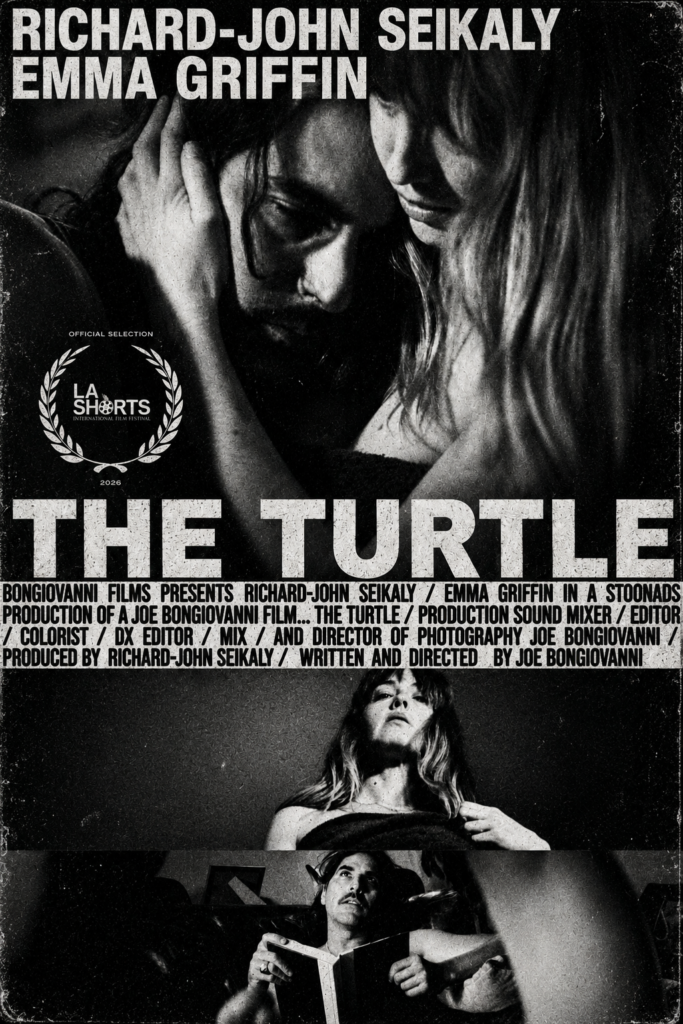
By the time our sit-down wraps, one thing becomes crystal clear: ‘The Turtle‘ is a hell of a lot more than just a story about a marriage running on fumes. It’s an uncompromising autopsy of the sheer guts it takes to lay your cards on the table and expose your real flaws.
Whether breaking down the power of iron-clad creative trust, the relentless pursuit of authentic performances, or the non-negotiable need to give men the space to drop their guard, Joe Bongiovanni and Richard-John Seikaly keep coming back to one central weapon, which is pure truth.
It’s this total commitment to emotional honesty that gives this short film its heavyweight punch, marking this creative duo as a force to watch closely as they gear up to unleash their next project, ‘Chasing Persephone‘.