
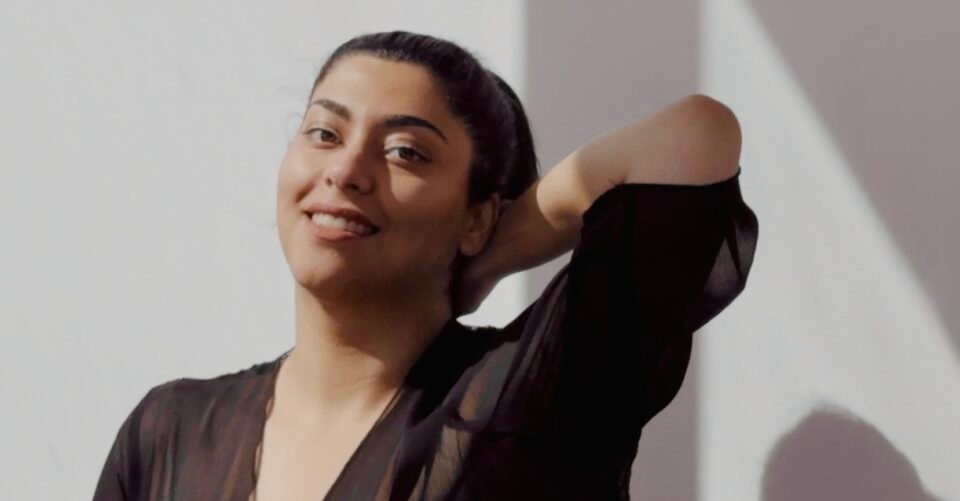
Sometimes, it is the smallest, quietest details we cling to when the world around us shifts beyond our control. For Afghan filmmaker Nazila Azizi, it all began with a tender instinct to record the gentle chirping of birds in her father’s office, just days before her family was forced to flee Afghanistan in 2021.
Though those specific clips never found a home in her short film, LINEOUT, that quiet longing to hold onto what might soon be lost became the very heart of its creation. Interweaving intimate personal phone footage with soft touches of magical realism, Azizi delicately explores the bittersweet ache of escaping toward safety while your soul remains tethered to home.
In this cosy interview, she opens up about discovering her voice through cinema, making room for the emotions she couldn’t process during the chaos of evacuation, and turning to poetry to express the deep, unspoken feelings the camera lens couldn’t quite capture.
- Nazila, thank you for sharing ‘LINEOUT’ with us. What first drew you to filmmaking, and how did poetry become part of your storytelling voice?
Nazila: Thank you. I was born in Iran to Afghan parents, and being a non-citizen where I was born, and a woman in the Middle East, I often felt silenced, especially since I was always a very expressive little girl. Filmmaking naturally became an inner refuge and a way of expressing myself through years of exploring different forms of art growing up; like music, design, performing arts, theater, and writing plays. I also got into reading more, and I found poetry a very adventurous exploration and the way to express not only by words, but also by their alignment, rhyme, and flow, and the depth they carry.
- You filmed your family’s escape from Kabul before knowing those images would become a film. When did you begin to see a story within that footage?
Nazila: Well, my father had a few birds in his office in Herat, and when we were there so he could find a taxi or bus to take us to Kabul, I was walking out and, for the first time, I really noticed them. I remember thinking, oh, my father would probably miss these birds so much, because they’d been part of his everyday life for so long. So I took out my iPhone and started filming them. Eventually, those birds didn’t make it into LINEOUT; they were cut during editing. But they were actually the starting point of me realizing I needed to capture these little moments, before they’re lost in the pace of time.
- What does the title ‘LINEOUT’ mean to you, and how does it connect to the boundaries the film explores?
Nazila: I really love how many meanings and associations LINEOUT has. In baseball, it’s a caught line drive; in rugby, a chance to restart play; in writing, a line crossing words out; and in audio, a signal traveling from one device to another. I think all these meanings somehow came together in this film. To me, LINEOUT is about what happens when you’re pushed outside the lines that once defined your life, and how your memories and your voice can still find their way through. And that’s really how the magical-realist narrative weaves around the real documentary footage, expressing what couldn’t be captured on camera.
- Looking back at the footage you recorded during the evacuation, what did you notice that you had been unable to process while living through those moments?
Nazila: I think it was realizing how vulnerable we all were, how broken everyone was inside, and how confused we all were. Personally, I wasn’t truly allowing myself to be vulnerable at the time, though. I was my max-effort version, just trying to get through everything. It took me a while to finally let myself sit down with everything we had been through and really process it.
- How did you decide which moments from your family’s experience to share publicly and which to keep private?
Nazila: My family always encouraged me to be true to myself and expressive. So even in our most vulnerable moments, they openly consented to me recording whatever I wanted. But the thing is, we barely had any privacy. Our only private moments were in our sleeping bags, surrounded by hundreds of strangers. Along the way, most of us kind of disconnected, just trying to figure out what was next.
- Also, you wanted to avoid sensationalising suffering. What specific choices helped you protect the dignity of the people and experiences on screen?
Nazila: I mean, the grief wasn’t always visibly dramatic in those moments. It had nuances, just like life. Kids were playing, people were eating food, watching news, sleeping. I think the uncertainty was actually what caused the most suffering after the evacuation rush. So I didn’t really have to do much. I just needed to stay authentic to what I was observing, which was real, normal life. The grief was way underneath it, at least during the part of the journey I filmed with my iPhone.
- Home becomes a voice in the film. How did you write that presence, and what did Anousha bring to it that changed or deepened your original vision?
Nazila: I think I started writing to Home because I needed that conversation myself. I was trying to understand what Home even meant to me anymore, and somewhere along the way, she became a dreamy soft voice I could actually speak to. Anousha connected to those words in a very personal way too. She imagined speaking to her own inner child, and I think that brought a tenderness and surrender to Home that I couldn’t have created through directing alone.
- ‘LINEOUT’ brings documentary footage together with magical realism. What was the process of achieving this like?
Nazila: Looking back at the real footage I had, I could barely recognize how I was feeling at the time. It was like everything was hidden somewhere, and I had to go explore it. I wanted to show those feelings through different layers of being human, with the real and imagined worlds existing together, without one having to explain the other. So, magical realism it is. A three-year-old drawing a home in the sand on a beautiful day at the beach, is easy to believe, but only for the waves to wash it away? Here, the small event becomes sad, judgment-free, and simply human. That’s magic to me. Finding that balance through narration and editing was really the process.
- What has the reception of this film been like so far? Do you believe that its message has been well received by the audience who have seen it?
Nazila: I’m happy with how the film has been received, but I can’t say many people have seen LINEOUT yet. I made it independently while living as a refugee, with very limited resources for distribution and visibility. And I wasn’t really trying to send a message. I wanted people to experience, even for a few minutes, the paradox of escaping home while still missing it. To stand beside someone experiencing both the escape and the grief, and maybe open a space for empathy. From the conversations I’ve had with people who watched it in person, I think it resonated with them emotionally. At least, I hope so.
- Lastly, what advice can you share with any aspiring filmmaker looking to use poetry as a voice in their filmmaking?
Nazila: To me, poetry is about giving a form to something that doesn’t quite have one yet. Sometimes it’s in the words, sometimes in an image, a silence, or even in what’s missing. I love how something so simple can carry so many layers of meaning. So I’d say don’t try too hard to make your film poetic. Just stay curious about what you can’t explain, and find your own language for it.
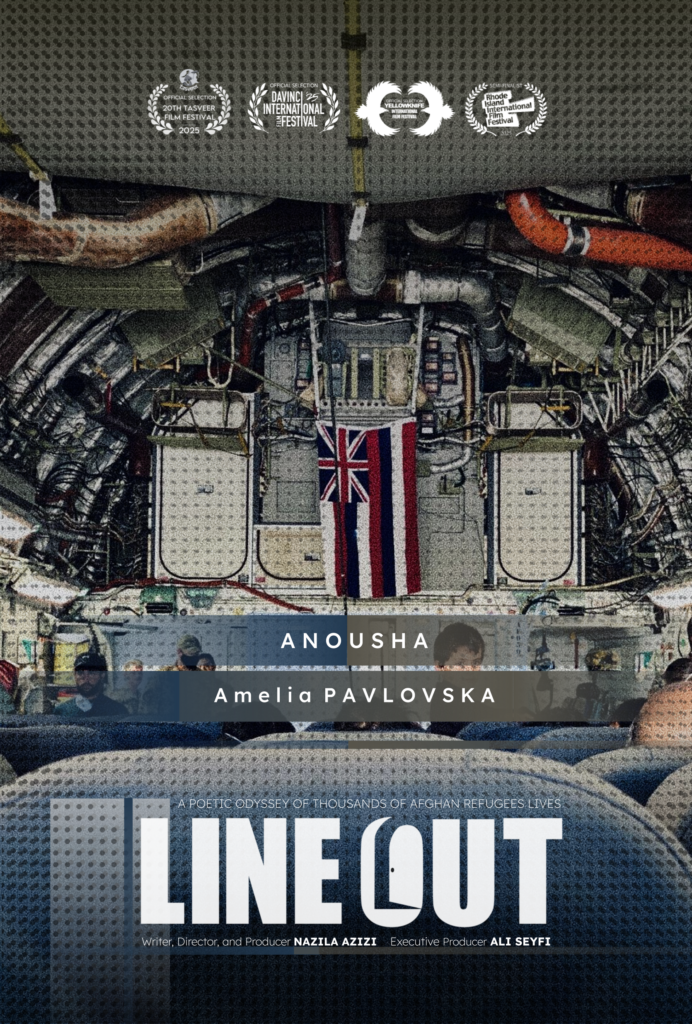
What lingers long after listening to Azizi’s reflections is a beautiful realisation of just how much emotion hides beneath the ordinary moments captured on film. Children play, families share meals, and life gently continues even as a cloud of uncertainty looms over everything.
Through LINEOUT, she cradles those quiet, unseen feelings, giving grief, tenderness, and an overwhelming longing for home a safe space to coexist. Her gentle advice to aspiring filmmakers reflects the pure authenticity of her own journey: remain curious about the mystery of what you cannot explain, and find a creative language that truly feels like home to your soul.
It is a tender invitation for us all to step inside another person’s lived experience and softly hold space for whatever feelings begin to stir.