
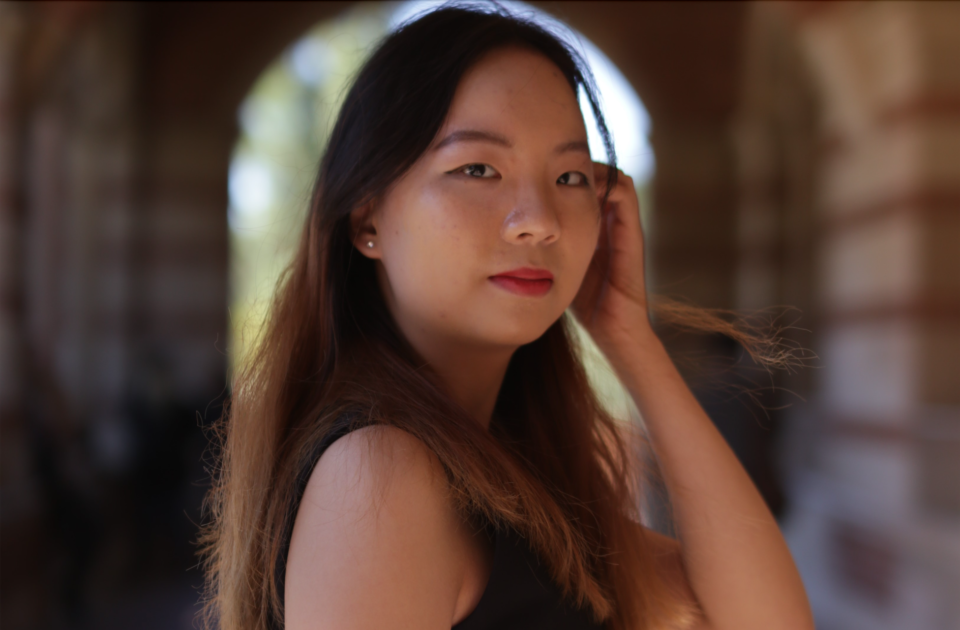
For filmmaker Lisa Ranran Hu, cinema has always been a gentle, quiet way of exploring the delicate threads of human connection. Ever since she picked up the small camera her father gifted her at twelve, Lisa Ranran Hu has been irresistibly drawn to stories of identity, love, and displacement. Capturing soft, vulnerable characters as they navigate the bittersweet space between belonging and becoming.
Her latest short film, ‘Heading to the East‘, gathers those tender themes into an intimate, heartbreaking meditation on memory, romance, and inevitable farewells.
Set against the vast, sun-drenched landscapes east of Los Angeles, the story follows a couple retracing their steps to where their love first bloomed, only to realise that the sanctuary they cherished has slipped away.
In this interview, she opens up about the personal heartbreaks that inspired the script, the profound cultural weight of travelling east, her poetic approach to building characters, and why the most honest love stories are often the ones that leave their tears unfiltered and their questions beautifully unanswered.
- Lisa, can you share with us a bit about your filmmaking journey so far?
Lisa: I started making short films when I was 12. My dad gave me a very small camera, and I brought it to school almost every day, documenting whatever was happening in class, on my sports team, and around me. Years later, I made a feature film with a group of friends called Escape, about a transgender teenager in China struggling with her gender identity. The film received attention from publications including TIME and Forbes. I became interested in filmmaking at a very young age, and I’ve continued telling stories centred on self-actualisation, relationships, and human connection.
- Your film ‘Heading to the East’ deals with separation on both an intimate and cultural level. What was the personal experience that first inspired you to tell this story?
Lisa: I’ve wanted to tell a story about separation for a long time because it has been a constant part of my life. As a child, I left my hometown with my parents and moved to Beijing. Years later, I left my parents to come to Los Angeles. More recently, increasingly restrictive immigration policies have made every goodbye to family or loved ones feel uncertain—you can’t help wondering when you’ll see each other again. Living in the diaspora has sometimes left me with a deep sense of powerlessness, almost a quiet fatalism: separation feels inevitable, and some relationships seem destined to be lost. The film also draws from specific experiences of saying goodbye to people I loved because a visa expired or life took us to different countries.
- The film starts with a lighter, playful dynamic. How important was it for you to begin the story this way?
Lisa: Interestingly, those flashbacks were added during post-production. The script originally went straight into the present-day story, but while editing, I realised the audience needed to see what the characters once had in order to understand what they were losing. Beginning with that lighter, more playful energy creates an emotional contrast with the rest of the film. It gives the story a clearer arc and makes the possibility that they may never share those moments again feel more painful.
- As someone who has lived in both China and the United States, how has living between cultures influenced the kinds of stories you feel compelled to tell?
Lisa: I’m naturally drawn to stories about Asian characters because that’s where I come from, and their cultural backgrounds are an important part of how I understand them. I’m especially interested in people who come from one culture and are trying to find their place in another—how they adapt, how the new environment changes them, and how they, in turn, leave an impact on that place. The land itself often becomes an important part of my storytelling. In Heading to the East, the landscape isn’t just a backdrop; it reflects the characters’ emotional and cultural displacement.
- What was the casting process like, and what were you particularly looking for in the actors who starred in your film?
Lisa: I found our male lead, Arnold, through Breakdown Express. The process involved several rounds of auditions, followed by an in-person chemistry read, because I wanted to be certain the connection between the two leads felt right. I already knew Michelle, our female lead, from a production at our school. She only appeared in one scene, but something about her stayed with me, so I invited her to submit a self-tape.
What I was looking for most was a quiet, melancholic quality—a face and a pair of eyes that could hold emotional depth and suggest someone longing for something they ultimately cannot have. I also asked the actors to improvise so they could bring parts of themselves into the characters. In a film where emotion carries more weight than plot, their personal contributions were essential.
- How did you work with the two lead actors to create the sense that these characters have a shared history that existed long before the audience meets them?
Lisa: We had a lot of conversations and rehearsals. I explained the history of the characters’ relationship, but I also spoke with the actors about their own experiences with love and separation if they were willing to share. I believe authentic chemistry often needs some connection to the actors’ real lives. I also asked them to improvise small events that might have happened before the film begins. For example, they acted out the moment when the woman first asked the man to visit the oasis one last time with her. That scene was never intended for the final film, but performing it gave them a more tangible sense of the relationship and memories their characters shared.
- How does also being an editor influence the way you approach directing, particularly when it comes to performance, pacing and visual storytelling?
Lisa: In this case, as the director-editor, I designed the shots to reveal the characters’ emotions rather than simply advance the plot. At the same time, I left room for discoveries during production and post-production. For example, the flashbacks were not in the original script. I felt a strong need to film them on set, without yet knowing how I would use them, and eventually found their place during editing. The editing process took a year and involved constantly restructuring scenes, incorporating the flashbacks, reflecting on the cuts, incorporating my producers’ feedback, and going through many trials and revisions before arriving at the final, impactful version.
- Do you see separation as something we should learn to accept, or is the film ultimately about resisting that inevitability?
Lisa: That’s a really good question. I don’t think the film is trying to tell audiences whether they should accept separation or resist it. I’m more interested in presenting the characters’ situation they are facing an inevitable separation, and the film observes the fatalism, struggle, and emotions surrounding it. By the end, the woman begins to accept what is happening, but acceptance is rarely permanent or straightforward. From my own experience, separation can remain painful for a very long time. You might accept it one day, resist it the next, and regret it later. I didn’t want to offer a definitive answer. Capturing that emotional uncertainty felt much more honest and valuable to me.
- Are there any specific messages that you hope Asian and immigrant audiences might recognise in this story that audiences outside those experiences might see differently?
Lisa: The title Heading to the East has both a literal and symbolic meaning. Geographically, the characters are travelling east of Los Angeles into the desert. But “the East” also points toward Asia—the cultural roots of these characters and of many people living in the Asian diaspora. There is also something culturally specific in the way the characters communicate. They rarely speak directly about their separation. Instead, they talk around it—through photographs, the oasis, and shared memories. Their sadness is expressed through the things and places surrounding them: seeing another couple parting at a Latino market, or a station connected to happier memories. I don’t want to generalise all Asian relationships, but emotional restraint and indirect communication are familiar within many Asian cultures.
- Lastly, if audiences leave ‘Heading to the East’, what would you hope they understand about their own memories and the things we carry with us?
Lisa: I hope the audiences can relate to this film in terms of memories or relationships they haven’t been able to let go of. Saying goodbye to someone you love is such a universal human experience, and emotional connection is what I care about most with this film. I also hope audiences don’t see the memories they carry as only a burden. You may not be able to put them down at first, but over time, you might learn to live with them. Memories are easy to revisit but impossible to recreate exactly. The characters try to reproduce something they once shared, but that doesn’t necessarily mean it will work. The film presents just one possibility among many, and I hope people can recognise something of their own experiences within it.
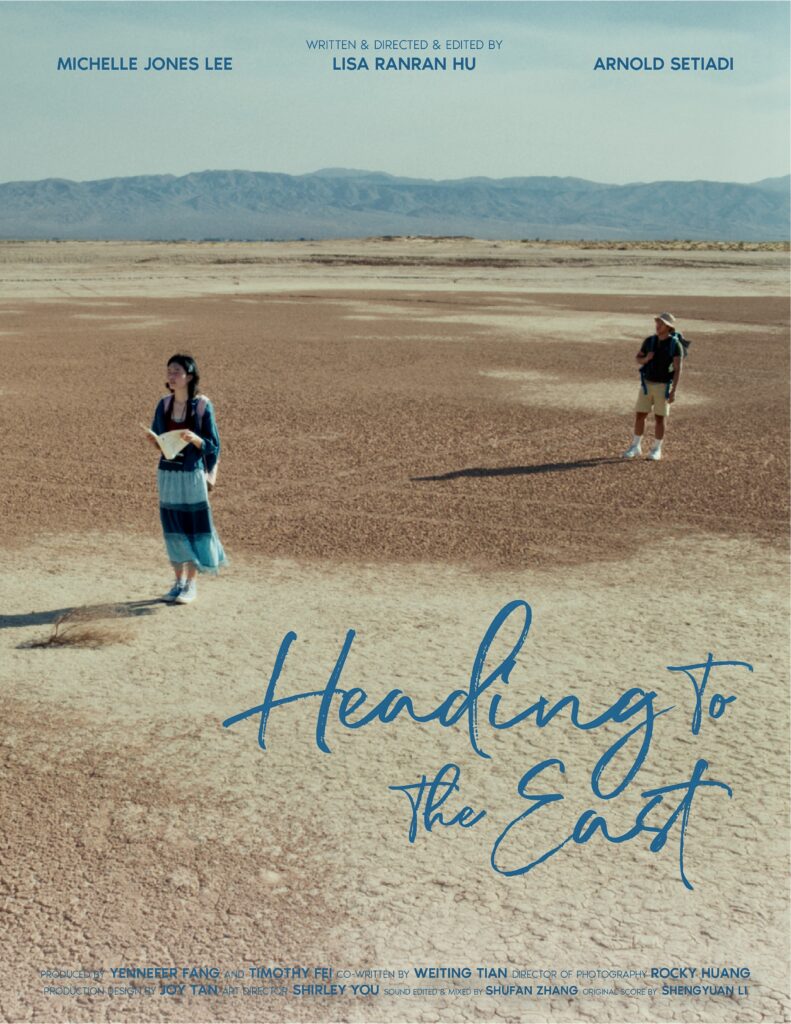
When the dust settles, ‘Heading to the East‘ doesn’t try to hand us tidy solutions for heartbreak; instead, it gently invites us to sit with the complicated, aching emotions left in its wake.
Lisa Ranran Hu leans gracefully into that ambiguity, honouring the truth that acceptance and longing often live side by side in a woman’s heart. Her vision of memory is breathtakingly nuanced: while the past can wrap us in a warm embrace, trying to relive it only proves that certain moments belong strictly to the time they were born.
Through soft, restrained performances, dreamy cinematography, and a deeply felt understanding of the diaspora experience, the film transforms one final road trip into a poignant love letter to the places and people we’ve had to leave behind. Yet for Lisa Ranran Hu, memory isn’t merely a weight to carry. It is a quiet light we hold onto, gently guiding us as we find the courage to move forward.